Lake City is quietly one of the best places in Florida to base a springs trip, and the single most useful fact for planning around it is this: watch the river levels, not the calendar — when the Suwannee and Santa Fe are up, the free river-fed springs turn tannic for days, so build a basin-fed backup into every plan.
Ichetucknee, twenty minutes south. The reason most people come. A spring-fed river you float from end to end through cypress and hardwood, with tram and shuttle logistics that reward reading up in advance — particularly the summer north launch, which is capped and books out. Go on a weekday if you possibly can.
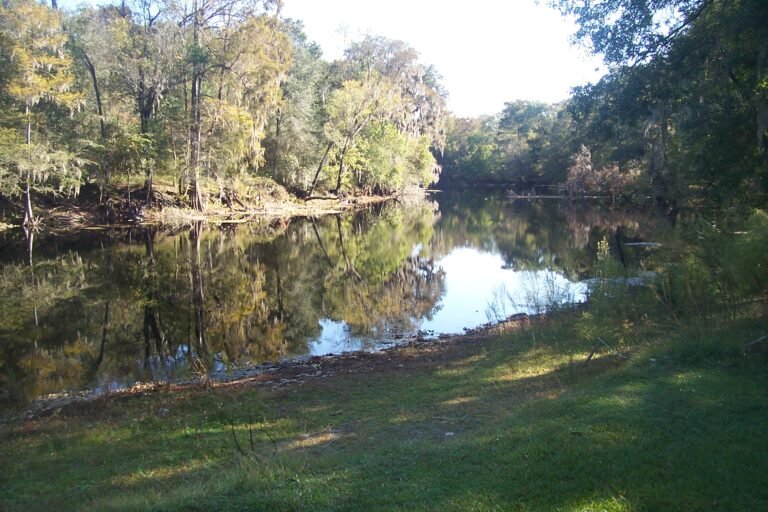
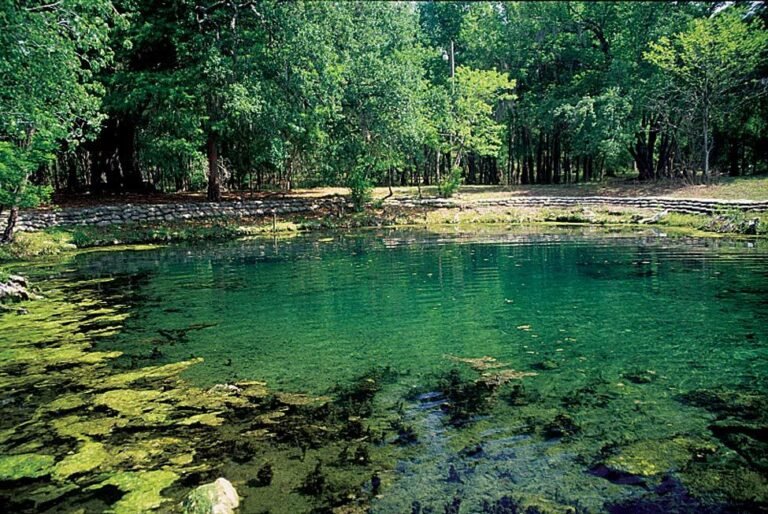
The Suwannee cluster, west. Little River, Royal, Suwannee and Troy Springs sit twenty-five to forty minutes out along the river. Several are free or nearly free, facilities are basic, and clarity swings with the river — after heavy rain the Suwannee backs into them and they go tannic for days. Troy in particular is a striking site with the remains of a Civil War-era steamboat visible in the basin.
South, to the Santa Fe. High Springs and its ring of springs — Ginnie, Gilchrist Blue, Poe, Rum Island — are thirty to forty minutes south, giving you an entirely fresh set of options without a serious drive.
West, into the Panhandle. Madison Blue is about forty-five minutes west on the Withlacoochee, and worth the trip on a day the Suwannee is running dirty.
The local rule. Watch the rivers, not the calendar. When they are up, go to Ichetucknee or Madison Blue; when they are low and clear, the free Suwannee springs are the best value in Florida.
Before you drive
Ichetucknee’s Midpoint launch is closed for repairs. Gilchrist Blue Springs’ water activities remain closed as of September 2026. Madison Blue Spring has frequent capacity closures from 10am to 3pm on weekends and holidays, and discourages large RVs due to limited turnaround since April 2026. Troy Spring diving requires open-water certification with no solo or cave diving permitted, and dives must be finished before 5pm. Check current conditions for the specific springs on your list before you drive, especially anything on the Suwannee side, where clarity can flip in a day.
Start with these
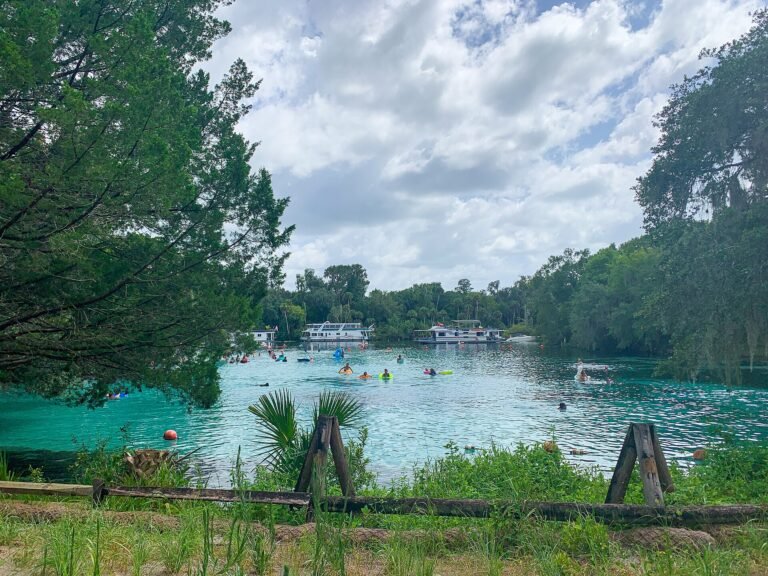
Ichetucknee Springs, twenty minutes south, is the reason most people base a trip here — a spring-fed float through cypress and hardwood, $6/vehicle ($4 solo, $2 pedestrian/bike). Right now the Midpoint launch is closed for repairs, so every float starts from Dampier’s Landing at the South Entrance, last launch 5pm, rentals ending 4:30pm, tram wristband $7.50. The north launch caps at 750 people a day, first-come-first-served, and everyone has to be off the water by 6pm.
Troy Spring, part of the Suwannee cluster, is $5/vehicle and one of the more striking sites in the state: a 70-foot-deep basin holding the visible remains of the steamboat Madison, scuttled there in 1863. Snorkelers can see the wreck from the surface, but diving it requires open-water certification — no solo diving, no cave diving, no lights — and dives must finish before 5pm. Nothing may be touched or removed, since it’s a protected historic site.
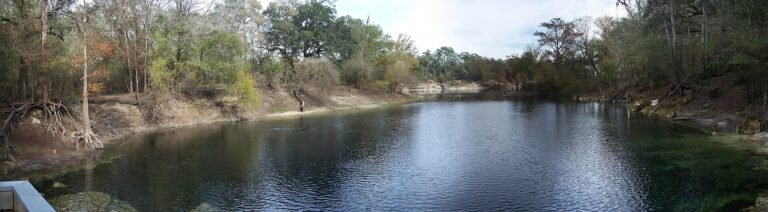
Suwannee Springs is free, open sunrise to sunset, and one of the most atmospheric small springs in the state — the ruins of a historic sulphur spa stand around the pool, having burned down three times (1884, 1901, 1925). The nearby “Graffiti Bridge,” a 1931 foot-only US-129 crossing repainted by visiting artists, is worth the short walk. Facilities are minimal, just a portable restroom, so bring what you need.
Ginnie Springs, thirty to forty minutes south near High Springs, is the riverside camping headline of the Santa Fe corridor, with the famous Ballroom cavern open to certified open-water divers. Expect $25/adult in season (March–October) or $20 off-season for admission, with camping at $40 or $30/adult depending on season, admission included. It has never allowed pets, and added a new alcohol policy in April 2026 keeping drinking to campsites only.
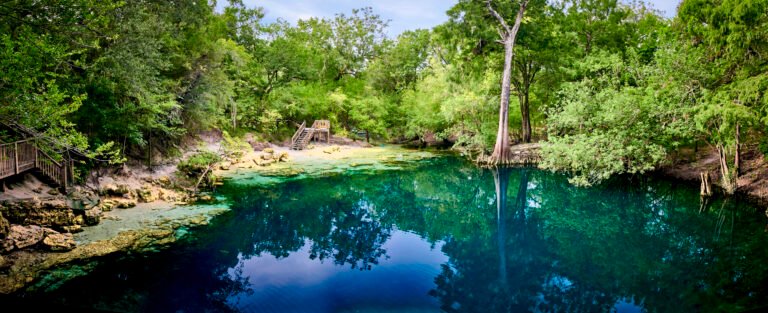
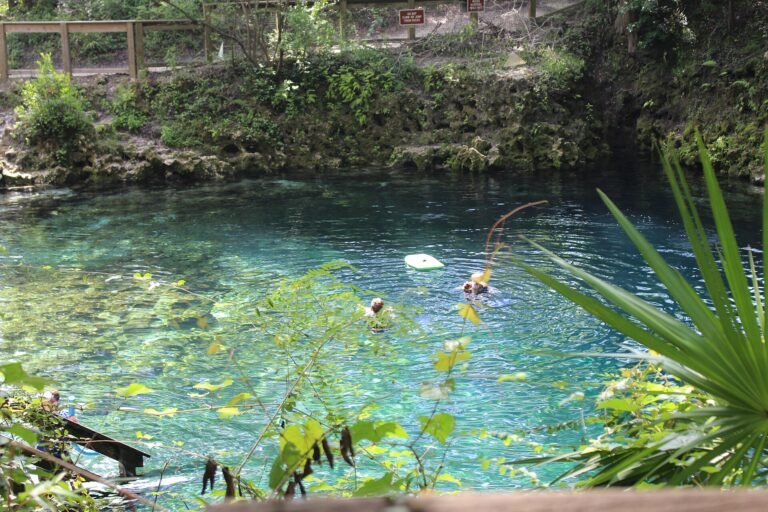
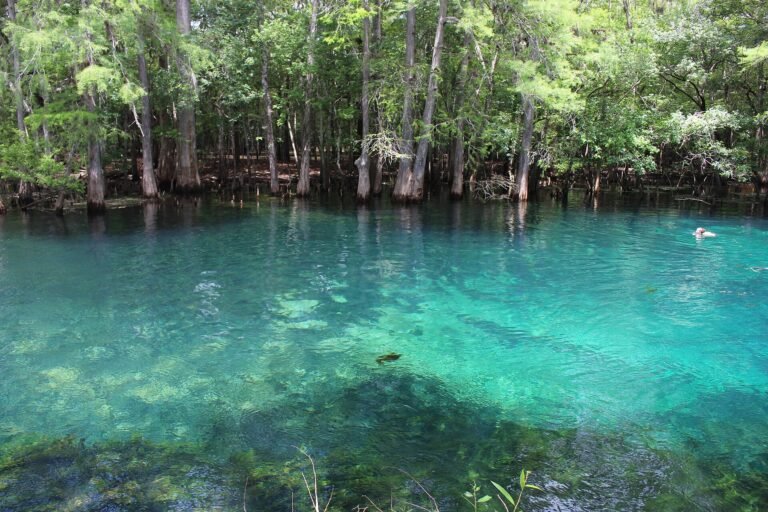
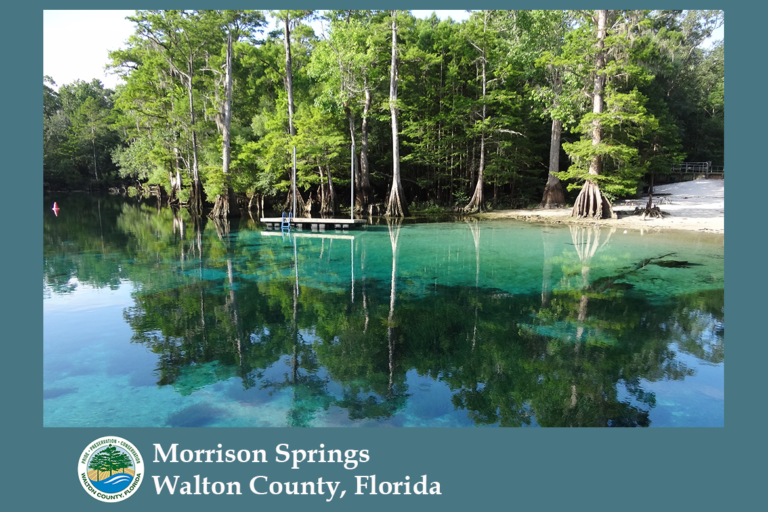
Madison Blue Spring, about forty-five minutes west on the Withlacoochee, is a small, brilliantly clear basin that USA Today readers voted the #1 swimming hole in the country — $5/vehicle, and worth the drive specifically on a day the Suwannee is running dirty, since it’s less exposed to the same silt. Expect frequent capacity closures from 10am to 3pm on weekends and holidays, no on-site camping, and large RVs discouraged since April 2026 for limited turnaround room.
Distances are straight-line miles from Lake City — drive times vary.
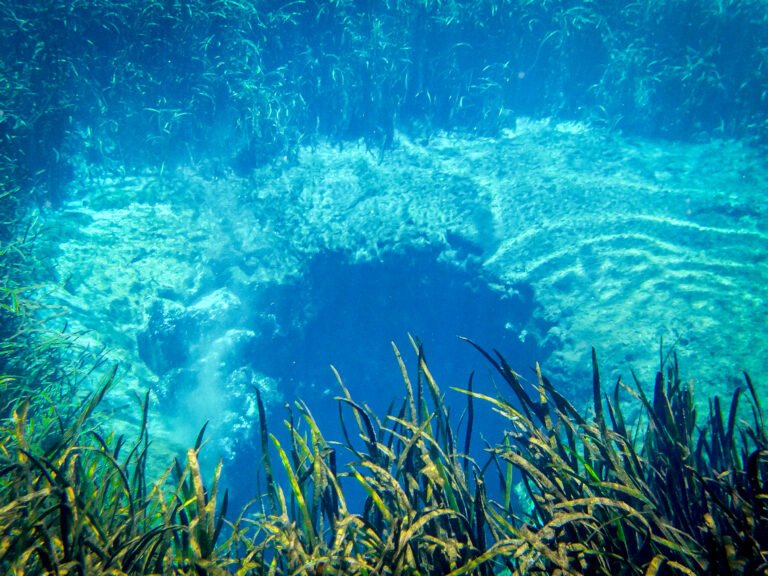
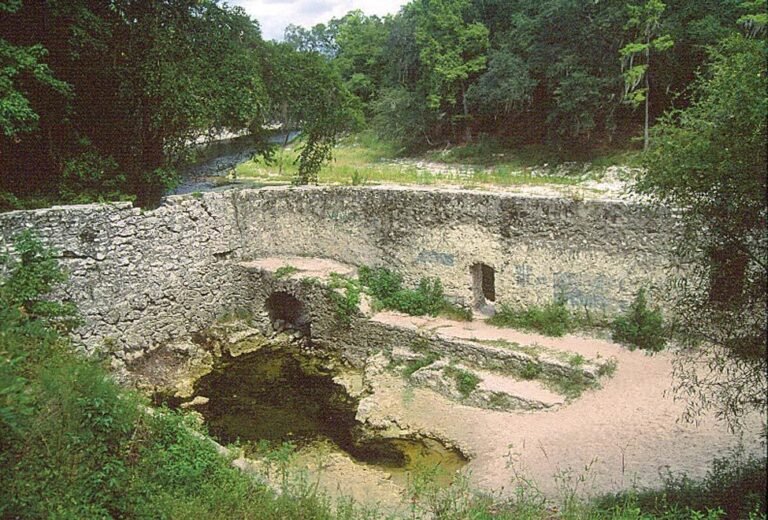
Suwannee Springs
Historic sulphur springs and 19th-century ruins on the Suwannee.
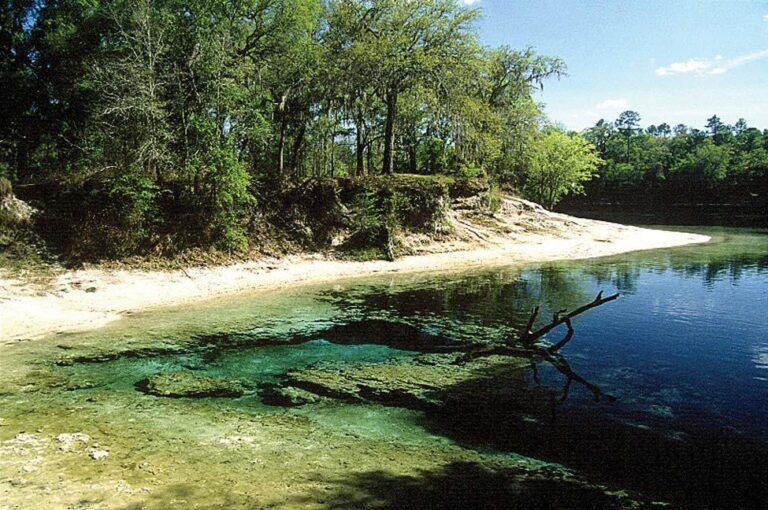
Little River Springs
Cheap, uncrowded swimming with a serious cave system below.
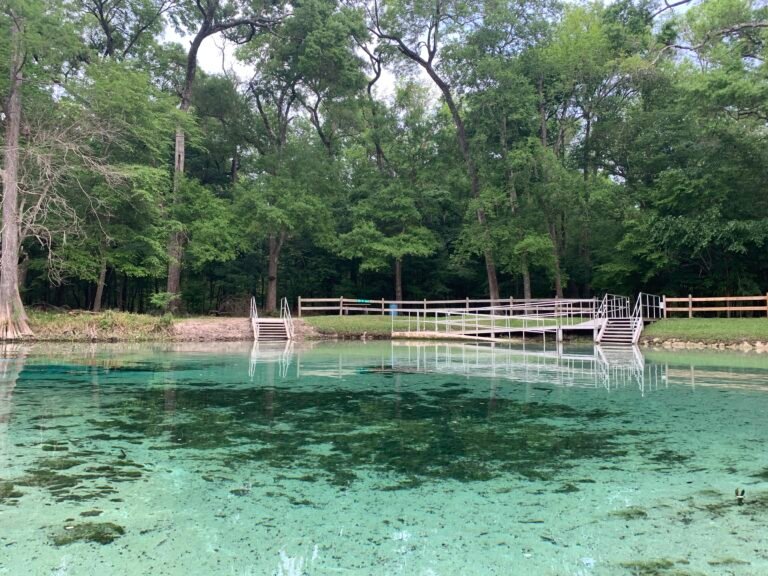

Gilchrist Blue Springs
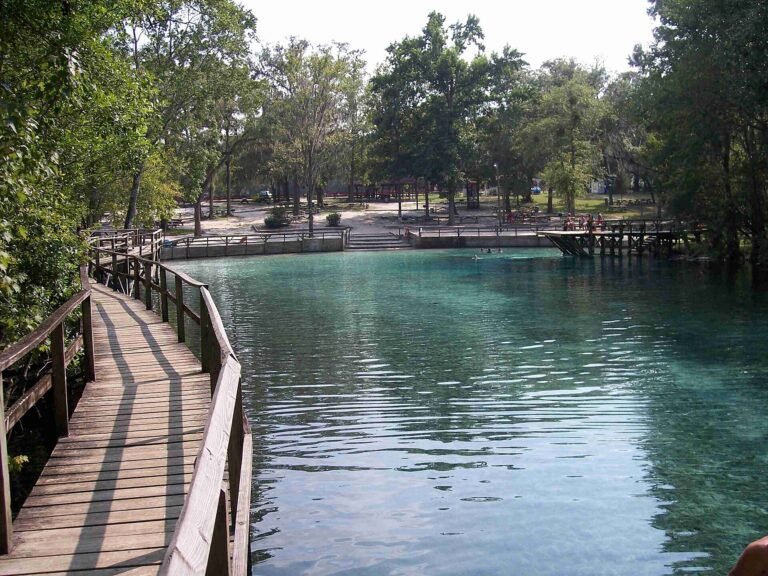
The best backup to Ichetucknee — and a top-five spring in its own right.
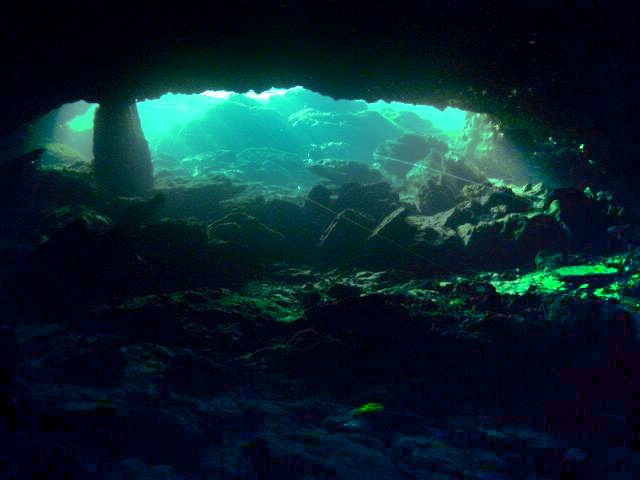
Wes Skiles Peacock Springs State Park
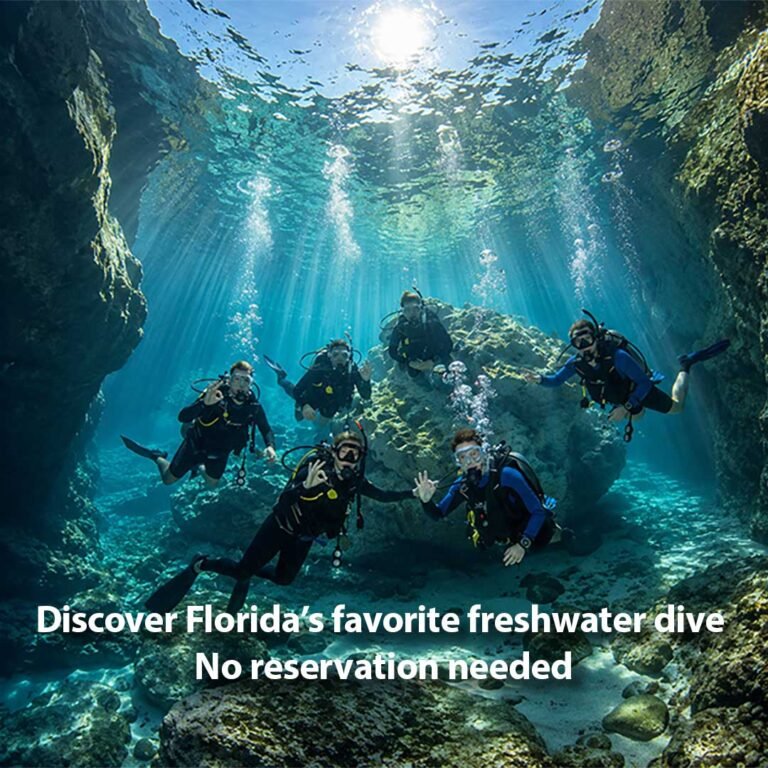
One of the longest underwater cave systems in the country.
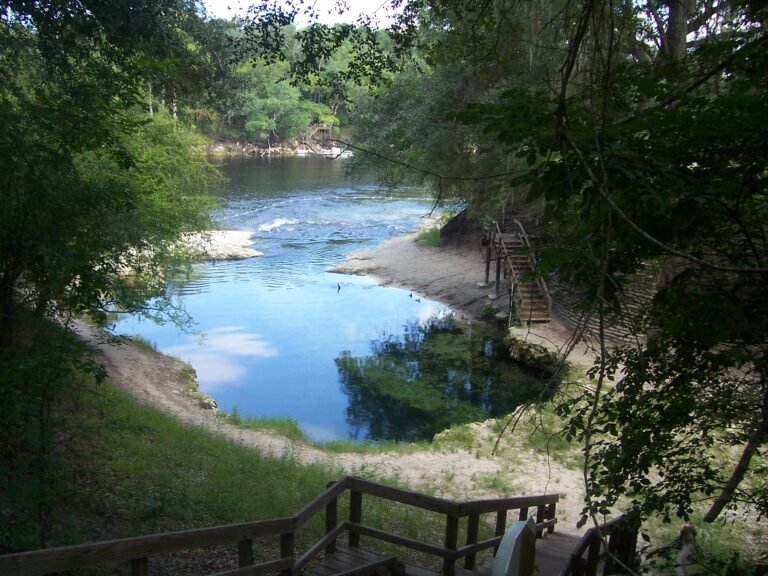
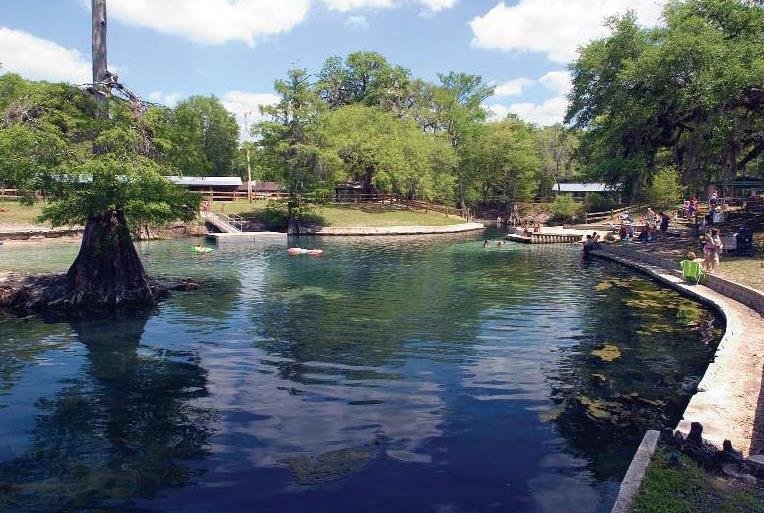

Silver Springs
Glass-bottom boats and paddling over giant springs — no swimming.
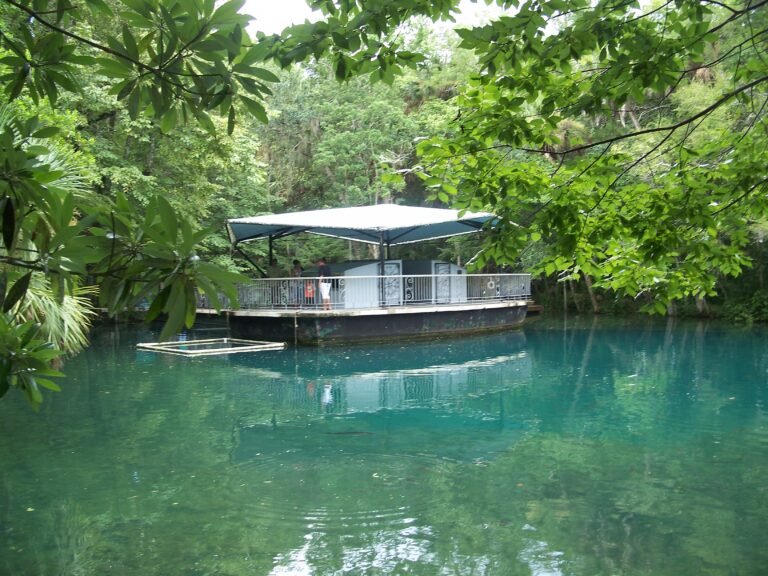
Ellie Schiller Homosassa Springs Wildlife State Park
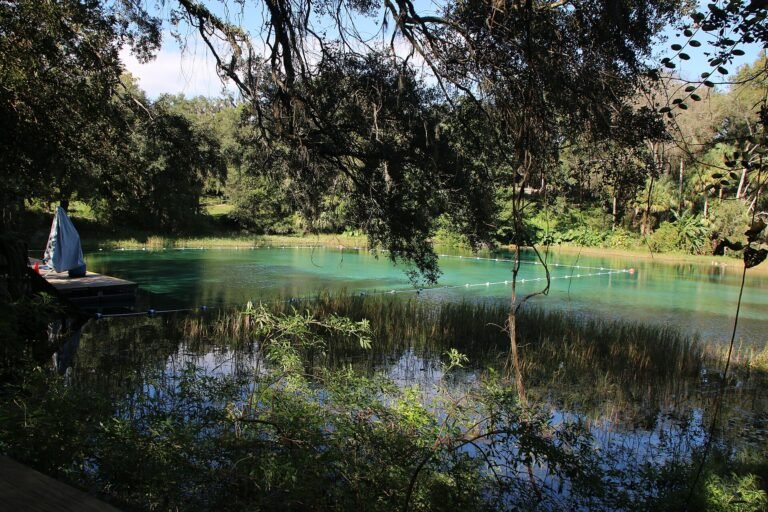
Guaranteed manatees, year-round, from an underwater observatory.

A one-day plan
Go to Ichetucknee Springs first, twenty minutes south — it’s the reason most people base a trip here. Right now the Midpoint launch is closed for repairs, so every float starts from Dampier’s Landing (South Entrance), with the last launch at 5pm and rentals ending at 4:30pm. If the Suwannee is running high and the river-fed springs are tannic, pivot west to Troy Spring instead, where a 70-foot basin holds the visible remains of the steamboat Madison, scuttled there in 1863 — dives must finish before 5pm and nothing may be touched or removed, since it’s a protected site.
If you have a weekend
Spend a day on the free and low-cost Suwannee cluster — Suwannee Springs is free with the ruins of an old health resort standing around the pool, and Little River Springs and Royal Springs both now charge $5 per vehicle (Royal was listed free in earlier research; a more recent check found the $5 fee now in place, and it’s a bring-cash park with no running water or electricity). Spend the second day south around High Springs, where Ginnie Springs offers first-come, first-served riverside camping and Gilchrist Blue Springs is the calmer state-park alternative — though its water activities remain closed as of September 2026 for construction, so confirm before you plan around it.
Seasonal notes
Watch the Suwannee and Santa Fe river levels, not the calendar, for this whole region — Little River Springs is described as very sensitive to Suwannee levels, and Rum Island floods outright when the Santa Fe runs high. Poe Springs drops from its $6 May-through-September vehicle fee to free admission each October through March, capping at 100 people in the spring — though its water area is currently closed for low levels, so it’s not swimmable right now; Rum Island is the better bet.
FAQs
What is the closest spring to Lake City?
Ichetucknee Springs, about twenty minutes south — the definitive Florida tube float and the reason most people base a springs trip here. Right now launches run only from the South Entrance since the Midpoint launch is closed for repairs.
Are there free springs near Lake City?
Yes — Suwannee Springs is free year-round, open sunrise to sunset, with historic sulphur-spa ruins around the pool. Poe Springs (near High Springs) is free October through March. Both are river-fed, so check conditions before driving out after heavy rain.
Which spring near Lake City is best when the rivers are muddy?
Madison Blue Spring, about forty-five minutes west on the Withlacoochee, and Ichetucknee tend to hold clarity better than the smaller Suwannee-side springs like Little River and Rum Island, which are especially sensitive to river levels and can flood or turn tannic within days of heavy rain.