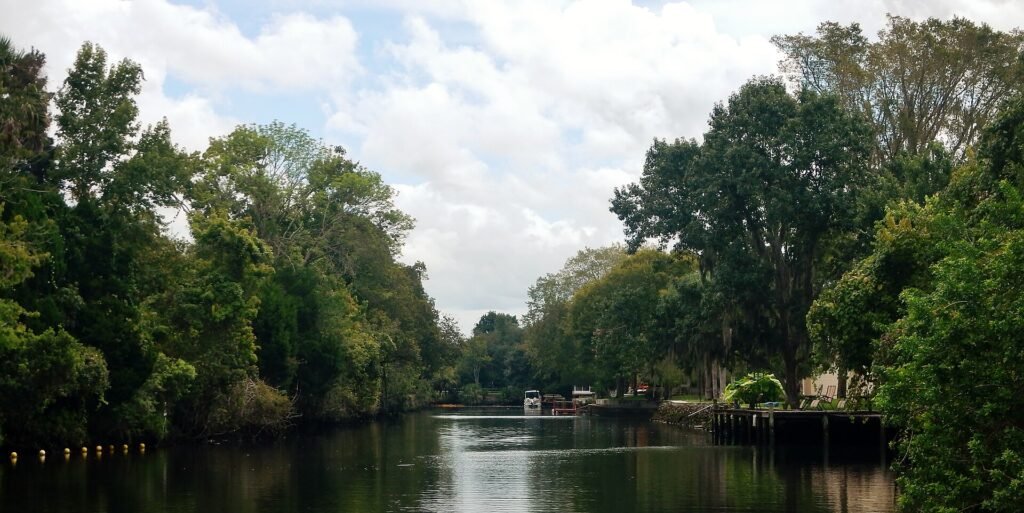
Should you go?
Three Sisters is the postcard: an impossibly blue spring pocket inside Crystal River National Wildlife Refuge where manatees pack in by the dozens on cold winter days. Crystal River is the only place in the United States where swimming with wild manatees is legal.
The critical detail everyone gets wrong: you cannot swim in from the boardwalk. In-water access is only by permitted tour launching by boat from Kings Bay — the land side is viewing only.
Visiting
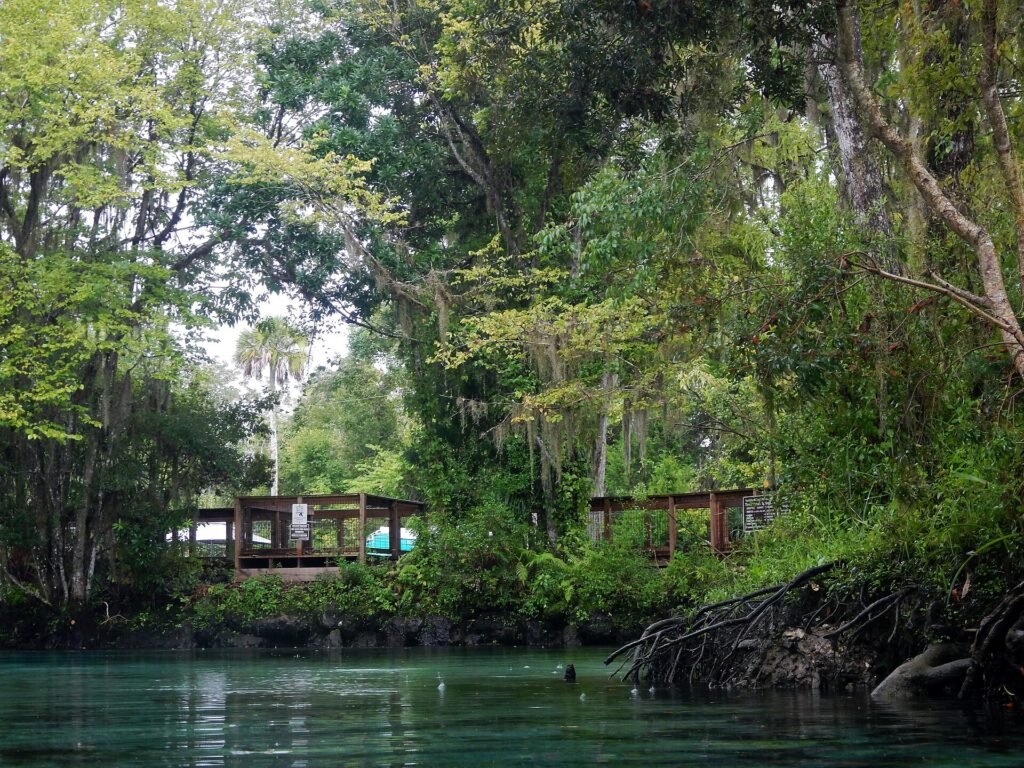
The boardwalk (viewing) is accessed via shuttle from designated stops around town. Per crystalriverfl.org (verified September 2026), admission is seasonal and higher in winter than summer: $12.50/adult and $7.50/child (6-15) from April 1 through November 14, rising to $20/adult and $7.50/child from November 15 through March 31 — peak manatee season, when most visitors come. Children 5 and under are free, and ticket/pass sales end at 3:30pm. Manatee swim tours are booked separately with licensed Crystal River operators, and per recent trip reports run anywhere from about $45 to $99+ per person depending on group size, tour length (2 to 3.5 hours), and whether it's a shared or private boat — wetsuits and gear are typically included. All tours follow strict passive-observation rules.
For manatee: The famous swim-with-manatees destination — the only place on this list where you can legally be in the water with wild manatees, but only by permitted tour, and the rules catch a lot of visitors off guard. For snorkel: The famous manatee-swim spot works as a general snorkel destination outside peak winter season, with exceptional clarity and easy access via guided kayak tours.
Getting to the boardwalk isn't a simple drive-up — there's no parking at the refuge itself except for handicap access, so you park in one of the city's public lots (or at the Three Sisters Springs Center) and ride the shuttle in from a designated stop, included with your admission. If you kayak instead of taking a boat tour, expect calm, forgiving water well suited to kids and novice paddlers, and know the tour boats sharing the area are required to move slowly.
One honest thing worth knowing before you book: this is genuinely one of the most crowded spring experiences in Florida during peak winter weekends — multiple experienced paddlers describe the area as overcrowded with tour boats and snorkelers more often than not. Early morning is both when manatees are most active and when the crowds are thinnest, so that timing does double duty here.
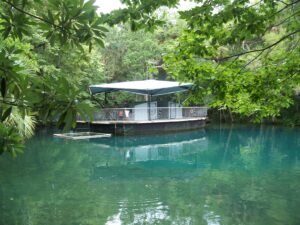
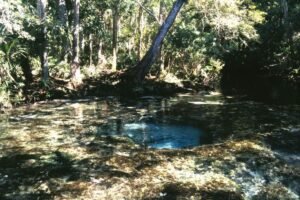
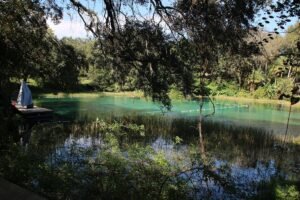
The name comes from three interconnected spring boils that rise and fall in visible depth with the tides — a sandy-bottomed area around 20 feet deep in spots, with a large submerged tree and a rock ledge you can actually stand on. When the water's clear, watching the sand boil up from the springhead while manatees drift past is genuinely one of the more remarkable natural sights in Florida, refuge crowds notwithstanding.
Manatee season runs mid-November through March 31, per the refuge's own FAQ page, with the best viewing on cold fronts and high tides when Gulf water drops below 68°F and manatees push into the warmer spring water. There's no public parking on site except for handicap permits, so the shuttle (included in your ticket) is genuinely required, not optional.
The refuge counted a record 528 manatees here in a single day on December 27, 2014 — a number that gives a real sense of what a great cold-front morning can look like. One safety note worth taking seriously: this is a wetland habitat, and both alligators and venomous snakes live here. Stay on the boardwalk and designated trails, and treat any wildlife sighting, manatee or otherwise, with distance and respect.
Note: the refuge's own site has at times flagged that portions of the boardwalk are temporarily inaccessible for construction — check current status before your visit if walking the full boardwalk matters to your plans.
By the numbers: what's called "Three Sisters" is actually three interconnected second-magnitude spring vents inside a 57-acre refuge — 45 acres of upland, 12 acres of wetland — tucked into Kings Bay on the west side of Crystal River. Water holds a nearly constant 73°F/23°C year-round regardless of air temperature, which is exactly why manatees stack up here on cold winter mornings. Crystal River sits roughly 70 miles/about 90 minutes from Tampa, about 115 miles/just over 2 hours from Orlando, and around 85 miles/1.5 hours from Gainesville, making it a realistic day trip from all three.
When to go
Mid-December through February, on the coldest mornings, first thing. Summer means few manatees but excellent kayaking in Kings Bay.
Local tips
Book a small-group tour for the first launch of a cold January morning — fewer people, more manatees, glassier water. Photograph from the boardwalk in afternoon light. Book with a guide who gets repeat, specific praise in reviews rather than just picking the first tour that comes up — reviewers name individual guides often enough that it's worth a quick search for who's currently well-regarded before you commit.
Visitors who've bought tickets online report getting an armband on arrival rather than waiting in a ticket line, which is worth doing ahead of a cold-snap weekend when demand spikes. The contrast between a quiet weekday and a busy weekend here is stark: one visitor who arrived at 8:30am on a Tuesday after a cold night described having the boardwalk nearly to themselves with dozens of manatees visible, while weekend mornings after the same kind of cold front are consistently described as chaotic, with overflow parking and crowded pull-offs near the refuge center.
If you're doing a boat or kayak tour rather than the boardwalk, expect the actual water time to run two to three-plus hours once you count the briefing, the ride out, and the ride back — budget your whole morning or afternoon around it rather than treating it as a quick stop.
Bring water shoes for the boat tours; entering and exiting over the transom or a ladder is easier barefoot in theory but rockier underfoot than most first-timers expect.
Rules & restrictions
In-water access is by permitted tour from Kings Bay only — never from the boardwalk. Passive observation only: no touching, chasing, feeding, or diving. Parts of the springs close as sanctuary in peak season.
Paddle craft — kayaks and canoes — are banned entirely during manatee season, November 15 through March 31; only swimmers on permitted tours are allowed in the water during that stretch. Motorized vessels are prohibited in the springs year-round, and water entry is only from outside the refuge boundary — never by walking down the bank — because of ongoing erosion control.
Good to know
Dogs: No. Season: Manatee tours winter; kayaking year-round.
Facilities
Refuge visitor center with shuttle service, boardwalk with viewing platforms, restrooms at the center. No facilities at the springs themselves. For food after, families repeatedly recommend Cracker's for a casual waterfront lunch that's fast enough for hungry kids, with The Crab Plant and Bayside Seafood Grille as solid alternatives, and Bayside Kraft Kitchen if you want something a bit more upscale to close out the day.
Over 100 documented bird species have been recorded on the property, and the refuge's own volunteers run guided birding tours throughout the year in addition to the manatee-season walking tours. Selfie sticks and drones aren't permitted anywhere on the refuge. Trails and the boardwalk are open 8:30am-4:30pm year-round, closed on several major holidays including Thanksgiving and Christmas.
For more Gulf Coast spring options within about 30 minutes of Crystal River, see our pages on /springs/homosassa-springs/, /springs/chassahowitzka-springs/, and /springs/weeki-wachee-springs/ — a good way to build a two- or three-spring day if the refuge alone doesn't fill your schedule.
Wildlife you may see
This is the manatee capital of the United States — several hundred gather in Kings Bay on cold days. Also mullet, snook, redfish, and abundant wading birds.
History & background
The city of Crystal River and federal partners bought the property in 2010 to protect it from development, adding it to the national wildlife refuge system after a public fundraising campaign.
The purchase price was $10.5 million, split between the Southwest Florida Water Management District and the City of Crystal River, and it put a stop to a 2008 proposal to build condominiums on the site — a plan that had alarmed conservationists and locals alike. Since then, the district has run two major bank-stabilization projects along the canal ringing the springs, in 2016 and again in 2023, installing native wetland plants and erosion barriers after years of manatee and human traffic wore down the canal edges and let sediment drift into the spring vents. A new visitor center opened in 2023, replacing older facilities and noticeably increasing how many people the refuge can process through the trolley system on a busy winter morning.
Map & directions
FAQs
Can you swim at Three Sisters Springs?
Only via permitted manatee tours entering by water from Kings Bay. There is no swimming access from the boardwalk or refuge land side.
When is manatee season in Crystal River?
Mid-November through March 31, per the refuge's own FAQ, peaking December-February on cold fronts and high tides when Gulf water drops below 68°F. Parts of Three Sisters close as manatee sanctuary during peak periods.
How much does the Three Sisters Springs boardwalk cost?
Per crystalriverfl.org (verified September 2026), it's seasonal: $12.50/adult April 1-November 14, jumping to $20/adult November 15-March 31 during peak manatee season. Children 6-15 are $7.50 year-round, and kids 5 and under are free.
How much is a manatee swim tour?
Recent trip reports put licensed Crystal River tours anywhere from about $45 to $99+ per person, depending on tour length (2 to 3.5 hours) and whether it's shared or private, including wetsuit and gear. Book ahead for winter weekends.
Can you park at Three Sisters Springs directly?
No — except for handicap access, there's no parking at the refuge itself. You park in one of the city's public lots (or at the Three Sisters Springs Center) and ride the shuttle in from a designated stop, included with your admission.
Is Three Sisters Springs crowded?
Often, yes, especially on winter weekends during peak manatee season — experienced paddlers describe it as regularly overcrowded with tour boats and snorkelers. Early morning gives you both more active manatees and noticeably fewer people; visitors report weekday mornings after a cold front as dramatically calmer than weekend mornings after the same conditions.
Is kayaking or a boat tour better for kids at Three Sisters?
Many families report kayaking as the bigger hit with kids specifically — the water is calm and forgiving for novice paddlers, and children get more of a sense of freedom and direct encounter than a guided boat tour offers.
Are there alligators at Three Sisters Springs?
Yes — it's a wetland habitat, and both alligators and venomous snakes are present. Stay on the boardwalk and designated trails, and keep a respectful distance from any wildlife you encounter.
What's the record manatee count at Three Sisters Springs?
528 manatees were counted in a single day on December 27, 2014 — a benchmark for what an exceptional cold-front morning can look like, though numbers vary significantly day to day.
Can you park at Three Sisters Springs yourself?
No, except with a handicap permit — everyone else parks in a city public lot (or at the Three Sisters Springs Center) and takes the shuttle, which is included in your admission ticket.
How long does a Three Sisters Springs manatee tour actually take?
Budget two to three-plus hours total once you include the briefing, the boat or kayak ride out, time in the water, and the return — it's a real chunk of your day, not a quick stop.
What should you bring on a Three Sisters manatee boat tour?
Water shoes are worth it — entry and exit points can be rockier underfoot than expected. Most operators supply wetsuits, snorkel gear, and flotation, but bring a towel, a dry bag for your phone, and sun protection for the boat ride itself.
Is there cell service at Three Sisters Springs?
Yes, generally solid — most major carriers get a usable signal at the refuge center and along the boardwalk, though it can dip in spots closer to the water.
Can you bring your own kayak to Three Sisters Springs?
Outside manatee season (April 1-November 14), yes — you can paddle in on your own boat launched from Kings Bay. From November 15 through March 31, paddle craft are banned entirely and only swimmers on permitted tours are allowed in the water.
How cold does the water feel when swimming with manatees at Three Sisters?
The spring itself holds around 73°F year-round, which feels chilly on entry in winter but is actually warmer than the Gulf water manatees are escaping — most tours supply wetsuits for exactly that reason.
Visitor photos
See this week’s shots: Instagram #threesisterssprings · TikTok #crystalriverflorida
Great for: Manatees · Snorkeling