Should you go?
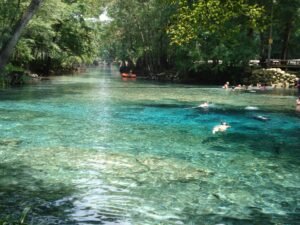
Ichetucknee is the spring we recommend first to almost everyone. The 3.5-mile run down a crystal-clear river through untouched cypress forest is the single best tubing experience in Florida, fed by eight named springs that keep visibility glass-clear the entire float.
The honest catch: everyone knows it. Summer weekends are a capacity lottery, and the north-entrance tube launch closes when the park hits its daily limit — often before mid-morning. This is a plan-ahead spring, not an impulse stop.
Visiting
Admission is $6/vehicle for 2-8 people, $4 if you're solo, $2 if you roll up on a bike (verified). Here's the thing you need to know before you drive out: the Midpoint launch is closed right now, which means 2026's tubing is just the shorter run from Dampier's Landing to the South Takeout.
That's a real change from the classic 3.5-mile float most photos and older writeups still show, so don't go in expecting the long version — the upside is your tram wristband ($7.50, temporarily down from $10 because of the closure) lets you run it as many times as you want in a day, which honestly works out fine once you've done it once or twice. Paddlers still get the longer route from the north entrance — kayaks, canoes, SUPs — capped at 100 boats a day in summer, $16/person for the shuttle plus $16 for your own boat if you bring one.
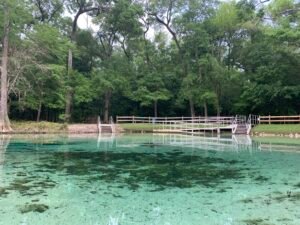
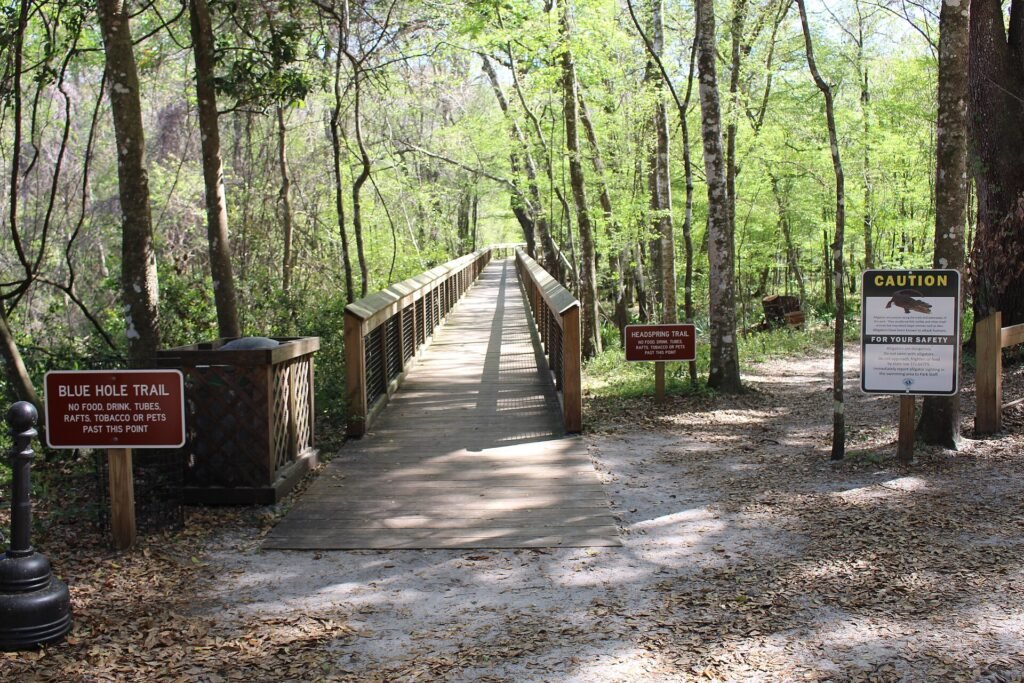
The two entrances do different jobs and this trips people up every year: north is for swimming and snorkeling at the Head Spring and Blue Hole, south is where the tubing happens. If you've got young kids who just want to splash around rather than float the river, skip the south entrance lines entirely and go north.
What it actually feels like once you're on the water: the current is gentle enough that toddlers in a lap-tube aren't fighting anything, and the cypress canopy overhead means you're rarely in direct sun, which matters more than people expect on a July afternoon. It's genuinely quiet in a way that surprises first-timers — no music allowed, no motors, just water sounds and the occasional splash from someone jumping in upstream.
Per the park's own hours-and-fees page, the float from Dampier's Landing down to the current takeout runs about an hour on the water, and the clock keeps moving after that: the North Boat Launch stops taking swimmers/boaters at 3pm, tube rentals at Dampier's cut off at 4:30pm, and everyone — tubers, paddlers, swimmers — has to be off the river and back at the dock by 6pm sharp, even though the gate itself stays open until sundown.
The park's FAQ is also blunt about a common misunderstanding: paying online in advance doesn't guarantee you a spot or let you skip the ranger-station line — every entrance is still first-come, first-served.
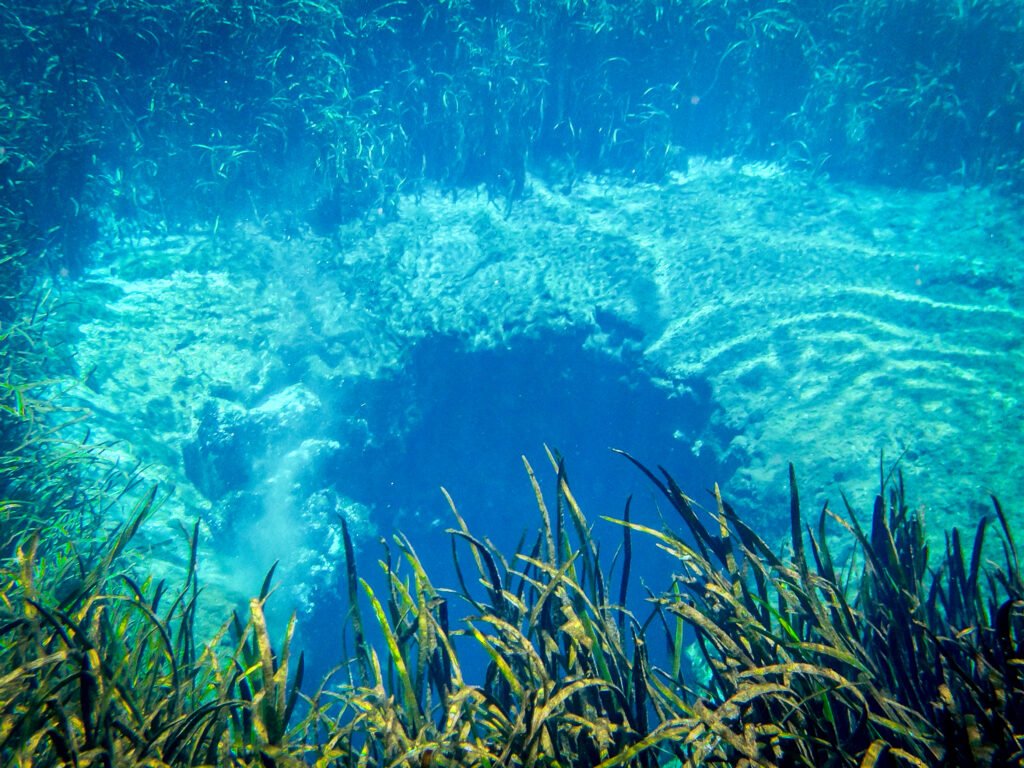
By the numbers: Ichetucknee is actually eight named springs working together, with a combined median discharge of about 356 cubic feet per second (roughly 230 million gallons a day) — Blue Hole alone contributes about 96 cfs from a 37-foot vent, the biggest single source, while Coffee Spring and Grassy Hole are tiny third-magnitude seeps under 3 cfs each. Water holds at a constant 72°F year-round. Fort White is minutes away; Gainesville is about 30 minutes southeast, Jacksonville roughly 75 minutes northeast, and Orlando is a solid 2.5-hour drive, which is why this reads as a north-Florida day trip rather than a theme-park add-on.
When to go
June through August for the classic tube-run atmosphere with tram service running, though expect real crowds. April, May, September, and October give you the same 72°F water with a fraction of the people — this is when we'd actually recommend going if your schedule allows it. Weekday mornings, any month, are close to empty.
Local tips
The north launch caps at 750 tubers a day and fills by mid-morning most summer weekends, so arrive at or before 8am if that's the plan. Tubes aren't rented inside the park — grab them from one of the roadside vendors on Hwy 27/47 on your way in, it's cheaper and faster than waiting in the park's own line.
For toddlers, look for the tubes or rafts with a mesh bottom — it lets little ones sit in the middle without sliding through, and a few of the outfitters rent these specifically. Life vests are worth renting for any kid under six regardless of how well they swim; the current picks up more than people expect in a couple of stretches. One trick from a family who's done this a dozen times: if you've got two vehicles, drop one at the south takeout before you start.
The tram back to your car can run a real wait on a busy day, and having your own ride sitting there beats standing in line with wet, tired kids. Reviewers who've done both entrances consistently say the same thing: south (Dampier's) is the party-adjacent tubing crowd, north (Head Spring/Blue Hole) is calmer, deeper, and better for snorkeling or just floating in place rather than drifting downstream, so pick your entrance based on what kind of day you actually want, not just which one shows up first in search results.
Multiple trip reports mention the same rookie mistake: showing up without cash or a card ready for the concessionaire's tube-rental window, then losing 20-30 minutes to the line once the sun's already up and the good parking is gone. Bring your own cooler-friendly snacks for the car (nothing goes on the river) and expect the walk from the far parking overflow to the entrance gate to add real time on a packed Saturday.
Weekday visits, even in June and July, routinely get described as "a completely different park" — short or no lines, no wait for tubes, and a river that still feels used but never crowded.
Rules & restrictions
No food, drinks, coolers, disposable containers, or tobacco allowed on the river itself — pack it in the car, not the tube. Tubes and rafts can't exceed 60 inches in any direction. Dogs are welcome in the park but not permitted in the water anywhere.
Good to know
Dogs: Park yes, not in water. Season: Year-round.
Facilities
Two entrances, each with its own restrooms and changing rooms. There's a tram running in summer between the south entrance and the launch points. Two small on-site restaurants — General Store Grill near the south entrance (burgers, sandwiches, a few breakfast items) and the seasonal Riverside Grill up north — though plenty of families just bring a picnic and use the shaded tables scattered through the park.
For food nearby: there's a small cluster of food trucks right in Fort White — Shauns Kountry Kitchen does a genuinely excellent breakfast burrito and gets a line early, worth the wait. If you want a sit-down meal after, High Springs is about 15 minutes further and has real options: Great Outdoors Restaurant, Bev's Better Burgers, and Pink Flamingo Diner all come up repeatedly in local recommendations. Gas and basic groceries are available in Fort White itself, so you don't need to plan far ahead for either.
Per the park concessionaire's own rental menu, tube and float prices at Dampier's Landing run from about $10 for a regular tube up to $35 for a raft, with headrest tubes around $12-13, mesh tubes (good for toddlers) $16 single/$32 double, and a kayak-lounge float at $20 — all of that is separate from the tram wristband and the vehicle gate fee, so budget for both if you're renting rather than bringing your own.
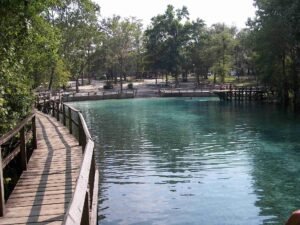
Both entrances have ADA-accessible restrooms and paved or boardwalk paths down to the water. Cell signal is spotty to nonexistent along most of the river itself, per visitor reports, so download any maps or plans before you leave the parking lot.
Wildlife you may see
Otters show up more than you'd expect, turtles are basically guaranteed — you'll lose count — plus wood ducks, limpkins, and gar hanging motionless in the current below you. Deer and wild turkey turn up along the Blue Hole trail early in the morning before the crowds arrive. By season: spring and early summer bring the most otter activity and nesting wood ducks; alligators are occasionally reported in the lower river in warmer months, rare and not near the main swim areas; winter mornings are the best bet for deer and turkey since the trails are close to empty.
History & background
The state bought this land in 1970 from a phosphate mining company, which is a strange thing to picture given how pristine it feels now. Long before that, Spanish missionaries built Fig Springs Mission here in the 1600s — the archaeological remains are still within the park boundary, one of those details that makes the place feel older than it looks.
Tubing here predates the state park by two decades — Gainesville college students were already floating the river for fun in the 1950s and 60s, and that grassroots tradition is part of why the state stepped in to protect it. The 1970 purchase was specifically from Loncala Phosphate Corporation, for $1.85 million, and the park earned National Natural Landmark status the following year, in 1971. Downstream, the Spanish mission site has since been provisionally identified as San Martín de Timucua, occupied in the first half of the 1600s.
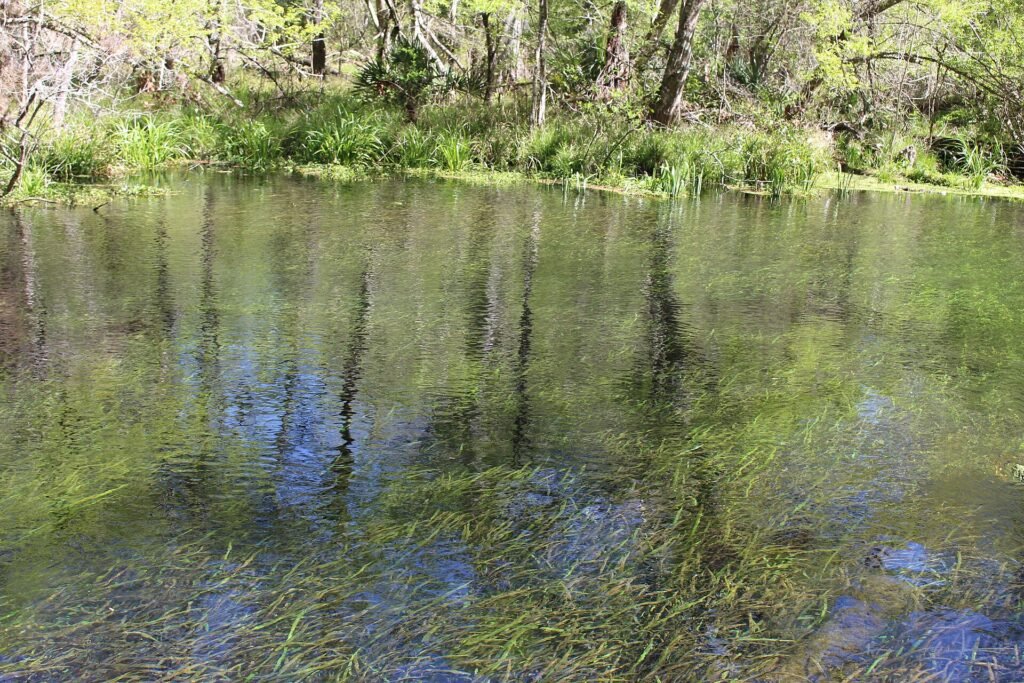
The park's history isn't all pristine, either: decades of heavy tubing traffic scoured stretches of the riverbed bare through the 1970s and 80s, uprooting the submerged grasses that keep the water so clear. A 1978 carrying-capacity study capped tubers at 3,000 a day; when that wasn't enough, the park split the river into managed sections in 1983 and tightened North Launch access again in 1989. Scientists have tracked recovery at fixed monitoring points ever since, and the vegetation has come back to near-equilibrium at nearly every site they check — a rare case of a crowded spring actually healing under a capacity limit instead of just absorbing the damage.
Map & directions
FAQs
What does Ichetucknee Springs cost?
Entry is $6 per vehicle (standard Florida state park rate), $4 for a single-occupant vehicle or motorcycle with 1-2 riders, and $2 per pedestrian, bicyclist, or extra passenger, per the park's own hours-and-fees page. Tube rental from the park concessionaire runs roughly $10-35 depending on the tube or raft style, on top of the tram wristband and gate fee.
What time does Ichetucknee reach capacity?
In summer, the park frequently reaches its daily visitor capacity by mid-morning — often between 9:30 and 10:30am on Saturdays. Arrive at opening (8am) to be safe.
How cold is the water at Ichetucknee?
A constant 72°F year-round, like nearly all Florida springs. It feels cold at first and perfect after two minutes.
Is Ichetucknee Springs good for toddlers?
Yes, especially at the north entrance's Head Spring and Blue Hole, which offer calm, shallow-edged swimming rather than the tube current. For tubing itself, rent a mesh-bottom tube or raft so a toddler can sit securely without slipping through, and use a life vest regardless of swimming ability.
Can you bring your own tube to Ichetucknee?
Yes — tubes just can't exceed 60 inches in any direction. Many families rent from roadside vendors on Hwy 27/47 before entering the park, which is usually cheaper and faster than any in-park option.
Is there cell service at Ichetucknee Springs?
Service is inconsistent through the park and can drop out entirely along parts of the river, so download any maps or information you need before you arrive, and let someone outside your group know your general plan for the day.
How long is the Ichetucknee tube float?
With the Midpoint launch closed, the current run from Dampier's Landing to the takeout is about a one-hour float, per the park's own tubing page — shorter than the classic 3.5-mile, multi-hour run many older writeups still describe.
What time do you have to be off the Ichetucknee River?
All visitors must be off the water and back at the dock by 6pm, even though the park gate stays open until sundown. Rental cutoffs are earlier: the North Boat Launch stops taking swimmers and boaters at 3pm, and tube rentals at Dampier's Landing close at 4:30pm.
Do you need a reservation to tube at Ichetucknee Springs?
No formal reservation guarantees entry. The park's FAQ states plainly that paying online in advance does not guarantee entry or let you skip the line at the ranger station — every entrance operates first-come, first-served, which is why arriving at 8am matters more than booking ahead.
Which Ichetucknee entrance is better for a first visit?
It depends on what you want: the south entrance (Dampier's Landing) is where tubing happens and draws the bigger, louder crowd; the north entrance (Head Spring and Blue Hole) is calmer, deeper, and better suited to snorkeling or just floating in place rather than drifting downstream with a group.
How much water does Ichetucknee Springs actually flow?
The park's eight springs together discharge a median of roughly 356 cubic feet per second (about 230 million gallons a day), according to hydrogeological studies of the system. Blue Hole is the single biggest contributor at about 96 cfs from a 37-foot vent; several of the smaller named springs put out under 5 cfs each.
Did tubing damage the Ichetucknee River?
Yes, historically. Decades of foot traffic in the 1970s and 80s stripped submerged grasses from long stretches of riverbed. The park responded with capacity limits starting in 1978 and tighter, zoned management by 1989, and monitoring since then shows the vegetation has largely recovered to near-equilibrium.
Where can you rent tubes near Ichetucknee Springs?
The park itself doesn't rent tubes at the gate — most visitors rent from roadside vendors along Highway 27/47 on the way in, which is typically cheaper and faster than waiting in an in-park line.
Are alligators a concern at Ichetucknee Springs?
They're occasionally reported in the lower river in warmer months but aren't a regular presence around the main swim and tube areas, and encounters are rare. Standard Florida spring caution applies: don't swim at dawn or dusk, and keep pets and small children close.
Visitor photos
See this week’s shots: Instagram #ichetuckneesprings · TikTok #ichetucknee
Great for: Family-Friendly · Kayaking · Snorkeling · Swimming · Tubing