Should you go?
Rainbow is often called the most beautiful of Florida's first-magnitude springs, and it is certainly the most effortless: $2 entry, gardens and man-made waterfalls from its roadside-attraction era, easy swimming in the headsprings, and a wide, gentle river.
The Rainbow River tube run (from the separate KP Hole county park entrance) is the relaxed alternative to Ichetucknee — wider, warmer-feeling, and far easier to get into on a summer Saturday.
Visiting
Headsprings entry is $2/person if you walk or bike in, but per the park's own hours-and-fees page, a standard vehicle of 2-8 people is actually $5, with $4 for a single-occupant vehicle — the flat '$2 entry' line you'll see repeated online is really the pedestrian/bicycle rate, not what most families driving in will pay. As of April 29, 2026 you need a day-use reservation to get in — book ahead, this isn't optional anymore, and the park's rollout also restricted in-person annual-pass sales to weekdays and non-holidays only.
Camping guests get headsprings access included with their site pass. Here's where people get tripped up on cost: that gate fee is just entry. Tubing is a completely separate paid experience, and there are two different ways to do it. The state park's own tubing operation runs about $27/person (a $25 tube plus the $2 fee), a shorter float of roughly 1.5-2 hours with a tram back to your car — no paddling required, tubes rented right at the launch, everyone gets the same basic tube.
Or there's KP Hole County Park nearby, which runs $25-30 all-in for a longer 4-hour float but doesn't allow you to bring your own tube or cooler. Either way, tubing only runs through September 30 — if you're planning a winter visit, the headsprings swim area is what you'll get, not tubing.
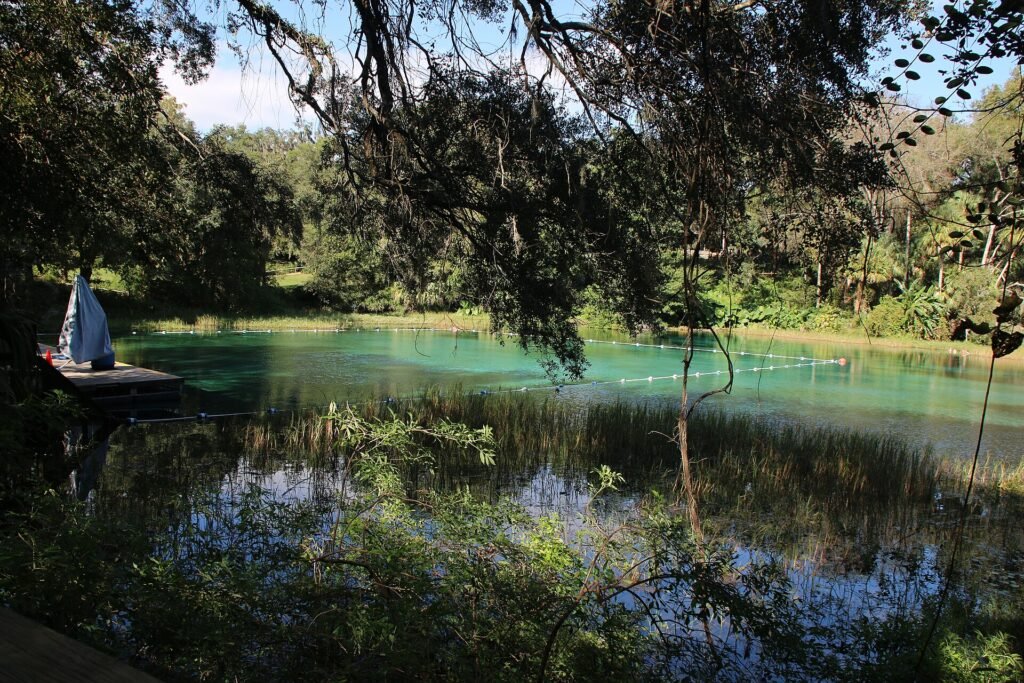
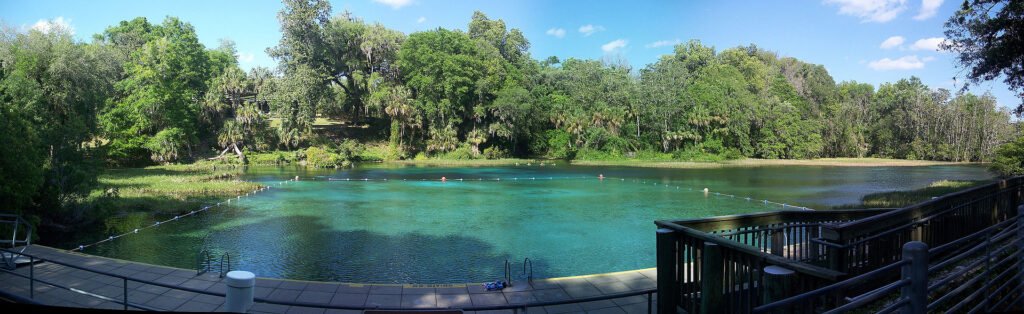
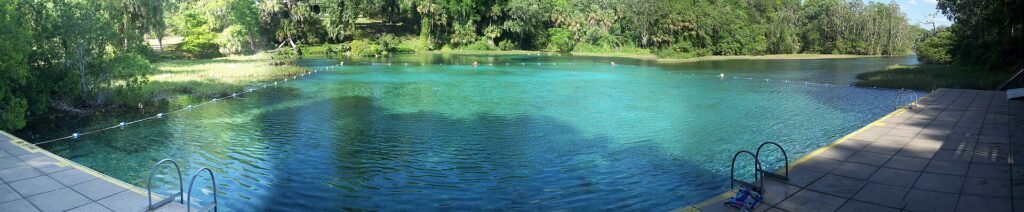
Per the park's own page, the tubing entrance itself keeps a tighter seasonal schedule than the headsprings: it's open daily 8am-4pm from Memorial Day through Labor Day, weekends-only 8am-4pm in the April-to-Memorial-Day and Labor-Day-to-September shoulder windows, and closed entirely October through March — the headsprings side, by contrast, stays open 8am to sunset all year. The headsprings themselves run 10-18 feet deep in the swimming area, so bring noodles or something to hang onto if your kids can't touch bottom — no inflatables, rafts, tubes, or balls are allowed there for safety reasons, that rule is strictly for the tubing side of the park.
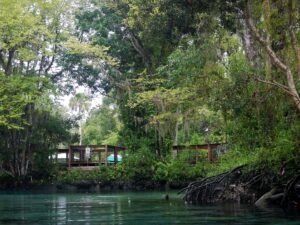
The headsprings area itself feels almost formal compared to some of the wilder springs on this list — landscaped gardens, ornamental waterfalls left from its old roadside-attraction days, and clear sightlines that make it easy to keep track of kids even in a crowd. It has a genuinely different character than the tubing side, which is much more river-adventure than manicured-park.
By the numbers: Rainbow is a first-magnitude spring group discharging around 600 million gallons a day (roughly 925 cfs) at full flow — one of the largest spring discharges in Florida. Water holds at a constant 72°F year-round. Dunnellon is right here; Ocala is about 25 minutes northeast, Gainesville roughly 50 minutes north, Tampa about 75 minutes south, and Orlando around 1 hour 45 minutes east, which makes it a realistic day trip from three different metro areas.
On diving: the park's own activity listing names swimming and snorkeling in the headsprings, with dive flags required by state law for snorkelers, but doesn't list scuba diving as an authorized headspring activity — treat it as off the table there and call the park directly if you're hoping to dive rather than snorkel.
When to go
April through September for tubing, since it closes for the season October 1. Year-round for the headsprings swim area, though you'll need that day-use reservation regardless of season. Weekday mornings are dramatically calmer than any summer weekend.
Local tips
Be ready for a longer walk from the parking lot to the actual spring than you'd expect — it caught more than one family off guard in reviews. If you've got a stroller, good news: most of the trails here are paved and genuinely stroller-friendly, which isn't true at a lot of springs on this list. There's a floating dock right at the headsprings entrance that kids love jumping off, and stairs leading into the water rather than just a drop-off bank.
Snorkeling in the buoyed swim area is popular and easy since the water's so clear you barely need the mask — but Florida law requires a dive flag if you're snorkeling. One family's honest note worth passing on: there's almost no shade on the tubing float itself, so sunscreen and a hat matter more here than at most springs. Also worth knowing before you picture postcard wilderness the whole way — part of the river run has houses along one bank.
Doesn't ruin it, just isn't the fully untouched feel some photos suggest. Reviewers who've done both tubing options are consistent on the tradeoff: the state park's own float is shorter, calmer, and simpler (rent, float, tram back, done), while KP Hole's longer run appeals more to groups who want to bring their own cooler and gear and make an afternoon of it rather than a quick float.
Multiple trip reports mention KP Hole's parking lot filling by mid-morning on summer weekends well before the water itself feels crowded, so an early start still matters even with the state park side now reservation-gated. Families who've brought toddlers describe the headsprings swim area as easier to manage than most because the buoyed zone is small and enclosed, but note the water is noticeably deep close to the entry stairs, so a life vest is worth it even for confident young swimmers.
Rules & restrictions
No inflatables, rafts, personal tubes, or balls allowed in the headsprings swimming area — safety rule, strictly enforced. Snorkelers need a dive flag by state law. Pets are welcome in the campground but not in swimming areas or buildings. Day-use reservation required as of April 2026.
Good to know
Dogs: Not in swim area. Season: Year-round.
Facilities
Four pavilions at the headsprings, good for a family reunion or a big group day. A separate campground a few miles from the main day-use area, with water/electric/sewer hookups (up to 50 amp) and ADA-accessible restrooms — camp check-in is 3pm, no early check-in. Gardens, waterfalls, and shaded nature trails, most of them paved. Dunnellon itself has more good food than its small-town size suggests. Go-For Donuts is a solid stop for breakfast on the way in — fresh donuts and iced coffee.
Blue Gator Tiki Bar has waterfront seafood and a laid-back vibe good for a post-swim lunch. If you're staying multiple days and find yourself near Crystal River (about 20 minutes away, and a natural pairing with a manatee-tour day), Cajun Jimmy's Seafood Seller gets repeated, enthusiastic recommendations from people who've been more than once.
Wildlife you may see
Fish and turtles are easy to spot from the clear water even without a mask. Otters turn up on the river paddle and reliably delight kids who've never seen one in the wild. Alligators are possible on the Rainbow River but genuinely uncommon — most visitors never see one. By season: otter sightings on the river paddle pick up in cooler months when the water's less crowded with tubers; wading birds and turtles are steady sightings year-round near the headsprings.
History & background
The site was called Blue Spring until the 1930s, when developers renamed it and built ornamental gardens, man-made waterfalls, and even a monorail as a roadside attraction competing with Silver Springs for tourist dollars. It's a National Natural Landmark today, and swimmers here are stepping into water people have used for over 10,000 years.
Dated specifics: the attraction operated through the 1930s-1960s with glass-bottom boat and, later, submarine-style underwater viewing tours, closed as a private tourist stop in the 1970s as unprotected competition and changing travel patterns wore it down, and sat mostly idle until the state bought it in 1990. The surrounding river picked up protective designations well before that purchase — a Registered Natural Landmark in 1972, State Aquatic Preserve status in 1986, and Outstanding Florida Waterway status in 1987.
Map & directions
FAQs
How much does Rainbow Springs cost?
Per the park's own hours-and-fees page, a standard vehicle (2-8 people) is $5, a single-occupant vehicle is $4, and pedestrians or bicyclists pay $2 — the '$2 entry' figure widely repeated online is the pedestrian rate, not the per-vehicle price most visitors actually pay. Tubing via KP Hole County Park or the park's own tubing launch carries separate fees.
Can you tube at Rainbow Springs?
Yes — the Rainbow River is a classic lazy tube run, launched either from the state park's own tubing entrance or from KP Hole County Park in Dunnellon. Tubing runs seasonally, roughly April through September, and is closed October through March.
Do you need a reservation for Rainbow Springs?
Yes — since April 29, 2026, all visitors need a day-use reservation to enter Rainbow Springs State Park, confirmed on the park's own hours-and-fees page. In-person annual-pass purchases are also now restricted to weekdays and non-holidays.
Is Rainbow Springs stroller-friendly?
The headsprings area, with its paved trails and landscaped gardens, is one of the more stroller-friendly springs on this list — much easier terrain than the natural-area parks. The walk from parking to the actual spring can be longer than expected though, so budget extra time.
Can you bring a cooler to Rainbow Springs?
Not into the headsprings swimming area or on the park's own tubing float — no inflatables, personal tubes, rafts, or coolers are allowed there for safety reasons. Personal tubes and coolers are allowed at KP Hole County Park, the alternate tubing entrance nearby, which runs under separate rules.
How far is Rainbow Springs from Crystal River?
About 20 minutes, which makes pairing a Rainbow Springs day with a Crystal River manatee tour a realistic two-spring trip if you're staying in the area a few days.
What are Rainbow Springs' tubing hours?
Per the park's own page, the tubing entrance is open daily 8am-4pm from Memorial Day through Labor Day, weekends only (8am-4pm) in the surrounding shoulder months, and closed entirely October through March. The headsprings side stays open 8am to sunset year-round.
Is Rainbow Springs open in winter?
The headsprings swim area is open year-round, 8am to sunset, but tubing is not available October through March — plan a winter visit around the headsprings rather than the river float.
How much water flows out of Rainbow Springs?
Around 600 million gallons a day (roughly 925 cfs) at full flow, making it one of the highest-discharge spring groups in Florida and one of the state's true first-magnitude springs.
Can you scuba dive at Rainbow Springs headspring?
The park's own activity listing names swimming and snorkeling for the headsprings, with dive flags required for snorkelers, but doesn't list scuba diving as an authorized headspring activity. Treat it as unavailable there and call the park directly before planning a dive trip.
When did Rainbow Springs become a state park?
Florida purchased the springs in 1990, after the site had operated for decades as a private roadside attraction (originally called Blue Spring, renamed Rainbow Springs in the 1930s) that closed to tourists in the 1970s. The surrounding river had already picked up protective designations — a Registered Natural Landmark in 1972, State Aquatic Preserve status in 1986, and Outstanding Florida Waterway status in 1987 — years before the state actually bought the property.
How far is Rainbow Springs from Ocala, Gainesville, and Tampa?
Roughly 25 minutes from Ocala, 50 minutes from Gainesville, and about 75 minutes from Tampa, which puts it within an easy day-trip radius of three separate metro areas.
Visitor photos
See this week’s shots: Instagram #rainbowsprings · TikTok #rainbowriver
Great for: Camping · Family-Friendly · Kayaking · Swimming · Tubing