Should you go?
Cypress Springs may be the most beautiful spring in the Panhandle, and you cannot drive to it. The first-magnitude vent sits on Holmes Creek, reachable only by kayak, canoe, or paddleboard — roughly a mile and a half from the nearest public launch.
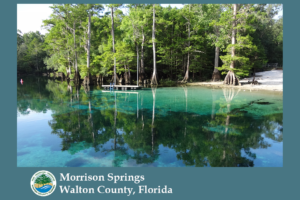
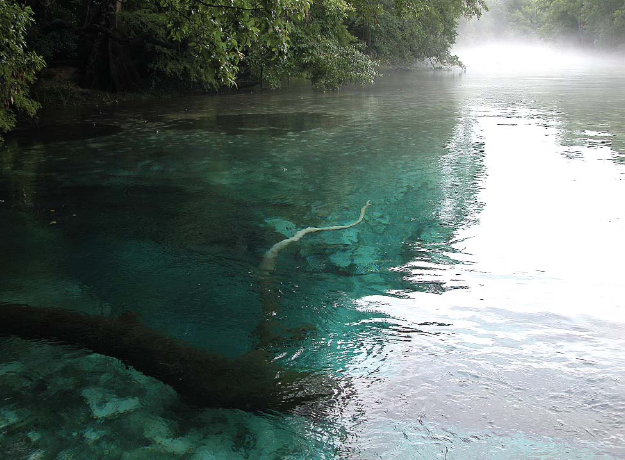
That barrier is why the water stays extraordinary: a deep blue boil you can watch from the surface with a mask, surrounded by cypress and almost no crowds on a weekday.
Is it worth the mile-and-a-half paddle? Yes, if you don’t mind working for your swim. It’s regularly named among the clearest swimming spots in the Panhandle, and the access difficulty is exactly what keeps crowds down even in summer. Families without their own boat shouldn’t be scared off either: several Holmes Creek outfitters now run all-downstream routes and rent transparent-bottom kayaks, and reports of successful trips with kids as young as four are common.
Visiting
Free to visit, but you need a boat. Launch at Cypress Springs Canoe Trail access on Holmes Creek near Vernon, or rent from local outfitters who also run shuttles. Allow two to three hours round trip with swimming time. There's more family infrastructure here now than the 'paddle-in wilderness' reputation suggests. One outfitter, Cypress Springs Kayak Rentals, includes a small water park — rope swing, water slide, diving board — free with any canoe or kayak rental (or $5/person entry alone), open 9am-5pm daily in season.
Several outfitters compete along Holmes Creek, so it's worth comparing routes: most shuttle you upstream and have you paddle back down to your car, but Holmes Creek Canoe Livery runs a version that's all-downstream, avoiding the harder upstream leg entirely — a real plus for families with young kids or less confident paddlers. Real families with kids as young as 4 report successfully doing this trip and having a great day.
Per SpringsInFlorida.com, the spring discharges roughly 65 million gallons of water a day at a constant 70°F, and its basin — about 25 feet deep around the edges — drops through a narrow opening to roughly 75 feet, which is why certified divers treat it seriously even though it's popular with casual snorkelers on the surface. One outfitter, Canoe Adventures at 3342 Roche Ave in Vernon, runs by-appointment trips daily from 8am to 5pm and offers both a roughly 1-mile and a 3-mile route into the spring, per their own site — worth asking about if you want a shorter or longer paddle than the standard trip.
By the numbers: first magnitude, roughly 65 million gallons a day, a steady 68-70°F year-round, basin about 25 feet deep at the edges dropping to roughly 75 feet through the vent. It's about 20 miles/30 minutes from Chipley, 45 miles/1 hour from Panama City, and 100 miles/2 hours from Tallahassee.
The spring sits inside private land that the surrounding tract's owner acquired in the early 2000s (long associated with Nestlé Waters North America's bottling operation in the area), and 'No Trespassing' signs line the western shore of the spring run — the only legal way in is still by water, via a roughly half-mile paddle up the spring run from either of two public landings on Holmes Creek. Cotton Landing is a Northwest Florida Water Management District recreation area with an ADA-accessible boardwalk, a covered picnic pavilion, and parking, about three miles north of Vernon off CR 277. Culpepper Landing (3081 Culpepper Lane) is the smaller alternate launch, roughly 15 paddling minutes downstream of Cotton Landing. Most guided and rental trips run one direction between the two landings, so you're not fighting current on the return leg. The water management district later partnered with Washington County and the landowner on a conservation easement over the surrounding tract, which protects the land from development even though it remains privately owned and closed to walk-in access.
When to go
Weekday mornings in late spring or early autumn. Summer weekends bring a boat crowd even here.
Local tips
Solid firsthand crowd or parking reports are harder to find for Cypress Springs than for drive-up springs, since access requires a boat — but outfitters describe business increasing steadily as the weather warms, with spring and fall weekdays the reliable quiet window and summer weekends drawing an actual boat crowd even here.
Bring sunscreen, drinking water, lunch, and bug spray; there's no store or shade structure once you're on the water. The paddle itself runs one of two ways depending on which outfitter you book — some are a straightforward 1-mile trip to the spring and back, others run a longer 3-mile loop, so confirm distance before committing if you're paddling with young kids or a nervous group. Fishing rods are worth bringing along; visitors report catching bream and bass in Holmes Creek en route.
Water holds a steady 68–70°F year-round, cooler than the standard 72°F baseline at most Florida springs, which surprises some first-time swimmers expecting bathtub warmth. There's no cell service once you're away from the launch, so download any map or directions ahead of time rather than counting on your phone.
Stay in your boat or in the water near the western shore of the spring run — the land there is private, and No Trespassing signs are posted. Cotton Landing and Culpepper Landing, both about a half-mile paddle from the spring, are the only legal public launches; most outfitters shuttle one-way between the two so you don't have to fight the current back upstream.
Some recent paddler reports describe a visibly worn bank and a sandy, largely fish-free bottom right at the spring mouth from heavy boat and swimmer traffic — a contrast to the pristine reputation the spring carries online, and a reason to treat the shoreline gently if you do stop nearby.
Rules & restrictions
No facilities, no lifeguard, no cell service. Paddle in with everything you need and take it all out. Land access is private — stay off the shoreline near the No Trespassing signs on the spring run's west bank and enjoy the spring from your boat or the water itself. The cave openings inside the spring are certified-diver-only territory; the basin's edges run about 25 feet deep before a narrow opening drops to roughly 75 feet.
Good to know
Dogs: Yes (natural area). Season: Year-round.
Facilities
None at the spring itself. Restrooms and parking exist at the public launch; outfitters near Vernon rent boats and run shuttles. While the spring itself has no facilities, several outfitters along Holmes Creek now offer parking, shuttles, and at least one includes a small water park (rope swing, slide, diving board) as part of the rental. Cotton Landing, the main public launch, is a Northwest Florida Water Management District recreation area with an ADA-accessible boardwalk, a covered picnic pavilion, and parking, about three miles north of Vernon off CR 277. Culpepper Landing (3081 Culpepper Lane) is the smaller alternate launch, about 15 paddling minutes downstream of Cotton Landing, and most outfitter shuttle trips run one direction between the two so you're not paddling back upstream.
Wildlife you may see
Turtles, bass, and bream in astonishing clarity; ospreys and herons along Holmes Creek, with otters occasionally seen from a boat.
History & background
The spring has long been a locals' secret on Holmes Creek, protected by the simple fact that no road reaches it. Cypress Spring was reportedly a land-accessible, walk-in swimming and diving spot for much of the 20th century before the surrounding tract changed hands in the early 2000s, an ownership long associated with Nestlé Waters North America's regional water-bottling operation. The new owner posted the shoreline against trespassing, cutting off the walk-in access that generations of Panhandle locals had used, leaving the roughly half-mile paddle up the spring run from Cotton Landing or Culpepper Landing as the sole legal way to reach the spring today. The Northwest Florida Water Management District later partnered with Washington County and the landowner on a conservation easement over the surrounding land, protecting it from further development while it remains privately held. Certified cave divers have explored the vent to at least 65-75 feet, and the spring basin itself sits roughly 25 feet deep around the edges before the narrow opening drops off into that cave system.
Map & directions
FAQs
How do you get to Cypress Springs?
Only by water — Cypress Spring is about a 10-minute paddle from Cotton Landing, a public launch three miles north of Vernon off Highway 277 (Culpepper Landing is the alternate launch). Bring your own boat or rent a kayak or canoe from a local outfitter offering shuttles.
Is Cypress Springs free?
Yes, the spring itself is free. You will pay only for a rental or shuttle if you don't have your own boat.
Is Cypress Springs worth the paddle?
For clear-water swimming and snorkeling, it's among the best in the Panhandle — the access difficulty is exactly why it stays pristine.
Is Cypress Springs good for young kids?
More than the paddle-in reputation suggests — real families with kids as young as 4 report successful trips, especially with an outfitter offering an all-downstream route rather than requiring an upstream paddle first.
Is there anything for kids to do besides paddle at Cypress Springs?
Yes — one outfitter includes a small water park (rope swing, slide, diving board) free with rental, a nice bonus before or after the paddle.
Which Holmes Creek outfitter is easiest for beginners?
Look for one offering an all-downstream route rather than an upstream-then-downstream trip — it removes the hardest part of the paddle for less experienced or younger paddlers.
How deep is Cypress Springs?
Its basin runs about 25 feet deep around the edges, with a narrow opening inside that drops to roughly 75 feet — real cave-diving depth, per SpringsInFlorida.com, even though most visitors only see the clear surface water.
How much water does Cypress Springs produce?
Roughly 65 million gallons a day at a constant 70°F, per SpringsInFlorida.com, putting it among the higher-volume first-magnitude springs in the Panhandle.
Does rain affect Cypress Springs' clarity?
The vent itself stays clear, but because it sits directly on Holmes Creek, heavy rain can push tannic creek water into the approach and dull visibility for paddlers until levels drop again.
Is Cypress Springs open year-round?
Yes — there's no gate or seasonal closure at the spring itself, though outfitter rental hours and availability can shift seasonally, so call ahead in winter.
How cold is the water at Cypress Springs?
A steady 68–70°F year-round, per SpringsInFlorida.com — cooler than the roughly 72°F baseline most Florida springs hold, which catches some first-time swimmers off guard.
Why can't you drive to Cypress Springs?
The land surrounding the spring was privatized in the early 2000s and closed to walk-in access, with No Trespassing signs posted along the spring run. Water access via Holmes Creek is now the only legal way in.
Where do you launch for Cypress Springs?
Cotton Landing, a Northwest Florida Water Management District recreation area off CR 277 north of Vernon, or Culpepper Landing on Culpepper Lane. Both are about a half-mile paddle from the spring, and most outfitters shuttle one-way between the two.
Is Cypress Springs privately owned?
Yes. The land around the spring is private, long associated with Nestlé Waters North America's bottling operation in the area, though the Northwest Florida Water Management District has since partnered with the county and the landowner on a conservation easement that protects the surrounding land from development.
Is the water always crystal clear at Cypress Springs?
The vent itself usually is, but paddlers have reported a worn bank and sandy bottom near the spring mouth from heavy traffic, and creek water can cloud the approach after rain.
Where is Cypress Springs, Florida, and can you swim there?
Cypress Springs is on Holmes Creek near Vernon, in Washington County in the Florida Panhandle. Swimming and snorkeling are done from your boat or in the water, since the land around the spring is private and posted against trespassing. Cotton Landing (3008 Highway 277), the closest public launch, is open sunrise to sunset.
Visitor photos
See this week’s shots: Instagram #cypresssprings · TikTok #cypressspringsflorida
Great for: Free Entry · Kayaking · Snorkeling · Swimming