Should you go?
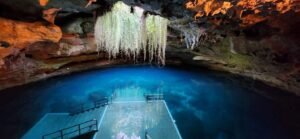
Two minutes from Devil's Den, Blue Grotto is the serious sibling: a 100-foot-deep cavern with famously clear water, a permanent air bell 30 feet down, and platforms that make it the state's favorite dive-training site.
This one is for divers — swimmers should book Devil's Den instead — but for certification dives and cavern experience, nothing in Central Florida beats it.
Visiting
Daytime diver admission is $61/person (verified against divebluegrotto.com, updated 2026); night dive $31; snorkelers $23 but only on weekdays or as part of a group that includes divers; non-diver walk-in $7. Open Water certification covers the cavern (recommended 60ft max); the separate cave requires full cave certification and a guide. The famous 30-foot air bell is fed by a surface compressor. Air fills $12. Open daily 8am-4pm, closed major holidays. Not a swimming spring — water access is for certified divers (and limited snorkelers) only.
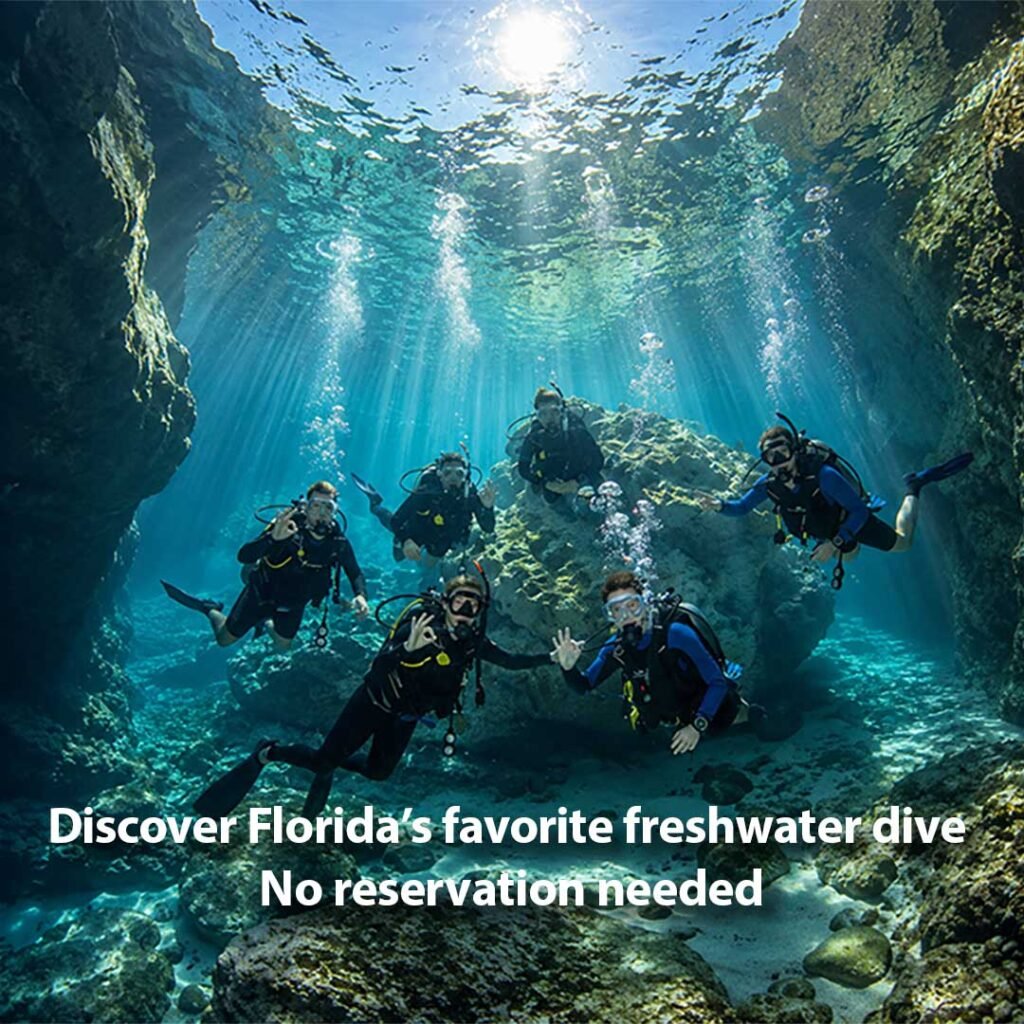
For scuba: Florida's best training cavern — a lit, guideline-equipped cavern with a submerged air bell at 30 feet where you can surface, take out your regulator, and chat with your buddies underwater. For snorkel: A cavern snorkel with exceptional visibility and the novelty of swimming near the famous 30-foot air bell where divers surface to chat.
For families staying overnight, this is more resort than rustic — a pool, basketball court, and ping pong table keep non-diving kids entertained, and more than one camping family reports never hearing a complaint about being bored the whole trip. Camping runs around $15/site; cabins range from tight efficiency units (sleeps about 2 comfortably, 4 if very close) to two-bedroom options, all clean and functional rather than luxurious.
By the numbers: the cavern is laid out in zones — a roughly 50-foot-deep upper chamber with a wide, well-lit entrance, an open basin around 40 feet, and a lightless lower chamber open only to guided, cave-certified divers, with the vent itself bottoming out around 100 feet. Blue Grotto sits in Williston, about 25 miles southwest of Gainesville and 30 miles northwest of Ocala. No reservation is required for a standard day of diving — rental gear is strictly first-come, first-served and can't be booked ahead — but night dives and any pool-based instruction need to be arranged in advance. A diver-plus-gear-rental package runs $114/person, and instructors bringing non-diving students pay a $6.49/person daily add-on on top of the $6/student pool fee (2-hour, 4-student minimums).
When to go
Weekday mornings for the clearest water and fewest classes in the cavern.
Local tips
Book alongside Devil's Den for a two-site Williston dive day. Midweek mornings get the glassiest water. Virgil, the resident softshell turtle, is a genuine fixture — divers feed and interact with her regularly, and she's become enough of a personality that staff and repeat visitors know her by name. Bring a good dive light regardless of certification level; at 90 feet it gets genuinely dark even in clear water.
Rental gear is first-come, first-served only — you can't reserve it ahead, so arrive early if you're counting on borrowing anything. Regulars specifically call out staff members Kurt, Harry, and Sandy by name for being especially helpful with first-time cavern divers. If you're bringing students to train in the on-site pool, budget $6/student with a 2-hour and 4-student minimum, plus the daily walk-in fee for any non-diving students in the group.
Rules & restrictions
Open-water certification required for the cavern zone, full cave certification beyond posted limits. No reservation needed for a standard day of diving or weekday snorkeling; night dives and pool-based group instruction do require advance arrangements. Not a swimming destination.
Good to know
Dogs: No pets. Season: Year-round.
Facilities
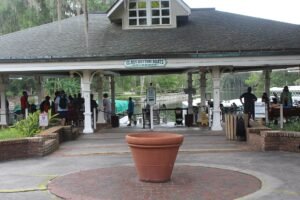
Dive shop with air fills and rentals, restrooms and showers, camping and lodging for dive groups, picnic areas, and training platforms. A huge deck overlooking the water provides ample space for gearing up, with benches and tank-securing loops throughout — reviewers repeatedly note how well-organized the layout is for a group getting ready to dive.
The resort's own history page notes the property has grown to its current footprint through a later land purchase beyond McQuarrie's original 1963 acreage, which is part of why there's enough room today for camping, cabins, and a full dive-training operation on what started as a single farm sinkhole.
Outdoor hot-water showers and dedicated gear-rinse stations sit right on the main deck alongside the standard restrooms — a detail repeat divers specifically call out as better-appointed than most Florida spring dive sites.
Wildlife you may see
Limited wildlife — this is a geology and training site. A resident softshell turtle named Virgil has been a fixture for years.
History & background
The cavern has been operated as a dive site since the 1970s and is among the most-used training locations in Florida, with a permanent air bell installed for instruction. Despite being technically overhead of an environment for a sinkhole, the atrium's open, well-lit design makes it feel considerably less intimidating than traditional cavern sites.
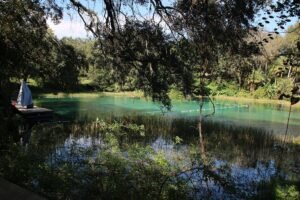
According to Blue Grotto's own history of the property, the site's real origin goes back further: Tom McQuarrie, who ran two Crystal River businesses (Fisherman's Pier and a diving-focused operation called Aqua Pier), bought the surrounding land in 1963 after evaluating several possible spring sites. What he found was rough — the sinkhole, then called "Blue Sink," sat on old farmland with cattle and a pecan grove, the bottom was littered with trash, and getting in or out involved a treacherous, unimproved path.
McQuarrie renamed it Blue Grotto, cleaned it up, later added ten more acres to establish the property's current boundaries, and opened it to divers in 1965. He made his last visit to the resort in 2015 and, by his family's account, was pleased with how far it had come from the overgrown farm sinkhole he'd first bought. His son later documented the whole story in a book, Crystal River and Blue Grotto: The McQuarrie Chronicles, sold in the resort's own store.
Map & directions
FAQs
Is Blue Grotto good for families camping?
Yes for non-diving family members especially — the resort has a pool, basketball court, and ping pong table, and camping families consistently report kids staying entertained the whole visit.
What's the deal with Virgil the turtle at Blue Grotto?
Virgil is the resident softshell turtle, a genuine fixture divers interact with regularly — one of the site's most-mentioned charms in reviews.
Is Blue Grotto crowded?
It varies — weekends and dive-class days can feel busy, but weekday visits are frequently described as nearly empty, sometimes just one other group on site.
Are there cabins at Blue Grotto?
Yes, ranging from tight efficiency units to two-bedroom options, all clean and functional. Camping is also available for around $15/site.
Who founded Blue Grotto?
Tom McQuarrie, who bought the property in 1963 after running two dive-related businesses in Crystal River. He renamed the sinkhole (previously called Blue Sink) and opened it to divers in 1965, per the resort's own history page.
What did Blue Grotto look like before it became a dive resort?
Rough farmland — the sinkhole sat on a property with cattle and a pecan grove, the bottom was littered with debris, and access involved an unimproved, treacherous path, according to Blue Grotto's own account of its history.
Do you need a reservation to dive Blue Grotto?
Not for a standard day of diving — walk-ins are fine. Night dives and pool sessions for student groups need to be arranged in advance, and rental gear is first-come, first-served with no way to reserve it ahead.
How deep is the cavern at Blue Grotto?
It's laid out in zones: a roughly 50-foot-deep upper chamber with a wide entrance, a 40-foot open basin, and a lightless lower chamber that's off-limits without a cave-certified guide. The vent itself bottoms out around 100 feet.
Is Blue Grotto ever closed?
Yes — it closes on Thanksgiving, Christmas Eve, Christmas Day, and Easter. Otherwise it's open daily 8am to 4pm.
How far is Blue Grotto from Gainesville and Ocala?
About 25 miles from Gainesville and 30 miles from Ocala, both roughly 30-40 minutes by car — close enough that either city works as a day-trip base.
Visitor photos
See this week’s shots: Instagram #bluegrotto · TikTok #bluegrottodive
Great for: Scuba Diving · Snorkeling