Should you go?
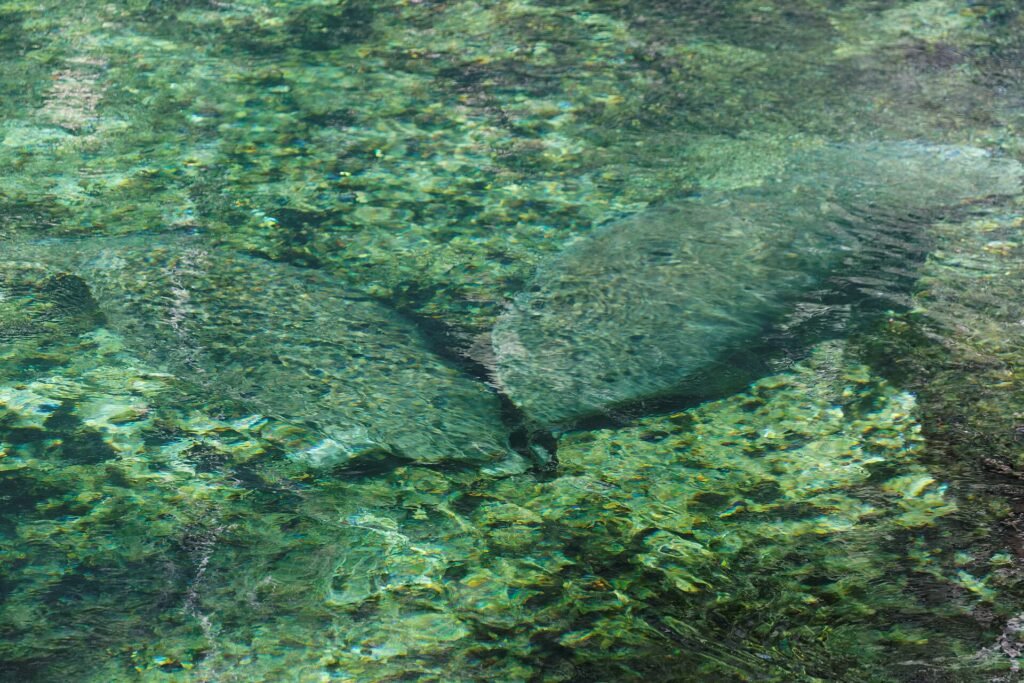
From roughly November through March, hundreds of manatees crowd into Blue Spring's warm run to escape the cold St. Johns River — counts in recent winters have topped 700 on cold mornings. The boardwalk view of that gathering is one of the best wildlife spectacles in the eastern United States.
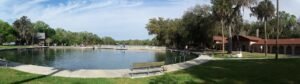
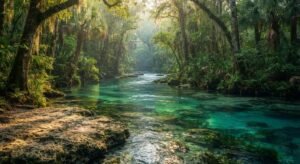
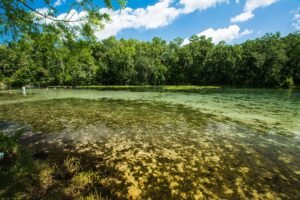
In summer the manatees disperse and the run opens to swimmers and snorkelers, becoming a superb (and popular) swimming spring a half hour from Orlando.
Visiting
Big change as of July 15, 2026: Blue Spring now requires a day-use reservation for every visitor, confirmed on the park's own reservation FAQ page and covered by multiple Central Florida news outlets at rollout. You book online up to 60 days ahead, pay the normal $6/vehicle ($4 solo, $2 per pedestrian/bike/extra passenger) entry fee at booking, and that reservation guarantees you one entry at any point during park hours — there's no extra reservation fee on top of the gate price.
Skip this step and you will not get in; the only visitors exempt are overnight campers (their camping booking covers entry), concession customers, and anyone buying an annual pass in person at the ranger station on a weekday. Cancel ahead of time and the entry fee is refunded; no-show and it isn't.
Re-entry on the same reservation if you leave and come back isn't guaranteed — it depends on whether the park still has capacity when you try to return, so plan your day assuming you're in once, not in and out. This is a real shift from how the park worked before: the old advice of just showing up at 8am to beat the crowd no longer applies the same way, since a full day's reservations can be booked out entirely before you ever get in the car.
Six dollars a vehicle is still one of the best per-person values on this list once you're inside — Blue Spring is where hundreds of manatees pack into the run every cold snap — a record 932 were counted one January morning in 2024 — and you watch it all from a boardwalk, no boat, no wetsuit, nobody in the water with them. One thing worth saying clearly since people get this confused with Crystal River: you cannot swim with the manatees here.
The run closes entirely to swimmers and paddlers from mid-November through mid-March while they're present, and rangers actively enforce it. That closure is the tradeoff for the sightings — come in summer and you get a gorgeous, clear swimming spring with nobody watching from a boardwalk; come in winter and you get the manatees but stay dry. The colder the morning, the more manatees show up, so if you're chasing numbers, aim for the coldest weekday you can manage rather than a mild Saturday.
The layout makes this easy to navigate even with a stroller or a slow toddler pace — the boardwalk from the parking area to the main viewing spots is a gentle, well-marked walk, not a hike. On a good winter morning the boardwalk itself becomes part of the experience: rangers are often posted along it happy to answer questions, and there's a genuine sense of occasion when the manatee count for the day gets posted at the entrance and it's in the hundreds.
By the numbers: Blue Spring is a designated first-magnitude spring and Outstanding Florida Spring, discharging roughly 102 million gallons a day into the St. Johns River, per Florida State Parks and the St. Johns River Water Management District. The spring pool runs about 135 feet north-south by 100 feet east-west, with the main vent roughly 40 feet down and a limited mapped cave system beneath it; the run itself is about 0.4 mile long and 70-100 feet wide before it meets the river. Water stays close to 73°F year-round, which is a big part of why manatees pack in here. Orange City sits about 30 minutes north of Orlando, 30 minutes west of Daytona Beach, and roughly 1 hour 45 minutes south of Jacksonville.
When to go
January is the single best month for manatee numbers — a hard cold front can bring hundreds. November through mid-March generally, but the coldest mornings are when it's worth the early alarm. June through September for swimming the run, when it's open and the crowds are lighter than winter's manatee rush.
Local tips
Get there before 8am if manatee season is the plan. Multiple families have reported waiting 30+ minutes just to get through the gate by mid-morning, and the lot fills not long after — arrive at opening or you'll be standing in a line of cars instead of on the boardwalk.
Since the July 2026 reservation requirement started, that early-arrival advice matters less for simply getting in the gate (your reservation does that) and more for beating other reserved visitors to the closest boardwalk parking and the best manatee-viewing spots once you're inside. There's a playground right near the parking lot, which is either a blessing or a curse depending on how badly your kids want to see manatees first — ours would happily get distracted there before we'd even reached the water.
Worth knowing: the boardwalk is genuinely great for kids even without manatees, since the fish alone tend to hold their attention. The historic Thursby House has a porch with rocking chairs that's a nice spot for a parent to sit while the kids run the front lawn — small thing, but it's there if you need five minutes.
Coverage of the new reservation rollout notes summer weekend day-use slots have been booking out days in advance, so treat the 60-day booking window as something to use immediately once your travel dates are set rather than a backup plan.
The closest other springs on this site are De Leon Springs, about 25 minutes north, and Wekiwa Springs, about 45 minutes southwest — both worth having as a backup plan if Blue Spring's reservation slots are full for your dates.
Rules & restrictions
The spring run closes to all swimmers and paddlers roughly November 15 through March 15 while manatees are present — check current dates before assuming you can swim. Never touch, follow, or feed a manatee; rangers and FWC officers actively patrol for this and will intervene. Alligators are mostly on the St. Johns River side, not the spring run itself, but stay alert regardless.
Good to know
Dogs: Park yes, not in water. Season: Swim closed in manatee season (Nov–Mar).
Facilities
Restrooms and changing rooms, a snack bar, canoe and kayak rentals, a campground with cabins, and a playground near the lot. A vending machine and small laundry area sit near the restrooms for campers. The Thursby House offers a shaded porch and some historical displays. For food, Blue Spring Pizza is close by in Orange City if you want something quick and casual, and Riverwalk Pizzeria & Brew Pub hosts a family-friendly bingo night Wednesdays if your visit happens to land right.
For something more memorable, De Leon Springs State Park is a short drive away and home to the Old Spanish Sugar Mill Restaurant, where you cook your own pancakes at a griddle built into your table — a genuinely fun stop with kids if you have the extra time. DeLand's historic downtown, with its shops and cafes, is also worth the short drive if you want to make a full day of it.
Per the park's own hours-and-fees page, camping runs $24/night plus tax, a $6.70 nonrefundable reservation fee, and (for RV sites) a $7/night utility fee covering electric and water; Florida residents 65+ or with a disability certification get a 50% discount on the base site fee.
The park's cabins run $95/night plus tax and the same $6.70 reservation fee and $7 utility fee, with a two-night minimum stay.
Wildlife you may see
In winter, manatees — sometimes hundreds on a good morning. Year-round: gar and other fish easily visible in the clear water (often more captivating to kids than the manatees), turtles, alligators mainly on the St. Johns side, and a good chance at otters along the run.
By season: winter (December–February) is peak manatee season, with counts climbing after cold fronts. Spring migration (March–April) brings a good run of warblers and other songbirds along the nature trail. Summer is prime for gar, turtles, and the occasional otter in the clear run. Fall is the transition period, as the first manatees start arriving once St. Johns River water temperatures drop, usually by mid-November.
History & background
A 1971 Jacques Cousteau documentary put this spring on the map and helped drive its protection. The Thursby House on the bluff dates to 1872, one of the area's earliest homesteads, and still stands with a few displays open to visitors.
Botanist John Bartram recorded visiting the spring in 1766. The Weismore family later built a plantation-style home on the bluff and grew citrus there until a hard freeze in the 1890s wiped the groves out, pushing the property toward tourism instead of farming. The state bought the park in 1972 specifically to protect the wintering manatee population, and researchers have tracked individual manatees here — births, deaths, and family relationships — in an ongoing study dating back to 1978.
Map & directions
FAQs
When can you see manatees at Blue Spring?
Manatee season runs roughly mid-November through March, with the biggest counts on the coldest mornings. The park posts daily counts in season.
Can you swim with manatees at Blue Spring?
No. The spring run closes to swimmers during manatee season — viewing is from the boardwalk. Legal in-water manatee encounters happen only at Crystal River on permitted tours.
Does Blue Spring State Park fill up?
Yes — on cold winter mornings and summer weekends the park regularly hits vehicle capacity early, and since July 2026 those days can book out entirely through the reservation system before you'd even arrive. Book your reservation as soon as your dates are set.
Can toddlers handle the walk at Blue Spring State Park?
Yes — the boardwalk from parking to the main viewing areas is flat, well-marked, and stroller-friendly, more of an easy walk than a hike, which makes it one of the more manageable springs on this list for very young kids.
Is there a manatee festival at Blue Spring?
Yes, an annual Manatee Festival is held in nearby Orange City during winter to celebrate the seasonal manatee gathering — check the city's event calendar for current dates if visiting during that window.
What's the best viewing spot for manatees at Blue Spring?
The boardwalk running from the parking area out to where the spring run meets the St. Johns River has multiple overlooks, and the mouth of the run — where the two waters meet — tends to be where the most manatees congregate.
Do you need a reservation for Blue Spring State Park?
Yes, as of July 15, 2026. Every day-use visitor must book an entry reservation online up to 60 days in advance; there's no extra fee beyond the normal gate price, and the only visitors who don't need one are overnight campers, concession customers, and in-person annual-pass buyers. Showing up without one means you won't get in.
How much does camping cost at Blue Spring State Park?
Per the park's own fee page, tent/RV camping is $24/night plus tax, a one-time $6.70 nonrefundable reservation fee, and a $7/night utility fee for RV sites. Cabins run $95/night plus tax with the same reservation and utility fees and a two-night minimum stay.
What happens if you no-show your Blue Spring reservation?
The reservation fee is only refundable if you cancel ahead of time. A no-show forfeits the entry fee, per the park's own reservation FAQ.
Can you leave and come back to Blue Spring on the same reservation?
Re-entry isn't guaranteed. The park's FAQ states that returning on the same day's reservation depends on available capacity at the time you try to re-enter, so it's safer to plan your visit as a single continuous stay.
Is there cell service at Blue Spring State Park?
Signal is generally reliable near the entrance and Thursby House, but it can weaken along the far end of the boardwalk and inside the campground. Don't count on a strong signal everywhere in the park.
Can you bring your own kayak or canoe to Blue Spring?
Yes, you can launch your own canoe or kayak on the spring run outside manatee season, when paddling closes along with swimming. The park also rents canoes and kayaks on-site if you'd rather not bring your own.
Are there alligators at Blue Spring State Park?
Alligators are part of the ecosystem but are mostly seen on the St. Johns River side rather than in the spring run itself, where cold, clear water and heavy foot traffic keep them less common. Stay alert near the river and never swim outside designated areas.
Visitor photos
See this week’s shots: Instagram #bluespringstatepark · TikTok #bluespringstatepark
Great for: Family-Friendly · Kayaking · Manatees · Snorkeling · Swimming