A Florida spring is a pool of clear, cold groundwater welling up out of limestone, and your first visit will go better if you know three things going in: the water is colder than you think, the fee is usually per vehicle, and the parking lot fills up faster than the drive down suggests. Everything else is details. Here’s what actually happens on a first trip, and the six mistakes almost everyone makes exactly once.
What a spring actually is
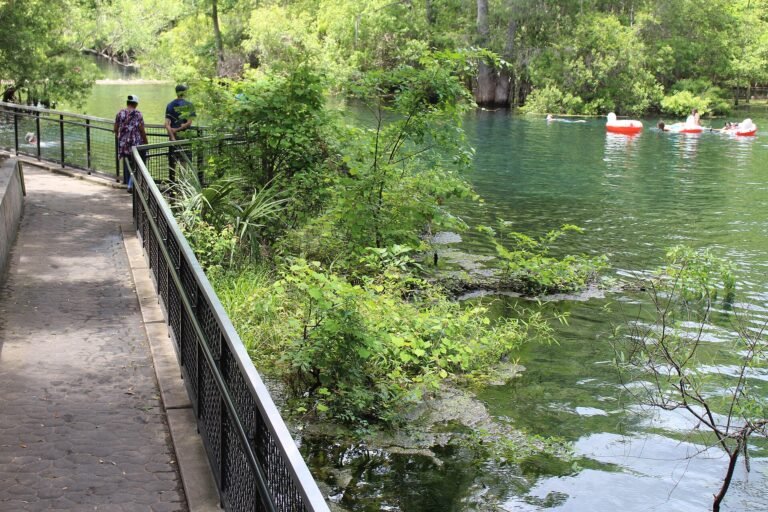
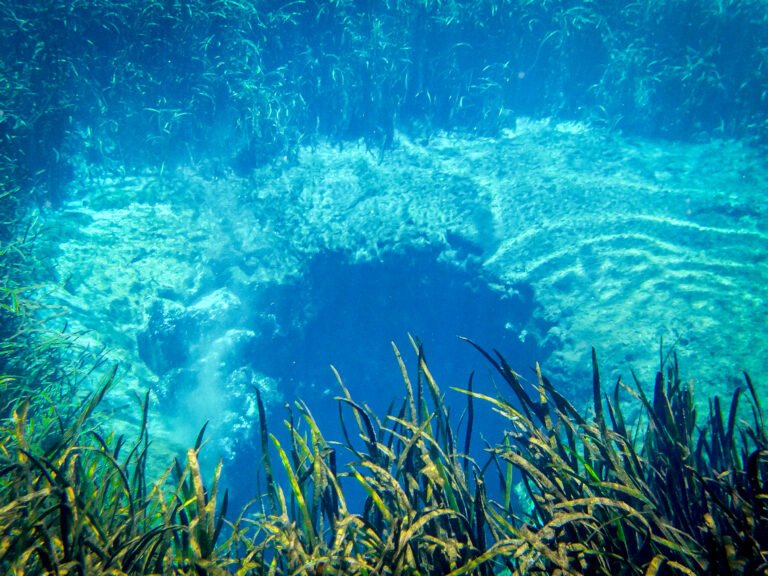
Every spring has three parts, and knowing the vocabulary helps you read a park map or a ranger’s directions. The boil is the vent where water pushes up out of the aquifer — sometimes a visible sandy crater, sometimes a dark slot in the limestone, sometimes (at a big spring like Wekiwa or Manatee) an open blue pool you can swim right over. The run is the stream the spring forms as it flows toward a river — this is the part you tube, paddle, or snorkel down at places like Ichetucknee or Rainbow. The swim area is whatever the park has fenced, roped, or otherwise designated for people to actually get in the water, and at most parks it’s smaller than the whole spring — there’s usually a roped-off deep section over the boil, a shallower swim zone, and areas marked off-limits to protect vegetation or a spring vent. Don’t assume the whole spring is swimmable just because you can see it.
The 72°F shock
Florida’s major springs hold at roughly 72°F year-round because the water has been underground long enough to reach the constant temperature of the aquifer. (Warm Mineral Springs, down in Sarasota County, is the exception — it runs close to 85°F and is not part of this rule.) 72°F sounds mild on paper. In practice, stepping into it on a 95°F July afternoon is a genuine gasp — cold enough that first-timers often yelp, hyperventilate for a second, and then acclimate within a minute or two. The second time you get in that day, it somehow feels colder, not warmer — your body’s already given up the heat it built back up on shore. Kids and older adults chill faster than they realize because the cold masks fatigue; if lips start looking blue or teeth are chattering, it’s time for a break in the sun, not a tougher-it-out lap. In winter, that same 72°F water feels warm compared to 50°F air, which is why manatees pile into springs like Blue Spring and Three Sisters from November through March — see our manatee season guide for where and when.
What it actually costs
Most Florida state park springs charge per vehicle, not per person — typically $6 for a vehicle with 2–8 people, $4 for a single-occupant vehicle, and $2 for someone arriving on foot or by bike. That means a family of five in one car pays the same $6 as a couple. Some springs break from that model entirely: Silver Glen and Juniper are U.S. Forest Service concession sites and charge per person (around $14.50/person as of 2026), Salt Springs runs $14.50/person plus tax, and privately-run springs set their own pricing entirely — Ginnie Springs is $25/adult March–October and $20/adult November–February (kids 4–12 $6/$5, under 3 free), Devil’s Den charges $30 for snorkeling by reservation, and Vortex Spring is $15/adult and $10/child. Poe Springs is $6/vehicle May through September and free October through March. None of this is one-size-fits-all, so check the specific spring’s page before you drive. Our fee breakdown post covers every model in detail, and if you’re going to hit more than a couple of state parks in a year, the annual pass math is worth doing before your second trip.
Reservations and capacity closures
Several popular springs now require an advance day-use reservation, and showing up without one means getting turned around at the gate. As of 2026, Rainbow Springs and Wekiwa Springs both require reservations booked ahead through the state park system, and Ichetucknee’s North launch is capped at 750 tubers a day. Even parks without a formal reservation system close their gates once the parking lot is full — a hard capacity limit, not a suggestion — and on a hot Saturday in June or July that can happen by 10 or 11am. Our reservations and closures guide lists which parks fill up and roughly when, and it’s worth a five-minute read before you plan a weekend trip around a specific spring.
The arrive-at-opening rule
This is the single best piece of advice for a first trip: get to the gate at or before opening time, not after. Most state park springs open at 8am. Arriving at 8am on a summer weekend means an open parking lot, a spring to yourself for the first hour, and cooler morning air before the heat sets in. Arriving at noon on that same Saturday can mean a full lot, a “sorry, we’re at capacity” sign, and a 20-minute wait for someone else to leave. The lot doesn’t refill space evenly through the day, either — a spring that’s full at noon is often still full at 3pm, because people who got in early tend to stay all day. If you can’t make opening, a weekday visit or an off-season month (October through March, outside of manatee-viewing crowds) is your next-best bet.
What the parking, entry, and changing setup is actually like
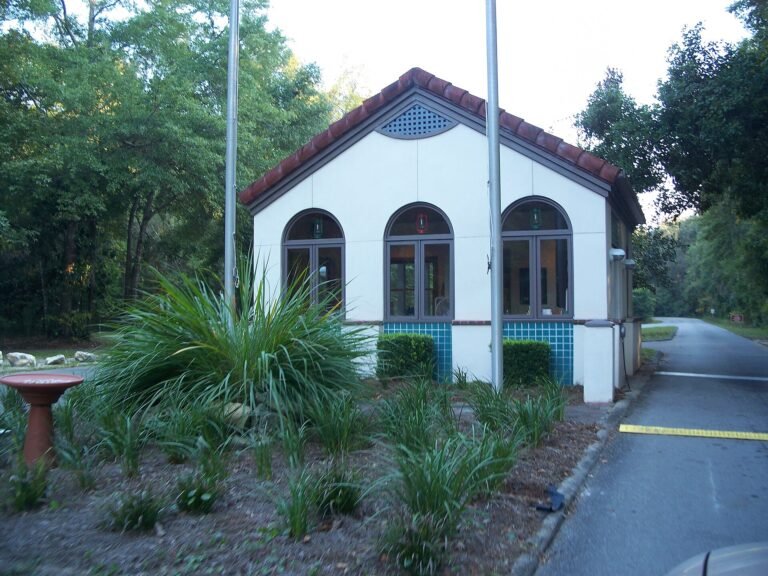
At a typical state park spring, you’ll pay at a gatehouse or self-pay station, park in a gravel or paved lot that’s a short walk from the water, and find a bathhouse with changing stalls and often outdoor showers — usually cold water, sometimes none at all, so don’t count on rinsing off sand or sunscreen before the drive home. Bring a towel to sit on and shoes you don’t mind getting wet; the walk from the lot to the water is frequently over packed sand, tree roots, or a boardwalk, and the entry into the water itself is often a set of stairs into rocky or sandy shallows rather than a beach you wade into gradually. Privately-run springs like Ginnie or Devil’s Den tend to have more built-out facilities — general stores, rental counters, sometimes food — but the same basic pattern holds: pay, park, walk, change, get in.
Six mistakes everyone makes once
- Arriving at noon in July. By then the lot is often full, the shade is gone, and you’ve missed the calm morning water. See the arrive-at-opening rule above.
- No water shoes. Limestone, oyster shell, submerged tree roots, and rocky run bottoms are common. Bare feet or flip-flops that fall off are a fast way to end a trip early.
- Expecting warm water. Ninety-degree air does not mean ninety-degree water. Assume 72°F and pack accordingly — see above.
- Bringing glass or alcohol to a state park. Florida state parks prohibit both glass containers and alcohol; see our full rules and etiquette guide for which private springs handle this differently.
- No cash for a county park. Smaller county-run sites like Rum Island use self-pay honor boxes that don’t take cards. Keep a few small bills in the car.
- Assuming your dog can swim with you. Most Florida state parks allow leashed dogs on land but not in the designated swim area or spring water, and some private springs (Ginnie included) don’t allow pets on the property at all. Check the specific spring before you bring one.
Pick your first spring
If you’re not sure where to start, go by region and by how adventurous you’re feeling:
- North Florida: Ichetucknee for a classic tubing run, or Rum Island Spring for a calmer, swim-first visit with fewer crowds than its Santa Fe River neighbors (Poe Springs is nearby too, but its water area is currently closed due to low water levels as of Sep 2026) — Gilchrist Blue is normally in this same conversation, but its water areas have been closed for construction renovations since late 2025 with no confirmed reopening date, so it’s a save-for-later pick rather than a first stop right now.
- Central Florida: Wekiwa for an easy, close-to-Orlando swim (book the reservation ahead), Kelly Park / Rock Springs for a short, current-driven tube float, or Blue Spring if you’re visiting in winter and want a shot at manatees.
- Gulf coast: Rainbow Springs for paddling and tubing on a genuinely big, clear river system, or Three Sisters in Crystal River for the best beginner snorkel experience.
- Panhandle: Morrison Springs for an easy swim with a boat ramp and picnic area, or Vortex Spring if you’re curious about trying scuba in a controlled, beginner-friendly setting.
Whichever you pick, our spring finder quiz and springs map are the fastest way to narrow down a shortlist by drive time and what you actually want to do once you’re there. Check current conditions the morning of your trip, especially after heavy rain — see our water clarity guide if you’re not sure what “tannic” means for visibility.
Common questions
Do I need a reservation for my first spring trip?
Only for the springs that require one — currently Rainbow Springs and Wekiwa Springs, plus the Ichetucknee North launch’s daily cap. Most other springs are first-come, first-served, but that just shifts the pressure onto arrival time rather than removing it.
Is the water actually clear, or is that just in photos?
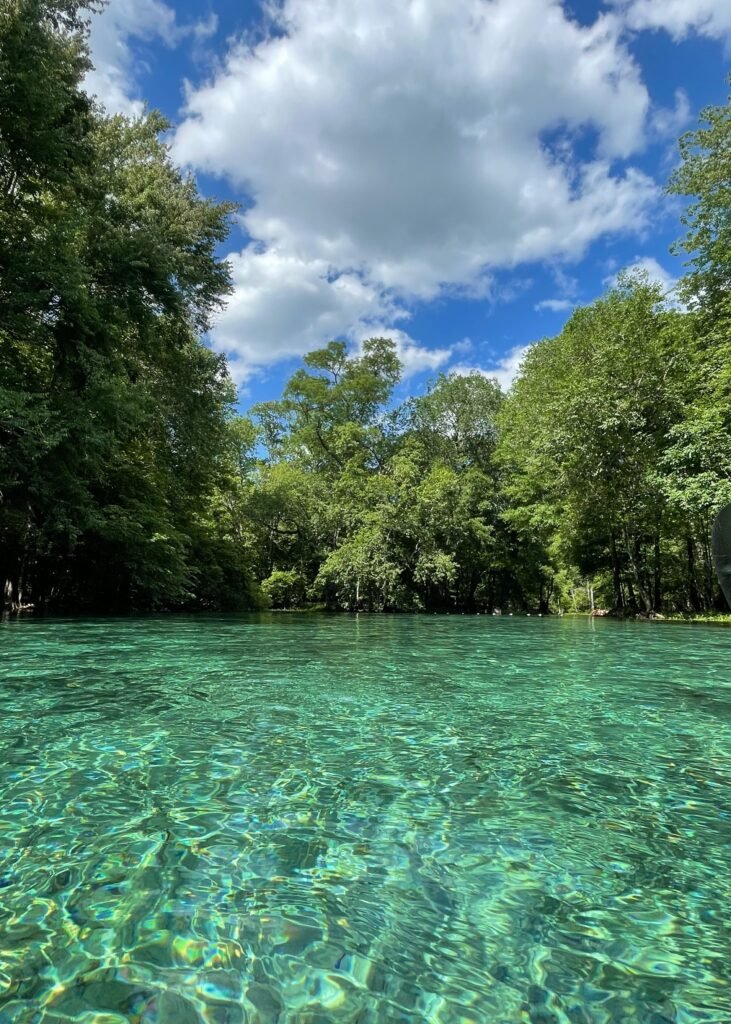
On a normal day, yes — many springs run 50 to 100+ feet of underwater visibility. After heavy rain, tannic water from the surrounding river or swamp can tint a spring’s run brown for days, even though the boil itself often stays clear. Check conditions before you drive if you’re chasing photo-worthy clarity.
Can I bring my own tube or kayak?
At most parks, yes, though a few (Ichetucknee among them) restrict outside flotation during peak season and require a park-rented tube instead. Check the specific spring’s current rules before loading up the car.
What should I actually pack?
Water shoes, a towel, sun protection, cash for parks without card readers, and a dry bag for your phone and keys. See our full packing list for the complete rundown by activity.
Is one visit enough to “get” a spring?
Most first-timers underestimate how different a spring feels on a second visit — different time of day, different season, different crowd level. If a spring didn’t wow you at noon on a packed July Saturday, try it again on a quiet October morning before writing it off.
Sources / verified against: Florida State Parks reservation and fee pages, Suwannee River Water Management District, individual park websites for Ginnie Springs Outdoors, Devil’s Den, and Vortex Spring. Fees and reservation requirements change; verify current figures with the specific park before you go.