You can spend a full day at a Florida spring for free, or you can spend $80 before anyone’s even in the water — the difference is almost entirely which spring you pick and whether you know where the fees actually sneak up. Here’s how to do it cheap without cutting corners on the experience.
Free springs
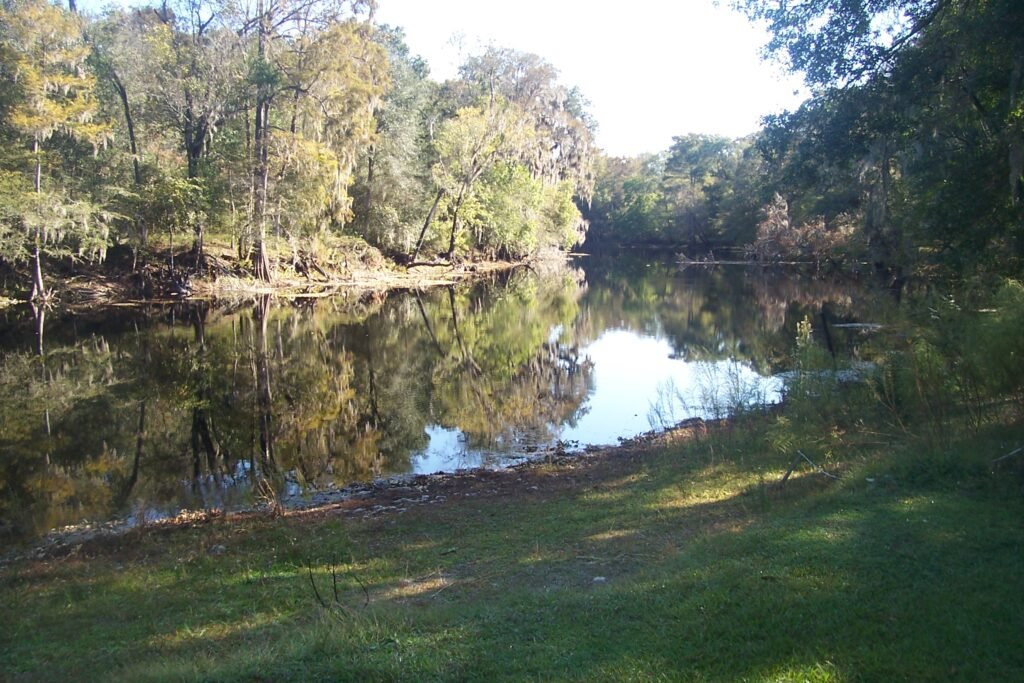
A handful of springs cost nothing to visit. The Suwannee Springs historic site is free and open to the public with no gate or entry fee. Cypress Springs and Chassahowitzka Springs are effectively free if you paddle in rather than use a fee-charging outfitter launch — both are accessible by kayak or canoe from public water without paying a park entry fee, though you’ll need your own boat or a separate rental. And Poe Springs flips from a $6/vehicle fee in the warm months to completely free from October through March. None of these are secret, and none of them lack for what makes a spring worth visiting — they just don’t have the staffing or amenities of a bigger park, so bring what you need with you.
The Florida State Parks Annual Pass
If you’re going to visit state park springs more than a handful of times a year, the Florida State Parks Annual Entrance Pass pays for itself fast. As of 2026, pricing runs around $60 for an individual pass and $120 for a family pass (covering everyone in one vehicle) — but Florida adjusts pass pricing periodically, so confirm the current numbers at floridastateparks.org before you buy. Do the math against your own plans: at $6/vehicle per visit, a family pass breaks even around the 20th visit, but an individual pass breaks even around visit 10, which is a realistic number for anyone who lives within an hour or two of a cluster of springs like the Santa Fe River group or the Ocala National Forest springs.
Per-vehicle beats per-person for families
This is the single biggest lever for a family on a budget: state parks charging per vehicle (typically $6 for 2–8 people) are dramatically cheaper than parks or private springs charging per person. A family of five pays $6 total at a per-vehicle state park spring like Gilchrist Blue or Manatee Springs, versus $60–100+ at a per-person site. If your priority is stretching a budget across multiple people, default to state parks first and treat per-person private springs as an occasional splurge rather than a regular stop. See our full fee breakdown for the complete list of which model each spring uses.
Where a federal pass does and doesn’t help
If you already hold an America the Beautiful pass for national parks and forests, don’t assume it waives the fee at every “forest” spring. Silver Glen, Juniper, and Salt Springs sit inside the Ocala National Forest, but they’re run as U.S. Forest Service concession sites with their own separate day-use fee ($14.50/person plus tax at Silver Glen, Juniper, and Salt Springs as of 2026) — the America the Beautiful pass typically does not cover that concession fee the way it would a standard USFS day-use area. Verify directly with the Ocala National Forest office or the specific site before counting on a federal pass to get you in free; this is one of the most common fee surprises we hear about from first-time visitors.
Private park costs
Private springs set their own pricing and it’s almost always per person: Ginnie Springs runs $25/adult March–October and $20/adult November–February (kids 4–12 $6/$5, under 3 free; day passes stop being sold at 3pm and expire at sunset), Devil’s Den is $30 for a snorkeling reservation and $48 for scuba, Blue Grotto is $61 for a dive and $23 for snorkeling, and Vortex Spring runs $15/adult and $10/child. These aren’t overpriced for what they offer — most have better facilities, camping, and fewer of the crowd-management restrictions a state park has — but a family of four adds up fast at any of them, so budget for it intentionally rather than by surprise.
Rental costs
Beyond entry fees, rentals are where a “cheap” day can quietly get expensive. Tube rentals at a tubing spring typically run somewhere in the $10–25 range depending on tube size and whether it’s single or double. Kayak or canoe rentals generally fall in the $25–50 range for a half or full day, more for a tandem or a guided trip. Shuttle service back to your car after a one-way run (common at Ichetucknee and Rainbow Springs) is often bundled into the tube or kayak rental price, but confirm that before assuming it’s included. If you own your own tube or kayak, bringing it yourself skips this cost entirely at parks that allow outside gear — though a few, Ichetucknee included, restrict outside flotation during peak season, so check first.
Other ways fees sneak up
A few costs catch first-time budget planners off guard. Some county parks — Rum Island among them — run on a self-pay honor box that only takes cash, so a card-only wallet turns a $5 fee into a wasted trip unless you’ve got small bills on hand. Parking overflow lots at popular springs sometimes charge separately from the main gate fee during peak season, which isn’t always obvious until you’re already being waved into the overflow lot. And a day pass that “stops selling at 3pm” — Ginnie Springs works this way — means arriving late in the afternoon isn’t just a bad idea for crowds, it can mean you’re turned away at the gate entirely regardless of what you’re willing to pay. Reading the specific spring’s fee page the morning of your trip, not just once when you first planned it, is worth the five minutes.
A sample $6 day
- Pick a per-vehicle state park spring near you — Manatee Springs, Hart Springs, or Rum Island all work (skip Poe Springs for swimming right now — its water area is closed due to low water levels as of Sep 2026). (Gilchrist Blue is normally on this list too, but its water is closed for construction as of 2026, so it’s off the table for now.)
- Pack your own water shoes, towels, snacks, and a cooler (cans/plastic only, no glass or alcohol).
- Arrive at opening to beat any capacity closure and get the best parking.
- Swim, picnic, and leave before the afternoon heat — total cost: $6 for the vehicle, nothing else.
A sample $60 day
- Visit a tubing spring like Ichetucknee: $6 vehicle entry plus tube rental (roughly $10–20/person) and shuttle if not bundled.
- Add lunch at a nearby local spot on the way out — budget $10–15/person.
- For a family of four, this lands in the $60–90 range once rentals and food are counted, which is a realistic “we did the whole thing” day rather than a bare-minimum visit.
Common questions
Is the annual pass worth it for a once-a-year visitor?
No — at that frequency you’ll pay far less with single-visit vehicle fees. The pass only pays off once you’re making several trips a year.
Do kids get in free anywhere?
State parks’ per-vehicle fee already covers kids riding in the same car at no extra cost. Per-person private and USFS sites sometimes offer a reduced child rate (Vortex Spring does, at $10 vs. $15 for adults) but not universally — check each site.
Are the free springs actually worth visiting, or just cheap?
They’re genuinely worth visiting — Suwannee Springs and the paddle-in access at Chassahowitzka and Cypress Springs offer a quieter, less commercial experience precisely because they don’t have the infrastructure (or crowds) of a bigger fee-charging park.
Does the state park pass work at Wekiwa or Rainbow Springs if I still need a reservation?
Yes, the pass covers your entry fee, but it doesn’t exempt you from the separate reservation requirement at parks that have one — you still need to book ahead.
Why do fees change so often?
Florida state parks and independent concessioners adjust fees periodically, and reservation systems get added or changed as parks manage capacity. That’s exactly why we flag “as of 2026” on every number in this guide — always verify with the park directly before you budget a trip around a specific figure.
Is it cheaper to buy a season pass at a single private spring instead of the state pass?
If you’re loyal to one specific private spring and visit it often, some do offer their own season or membership options separate from the state system — worth asking about directly if a particular private spring is your regular spot rather than assuming the state pass is your only annual option.
Sources / verified against: floridastateparks.org fee and annual pass pages, Ocala National Forest / USFS recreation site fee pages, Ginnie Springs Outdoors, Devil’s Den, Blue Grotto, and Vortex Spring official sites. Fees change; verify current pricing directly before your trip. See also our full fees breakdown.