An open-water scuba certification gets you into the open, daylight basin of a spring — it does not get you into a cave, and at most sites it doesn’t get you into a cavern either. Florida’s springs sit on top of one of the largest underwater cave networks on earth, and the line between “certified diver having a great day” and “untrained diver in a fatal overhead environment” is a specific piece of training, not confidence or a good flashlight.
What open-water certification actually covers
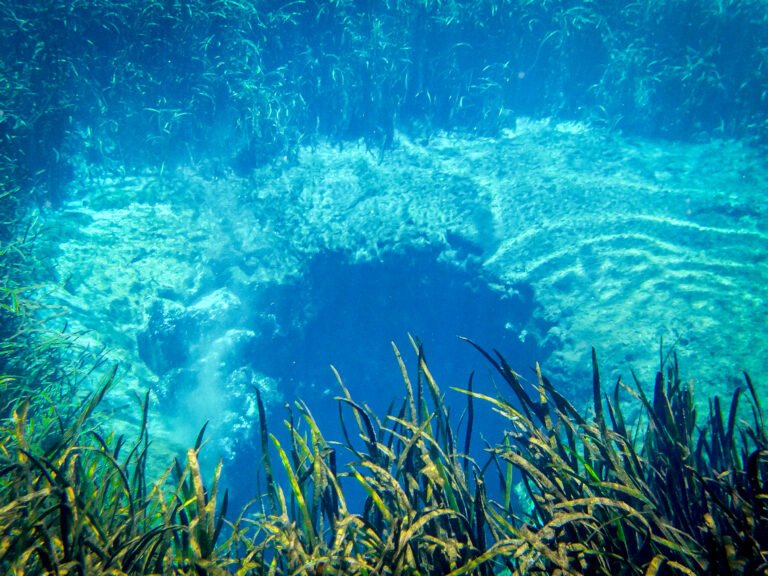
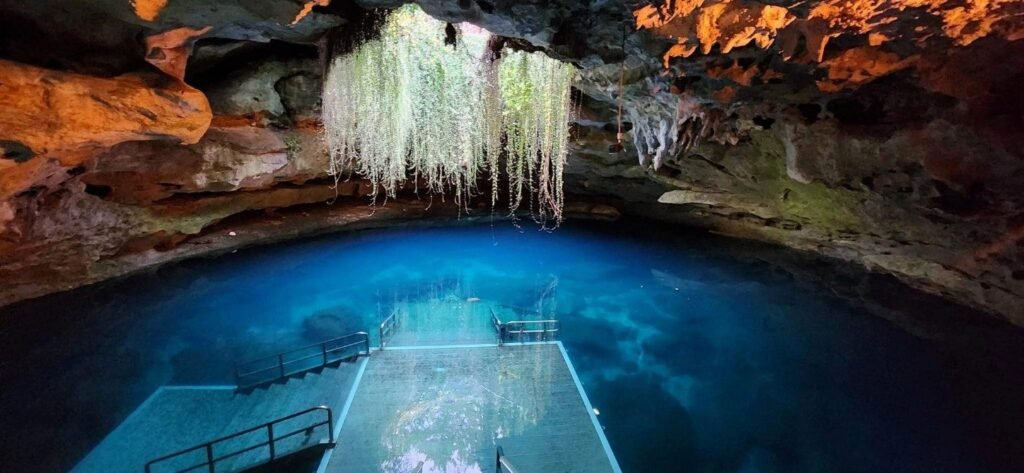
Open-water certification qualifies you to dive in open water with direct, unobstructed access to the surface — no ceiling between you and daylight. At Florida springs, that means the open basins: Blue Grotto‘s upper basin, Devil’s Den‘s sinkhole basin, Vortex Spring‘s basin, and Morrison Springs. These are genuinely great open-water dive sites — clear, warm relative to the air, interesting structure — and none of them require you to go anywhere near an overhead environment to have a full dive.
Ginnie Springs is the notable exception people get confused about. The Ballroom at Ginnie is open to certified open-water divers using lights, without a cavern or cave certification — a real exception to the general rule, and one of the reasons Ginnie is such a popular training and recreational dive site. But this is a specific, published allowance for that specific site, not a general rule that open-water divers can enter cavern zones — don’t assume it applies anywhere else.
Blue Spring State Park is a clear no: the cave system at Blue Spring requires cave certification to enter, full stop, and the park enforces this.
Cavern certification vs. full cave certification
These are two different courses with two different scopes, and neither one is optional if you want to legally and safely go past the open basin at most sites.
- Cavern certification qualifies you for the cavern zone only — the daylight-adjacent portion of an overhead system, typically within sight of natural light and a short, direct swim from open water, with strict limits on depth and penetration distance.
- Full cave certification — usually built in stages (Cave 1/Intro to Cave, then Full Cave) — qualifies you for true cave diving beyond daylight, with the skills, gas planning, redundant equipment, and line-following training that overhead diving actually requires.
The major training agencies certifying cave divers for Florida’s systems are NSS-CDS (National Speleological Society – Cave Diving Section), NACD (National Association for Cave Diving), GUE (Global Underwater Explorers), and TDI (Technical Diving International). Each has its own course structure, but the underlying idea is consistent: cavern first, then cave, with real prerequisites and real open-water experience expected before either.
Cave-cert-only systems
These Florida spring systems are cave-certified-divers-only, and this is enforced at the gate, not just posted as a suggestion: the Devil’s Spring system at Ginnie Springs (beyond the Ballroom’s cavern-accessible zone), Peacock Springs, Madison Blue Spring, Manatee Springs, Jackson Blue Spring (near Marianna), and Troy Spring. If you show up at any of these without a cave card, expect to be turned away from the cave sections — and that’s the outcome you want, compared to the alternative.
The rules that keep divers alive
- No lights, no overhead — at many parks, a diver without proper cave-diving lights is, by definition, not equipped to be anywhere near an overhead environment, and staff use this as a practical check.
- Dive flag — required where you’re diving away from a clearly marked, enclosed dive area, same as for snorkeling.
- Buddy system — solo cave diving is a training topic reserved for advanced, experienced cave divers, not something an open-water or even cavern-certified diver should attempt.
- Check-in / check-out — several cave sites require divers to log in and out with staff, partly so someone notices quickly if a diver hasn’t surfaced when expected.
Why people die in these systems
Florida’s spring caves have killed untrained divers, and the pattern in nearly every case is the same: someone with open-water or even advanced open-water certification — sometimes confident, experienced divers in open water — swims past the daylight zone into a true cave without cave training. Once inside, silt gets kicked up and destroys visibility, the exit isn’t visually obvious anymore, air runs low faster than planned because of the stress and the swim back, and without a guideline, a diver can become disoriented in total darkness a few dozen feet from open water they can no longer find. Every layer of cave training — the guideline, the gas rules (thirds or better), the lights, the practiced silt-avoidance technique — exists specifically to prevent this sequence. None of it is optional gear or a nice-to-have; it’s the entire reason cave diving is survivable at all.
How to actually get trained
Start with a cavern course, not full cave — it’s the appropriate first step even if your eventual goal is full cave certification, and it will tell you honestly whether overhead diving is something you want to pursue further. From there, Cave 1/Intro to Cave and then Full Cave build progressively, each with real prerequisites (minimum open-water dive counts, sometimes advanced or nitrox certification) rather than just a credit card and a weekend. Expect a genuine time investment — these are not one-day certifications — and expect instructors in Florida’s cave-training community to take currency and continuing skills seriously, since they’re training people for an environment with zero tolerance for improvisation.
The gear that separates cave diving from open water
Cave-specific gear isn’t optional accessorizing — it’s the redundancy that makes the sport survivable. That means a primary light plus at least one, usually two, backup lights per diver, since losing your only light in total darkness is not a recoverable situation. It means a guideline reel, because the line back to open water is your actual exit, not a mental map. It means redundant air sources and a gas-management rule (commonly “thirds”: a third of your gas in, a third out, a third in reserve) that assumes something will go wrong and plans for it in advance rather than after the fact. None of this is how open-water diving works, and that gap is exactly why open-water certification doesn’t transfer to cave environments.
Costs and fills
Budget for the course itself (typically a multi-day commitment with an experienced cave instructor), your own gear or rental of cave-specific equipment (redundant lights, reels, appropriate cylinders), and site fees at the springs where you’ll train and dive — Blue Grotto runs $61 for a dive as of 2026 (versus $23 to snorkel), and site fees at cave-diving springs are generally higher than standard state park day-use fees, reflecting the specialized infrastructure and staff oversight these systems require. Air and gas fills add up over a training weekend; ask your instructor or the dive shop what’s included versus billed separately before you commit.
Common questions
Can I dive Ginnie’s Ballroom with just open-water certification?
Yes, with a light — this is a specific, published exception at Ginnie. It does not extend to the Devil’s Spring system beyond the Ballroom, which requires cave certification.
What’s the difference between cavern and cave certification?
Cavern certification covers the daylight-adjacent zone near an entrance with strict depth and distance limits. Full cave certification covers true overhead diving beyond daylight and requires additional, more advanced training.
Is Blue Spring State Park’s cave open to any certified diver?
No — the cave at Blue Spring requires cave certification specifically, and this is enforced by the park.
Why do untrained divers die in these systems when experienced open-water divers seem confident?
Open-water experience doesn’t teach overhead-specific skills like guideline use, silt avoidance, and gas planning for a return swim with zero visibility. Disorientation a short distance from open water, in the dark, is what kills untrained divers in caves — training is what prevents it.
Where should I start if I want to eventually cave dive?
A cavern course with a certified instructor through NSS-CDS, NACD, GUE, or TDI. It’s the required and appropriate first step before Cave 1/Intro to Cave and Full Cave.
For the broader picture of scuba diving across Florida’s springs, including which sites are best for recreational open-water diving, see our Florida springs scuba diving guide.
Sources / verified against: NSS-CDS (National Speleological Society – Cave Diving Section), NACD (National Association for Cave Diving), Ginnie Springs Outdoors, Blue Grotto, Devil’s Den, Blue Spring State Park, Peacock Springs State Park, Madison Blue Spring State Park, Manatee Springs State Park, Troy Spring State Park.