The single best trick for paddling a Florida spring run: go upstream first, then drift back down. Spring runs have gentle, steady current, and if you paddle against it on the way out, your return trip is nearly effortless — which matters a lot when you’re tired, the sun’s higher, and you just want to coast to the takeout.
Upstream-first logic
Most spring runs flow one direction at a slow, consistent pace — nothing like river whitewater, but enough that paddling against it takes real effort and paddling with it takes almost none. Launch, point your bow upstream, and paddle as far as you want to go (or as far as time and arms allow), then turn around and let the current do most of the work back. This is the opposite of how a lot of first-timers plan a trip — they paddle downstream first because it’s easier, then face a slog back upstream when they’re already worn out. Plan your outbound leg against the current and you’ll thank yourself in an hour.
Classic runs, launch by launch
Ichetucknee Springs‘ North launch is paddling-only in 2026 and capped at 750 paddlers a day — get there early, especially on a weekend, because the cap is enforced and the park stops admitting new paddlers once it’s hit. This is a narrower, winding run through cypress and hardwood shade, genuinely pretty and not technical.
The Rainbow River is wide, clear, and popular for both kayaks and paddleboards; most people launch from KP Hole County Park downstream of the headsprings and either paddle up toward the springs and drift back, or arrange a shuttle for a one-way float. Rainbow Springs State Park’s headsprings area itself requires an advance day-use reservation, separate from KP Hole access.
Silver Springs is the paddling destination for glass-clear water over some of the most photographed spring boils in the state — launch from Silver Springs State Park and paddle the Silver River, watching for the wild rhesus macaques along the banks (yes, they’re real, and no, don’t approach them).
Rock Springs Run is best paddled starting from King’s Landing, upstream of Kelly Park — this is the put-in most paddlers use rather than Kelly Park itself, which is set up for tubing. It’s a narrow, winding, shaded run with a moderate current, popular enough that King’s Landing limits capacity on busy weekends.
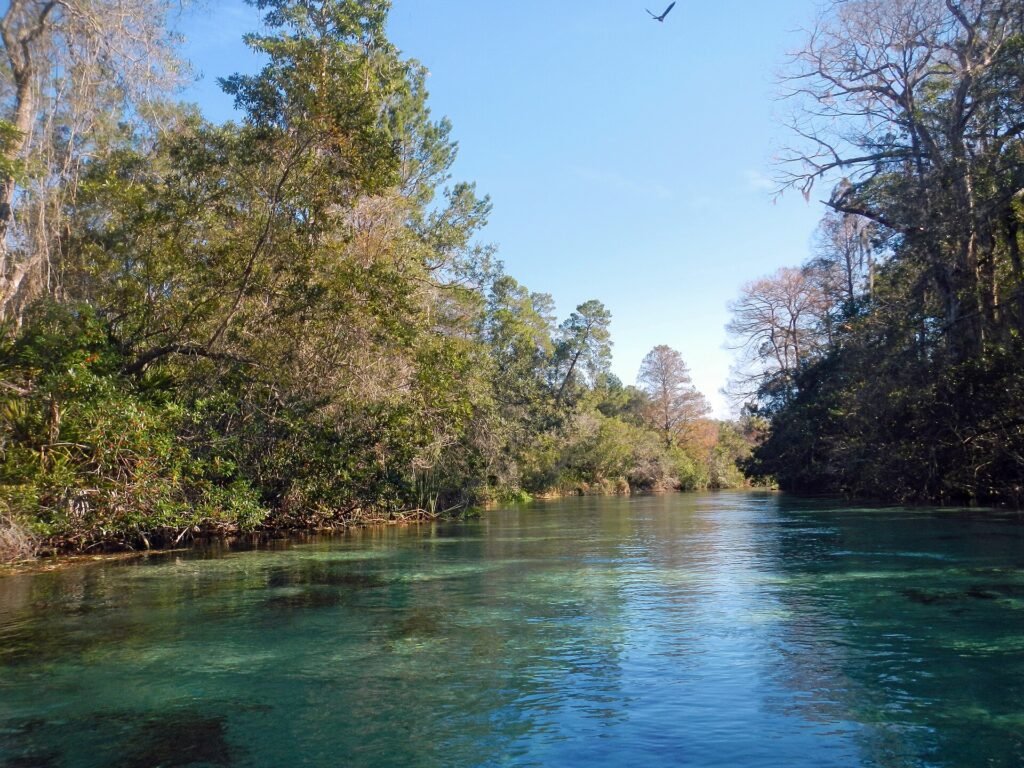
The Weeki Wachee River has launch limits and requires reservations at busy times — check current availability before you go, since this run fills up, especially on weekends in warm months. It’s a clear, spring-fed run known for turquoise water and can get crowded with tubers and paddlers sharing the same narrow channel in summer.
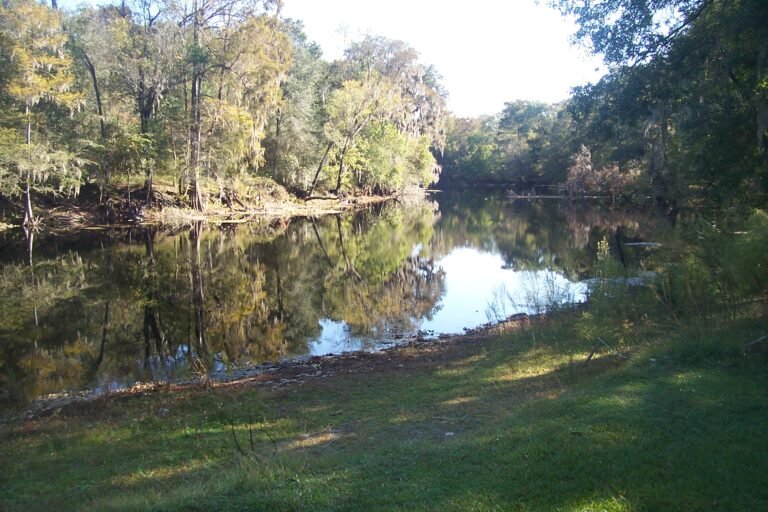
The Wekiva River, reached from Wekiwa Springs State Park, also requires an advance day-use reservation at the park itself as of 2026. The river winds through dense floodplain forest and connects downstream to the Little Wekiva and eventually the St. Johns system for paddlers doing a longer trip.
Chassahowitzka is a slower, wilder, more remote run — fewer people, more wildlife, and tidal influence near the coast (more on that below).
Juniper Run at Juniper Springs Recreation Area deserves its own paragraph because it’s not a casual paddle. It’s a one-way run of about seven miles through the Ocala National Forest, narrow, technical, and full of tight turns around cypress knees and submerged logs — you need a shuttle arranged in advance (or to arrange your own second car at the take-out), and this is not the run to bring a beginner or a rental tandem kayak on. Experienced paddlers love it for exactly the reasons beginners should skip it.
Rentals and shuttle logistics
Most of these launches have an on-site or nearby outfitter renting kayaks, canoes, and paddleboards, and several (KP Hole on the Rainbow, King’s Landing on Rock Springs Run) run their own shuttle service back to your car if you do a one-way float. For Juniper Run specifically, a shuttle isn’t a convenience — it’s close to mandatory, since walking back seven miles through the forest isn’t realistic. Book shuttle-dependent runs like Juniper ahead in season; outfitters can and do fill up.
Launch fees vs. park fees
Don’t assume a spring’s state park entrance fee covers your paddling launch — several of the best-known runs launch from a separate concession (KP Hole, King’s Landing) with its own fee, distinct from the state park gate fee for the headsprings. Read the fee structure for wherever you’re launching before you go, and see our fees breakdown for how per-vehicle, per-person, and private-park pricing differs across the state.
Paddleboard etiquette on a narrow run
Standup paddleboards are increasingly common on spring runs, and they work well on wider water (Rainbow, Silver River) but get awkward fast on narrow, twisting runs like Juniper or the upper Ichetucknee, where a standing paddler has less control around tight turns and overhanging branches than someone seated in a kayak. If you’re newer to paddleboarding, pick the wider runs first. Everywhere, yield to kayaks and canoes in tight channels, and if you fall in, get back on quickly rather than drifting broadside and blocking the channel for paddlers behind you.
Manatees: no-contact, always
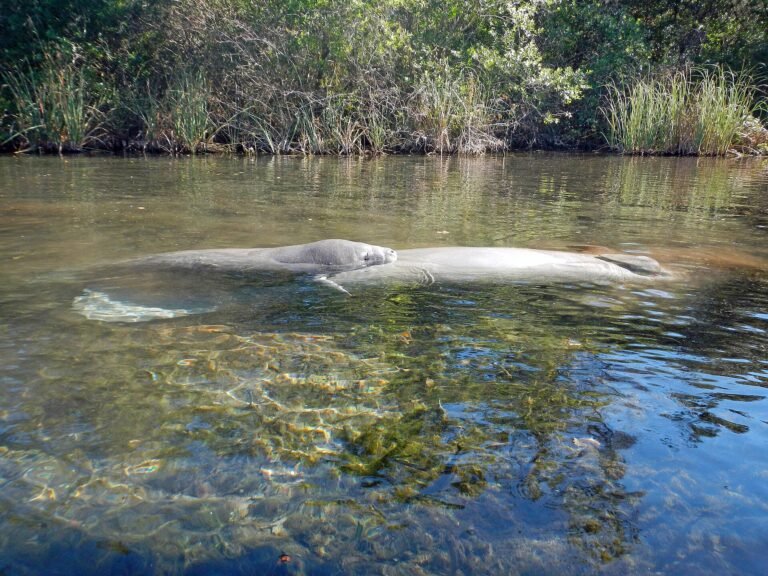
On any run where manatees are present — the Wekiva, Rainbow, Silver, Chassahowitzka, and the St. Johns-connected runs near Blue Spring — the rule is simple and legally enforced: no touching, no chasing, no cornering. Give a manatee room to move away from your boat or board on its own terms. Manatees are most concentrated in these runs in winter; see our manatee season guide for timing.
Tides on coastal runs
Chassahowitzka and similar coastal-influenced runs feel tidal influence the closer you get to the Gulf — an outgoing tide can add noticeably to the current pushing you downstream, and an incoming tide can slow or even reverse the flow near the mouth. Check tide tables before planning a long paddle on these runs, especially if you intend to paddle back upstream to your put-in rather than arranging a shuttle.
What to bring
- A properly fitted life jacket — required by law to be aboard for every paddler, and worth actually wearing on narrower or faster runs
- A dry bag for phone, keys, and any first-timer’s most likely-to-be-lost item (sunglasses)
- Water shoes for muddy or rocky launches
- Sun protection — most runs offer patchy shade at best, and a midday paddle on the Rainbow or Silver River has long open stretches
- A whistle or other sound signal, and a way to call for a shuttle pickup if you’re doing a one-way run
The mistakes people make
- Paddling downstream first and getting stuck fighting current back to the car when they’re tired
- Showing up to Ichetucknee’s North launch expecting a walk-up spot once the 750-paddler cap is hit
- Attempting Juniper Run without a shuttle arranged, or attempting it at all as a first-time paddler
- Standing on a paddleboard through a tight, twisting section instead of kneeling or sitting for better control
- Assuming the state park entrance fee includes the paddling launch fee when they’re run by separate concessions
Common questions
Do I need a permit for Ichetucknee’s North launch?
You need to get in under the daily cap of 750 paddlers; there isn’t a separate permit beyond park admission, but arriving early matters once that cap fills, especially on weekends.
Is Juniper Run good for a first-time paddler?
No. It’s narrow, technical, and seven miles one-way with a mandatory shuttle. Start on a wider, shorter run like Rock Springs Run or the Rainbow River first.
Can I paddleboard the same runs as kayaks?
Generally yes, but standing paddleboards are harder to control on narrow, twisting runs. Choose wider water for your first paddleboard trip.
Do I need my own shuttle vehicle?
For one-way runs like Juniper, yes, unless you book an outfitter shuttle. For round-trip out-and-back paddles like most of the shorter runs, no — you return to the same launch.
How does current affect trip planning?
Paddle upstream first while you’re fresh, then drift back with the current — it turns your return leg into the easy part of the trip instead of the hard part.
Sources / verified against: Ichetucknee Springs State Park, KP Hole County Park, Silver Springs State Park, King’s Landing (Rock Springs Run), Weeki Wachee Springs State Park, Wekiwa Springs State Park, Juniper Springs Recreation Area (Ocala National Forest, USFS).