How you see a manatee varies as much as where. Most of these springs are boardwalk-only, with the run closed to swimmers for the season, and only one lets you legally get in the water, by permitted tour. The season runs roughly November through March, and Blue Spring now requires an advance reservation.
At a glance
| Spring | Season | Viewing vs in-water | Entry | Closures | Best time |
|---|---|---|---|---|---|
| Blue Spring State Park | Nov 15–Mar 15 (peak January) | Boardwalk viewing only | $6/vehicle | Reservation required since Jul 15, 2026 | Coldest January mornings, at opening |
| Three Sisters Springs | Nov 15–Mar 31 | Only legal in-water tour on this list | Boardwalk $12.50 Apr–Nov, $20 Nov–Mar; tours $70–90 | Springs roped off Nov 15–Mar 31 | Cold winter morning, high tide |
| Ellie Schiller Homosassa Springs Wildlife State Park | Year-round (residents); more in winter | Viewing only, underwater observatory | ~$13/adult | Observatory reopened Oct 2025 after storm damage | Before 11am |
| Manatee Springs | November–March, best after cold fronts | Boardwalk viewing only | $6/vehicle | Swim area closes when manatees present | After a hard cold front, weekdays |
| Chassahowitzka Springs | Winter | Wild paddle-in viewing, no boardwalk | Free (launch fees apply) | — | Low tide, paddle up-river first |
How to choose
Cold is the whole game. Manatees crowd into springs when surrounding rivers and the Gulf drop below about 68°F, so the best viewing is on the coldest mornings from mid-November through March — a miserable cold snap is exactly when you want to go, and the colder the front, the bigger the gathering.
Viewing and swimming are different trips. At Blue Spring and Manatee Springs, the run closes to swimmers in winter, so you watch from a boardwalk. Only Three Sisters Springs offers a legal in-water experience, and only by permitted tour. Homosassa guarantees sightings year-round because its manatees are residents, not winter visitors.
The law is not optional. Manatees are federally protected — never touch, chase, feed, or corner one, whether you’re on a boardwalk or in the water. Rangers and refuge staff enforce this.
Common questions
Can you swim with manatees in Florida?
Only at Three Sisters Springs near Crystal River, and only on a permitted guided tour — there’s no land entry, so you reach the water by tour boat or paddle from Kings Bay. Everywhere else on this list, including Blue Spring and Manatee Springs, manatee viewing is boardwalk-only; the spring run closes to swimmers while manatees are present.
When is the best time to see manatees at Blue Spring?
The coldest mornings from roughly mid-November through March, when manatees crowd into the constant 72°F spring water to escape a cold St. Johns River. A day-use reservation has been required since July 15, 2026, so book ahead rather than just showing up at opening.
Where can you guarantee seeing a manatee in Florida?
Homosassa Springs Wildlife State Park. Unlike every other spot on this list, its manatees are non-releasable residents who live there year-round, viewed from the underwater Fish Bowl observatory, so sightings don’t depend on cold weather or luck.
Florida is the best place on earth to see a wild manatee, and these springs are where it happens. When the rivers turn cold, manatees crowd into the constant 72°F spring water to survive — sometimes hundreds in a single run. But the five springs below offer genuinely different experiences: guaranteed year-round residents, a boardwalk over a herd of hundreds, a permitted in-water swim, and a wild paddle-in encounter. Here is what each is actually like, and how to time it.
The descriptions below draw on official park and refuge sources plus recent visitor reports. Manatee numbers depend entirely on the weather and change daily — the details here reflect typical patterns, but always check current conditions before you drive.
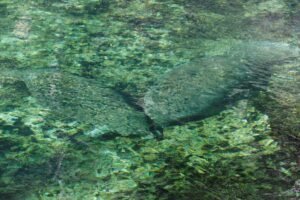
Why here: The single best manatee viewing in Florida, and it's not close — hundreds of manatees pack the crystal-clear spring run every cold snap, and you watch them from a boardwalk directly above the water, no boat or wetsuit required.
This is a winter-only spectacle with real numbers behind it: the park counted a record 932 manatees on one January morning in 2024, up from just 14 in 1970 before protections — one of conservation's great success stories. Manatees gather here from roughly mid-November through March, and the count rises with the cold: the colder the St. Johns River, the more manatees crowd into the 72°F spring. A one-third-mile boardwalk runs from the river to the headspring with multiple overlooks, and because the water is glass-clear you see mothers nursing calves and whole herds resting below you. The critical catch: the spring run closes to all swimming, tubing, and paddling from about November 15 to March 15 while manatees are present — so winter is for viewing, not swimming. Come on the coldest morning you can stand; January is the most reliable month, and early is best before crowds fill the boardwalk.
Best for Families, non-swimmers, anyone wanting guaranteed winter manatees without a boat. Go on a cold January morning at opening.
Verify before you go Live manatee counts are posted by the park daily in season; the exact swim-closure dates shift with the weather. Check the Florida State Parks page or the park's webcam before you go.
Full guide, map & conditions →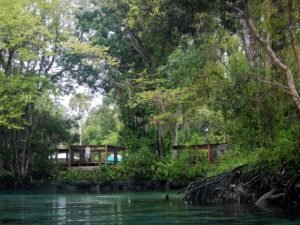
Why here: The famous swim-with-manatees destination — the only place on this list where you can legally be in the water with wild manatees, but only by permitted tour, and the rules catch a lot of visitors off guard.
Three Sisters sits inside the Crystal River National Wildlife Refuge, and the single most important fact is access: there is no entry to the springs from land — you reach the water only by tour boat or paddle from Kings Bay, and rangers enforce it strictly to protect the springs from erosion. The boardwalk (around $12-20 in season) lets you view from above without getting wet; the in-water experience requires a guided tour. Real tour prices run roughly $70-90 per adult for a two-to-three hour trip, and the operators split their season deliberately: from November 15 to March 31 the springs themselves are roped off, so winter "manatee season" tours find manatees out in Kings Bay rather than inside Three Sisters, while April-to-November tours paddle into the springs but with far fewer manatees. Visitor reports are consistent on timing: go on a cold winter morning at high tide for the most manatees, and go early — one recurring complaint is that entry logistics and parking eat into the actual manatee time, and midday brings crowds of boats and paddlers.
Best for Anyone whose bucket-list item is swimming near wild manatees. Book a guided tour, go early on a cold high-tide morning, and set expectations on logistics.
Verify before you go Tour operators, prices, and the exact spring-closure dates change yearly. Confirm current tours and the manatee-season rules with a Crystal River outfitter before booking. Federal law: passive observation only — no touching, chasing, or feeding.
Full guide, map & conditions →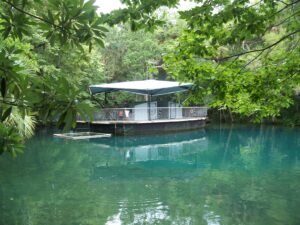
Why here: The guaranteed manatee sighting — while every other spot depends on cold weather and luck, this wildlife park keeps rescued resident manatees you'll see any day of the year, viewed from an underwater observatory that puts you eye-level with them.
Homosassa is a wildlife state park and rehabilitation center, not a swimming spring, and that's exactly why it's a sure thing: a handful of non-releasable resident manatees live here permanently, so sightings don't hinge on the season. The centerpiece is the Fish Bowl underwater observatory — a floating structure you walk down into to stand below the waterline, eye-to-eye with manatees and thousands of fish. Daily manatee programs run at 11am and 1pm. Admission is around $13 per adult; plan two to three hours, because the park also holds rescued Florida panthers, red wolves, black bears, whooping cranes, and Lu the resident hippo. Two honest notes from recent visitors: the underwater observatory sustained storm damage and was closed for a stretch before reopening in October 2025, and mornings before 11am are best when the water is coolest and manatees most active. In winter, wild manatees join the residents for even bigger numbers.
Best for Families, first-timers, anyone who can't gamble on weather — guaranteed manatees plus a full wildlife park. Arrive before 11am.
Verify before you go Admission price and observatory status can change — confirm current fees and that the Fish Bowl is open on the Florida State Parks page before visiting.
Full guide, map & conditions →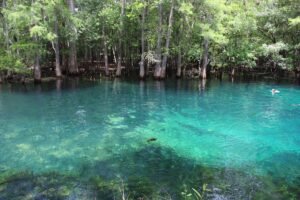
Why here: A quieter, wilder manatee experience on the Suwannee — winter manatees in the spring run, viewed from an 800-foot boardwalk through ancient cypress swamp, with almost none of the Crystal River crowds.
Manatee Springs earns its name each winter, when manatees move up from the Suwannee River into the first-magnitude spring's warm 72°F water — generally November through March, best after a hard cold front. The boardwalk crosses dark, moss-draped cypress swamp out to the river, and the park is genuinely quiet on weekdays compared to the coastal manatee spots. It's also one of the best camping bases on this list (see our camping guide), with deer wandering the loops and abundant birdlife. The swim area closes to people when manatees are present, so like Blue Spring, winter is for viewing. Reviewers consistently flag two things: bring bug spray in warmer months, and cell service is historically poor.
Best for Anyone wanting winter manatees without crowds, campers, and paddlers combining manatees with a Suwannee trip.
Verify before you go Entry fee and the manatee-season swim closures shift with the weather — confirm on the Florida State Parks page.
Full guide, map & conditions →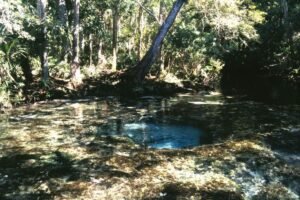
Why here: The manatee experience for people who want wildness over convenience — winter manatees on a spring-fed river deep inside a national wildlife refuge, reachable only by kayak, with dolphins and world-class birding thrown in.
The Chassahowitzka — "Chaz" locally — is a paddle-only spring river running through a national wildlife refuge to the Gulf. In winter, manatees move up the river for the warm spring water, and because there's no gate, no crowds, and no boardwalk, encounters here feel genuinely wild. Side springs like the Crack and Blue Spring hide up narrow channels off the main run. The tradeoffs are real: you need a boat (rentals and a small launch fee at the county campground), navigation matters because the marsh channels look alike, and there are no facilities at the springs. Beyond manatees you'll likely see dolphins near the river mouth and some of the best birding in Florida.
Best for Confident paddlers who want a wild, uncrowded manatee encounter and don't need facilities. Go at low tide for clarity, up-river first while fresh.
Verify before you go Launch fees, rental availability, and current conditions vary — confirm with a local outfitter. Manatee protection rules are strictly enforced by refuge staff: passive observation only.
Full guide, map & conditions →