Should you go?
The Chassahowitzka — ‘Chaz’ to everyone local — is a spring-fed river running through a national wildlife refuge to the Gulf, with side springs like the Crack and Blue Spring hidden up narrow channels off the main run.
It is a paddler’s spring rather than a swimmer’s park: no gate, no fee, no lifeguard. Manatees in winter, dolphins where the river meets salt water, and some of the best birding in Florida.
Is it worth it? For paddlers who want genuine wilderness — manatees, dolphins, over 250 bird species, and a narrow fissure spring called the Crack that consistently gets singled out as the highlight — yes, especially with a guided tour if the marsh channels intimidate you. It’s a half-day commitment at minimum and rewards people willing to navigate rather than just show up.
Visiting
The spring itself is free; the county campground launch charges a small fee, and outfitters rent kayaks nearby. Allow half a day. Navigation matters — side springs are easy to miss and the marsh channels look alike, so bring a map or GPS. For manatee: The manatee experience for people who want wildness over convenience — winter manatees on a spring-fed river deep inside a national wildlife refuge, reachable only by kayak, with dolphins and world-class birding thrown in.
Guided kayak tours are a genuinely good option if you're not confident navigating the marsh channels yourself — real families report success even with kids as young as 9 on their first-ever kayaking trip, spotting manatees within minutes of putting in. "The Crack" — a narrow fissure spring off the main run — consistently gets singled out as the highlight of the paddle, stunning enough that more than one family calls the whole trip mentally soothing despite the physical effort.
This is also part of the Great Florida Birding and Wildlife Trail, with over 250 documented bird species alongside alligators, manatees, otters, raccoons, and deer. Per the Southwest Florida Water Management District's monitoring, the water runs about 71°F, and the river itself is short — just 5.6 miles from the headsprings to the Gulf of America — with mid-channel depths ranging only 2 to 9 feet depending on tide. As a first-magnitude spring group, Chassahowitzka's combined vents exceed the 64.6-million-gallon-a-day threshold that defines that classification.
The refuge itself is open sunrise to sunset, and the public boat ramp — maintained by Citrus County at the end of State Road 480 — sits about three miles upstream of where the wildlife refuge boundary actually begins.
By the numbers: first magnitude (combined vents over 64.6 million gallons a day), 71°F year-round, river runs 5.6 miles from headsprings to the Gulf, mid-channel depth 2-9 feet depending on tide. It's about 75 miles/1 hour 20 minutes from Tampa, 90 miles/1 hour 45 minutes from Orlando, and 15 minutes from Crystal River.
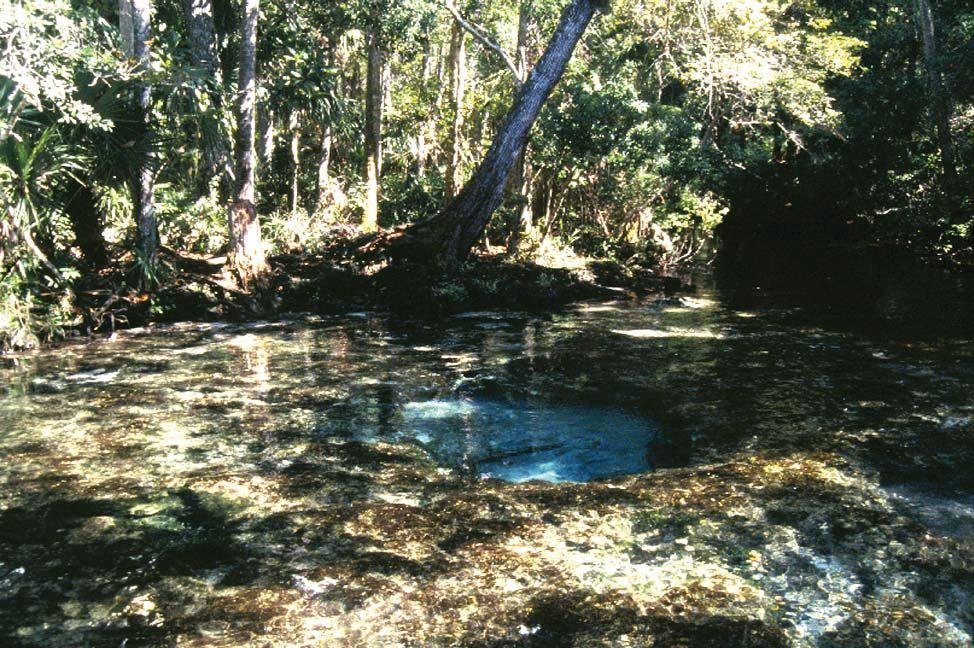
Two named side-springs give the paddle its structure. Seven Sisters Spring sits just off the main channel, roughly a five-minute paddle from the campground marina — turn right at the dock and you're there quickly, which makes it the easiest stop on the river. The Crack sits much farther in, at the head of Baird Creek, a narrower tributary that peels off the main run; the creek gets progressively shallower and clearer as you approach the spring, and it runs shallow enough at low tide that portaging over sandbars is common, so check a tide chart before committing to that leg. The refuge was established in 1943 to protect migratory waterfowl, and in 1970 the Citrus County portion was designated federal wilderness — one reason development never reached this stretch of coast. The campground launch (8600 W Miss Maggie Drive, Homosassa) charges a $5 honor-box parking fee even if you bring your own boat; kayak, canoe, and paddleboard rentals are available on site.
When to go
Winter for manatees; low tide any season for the clearest water. Weekdays avoid the boat traffic. Note that low tide is best for clarity but can leave Baird Creek toward the Crack too shallow to paddle without portaging — a mid-to-high tide is the better call if you're headed for that spring specifically.
Local tips
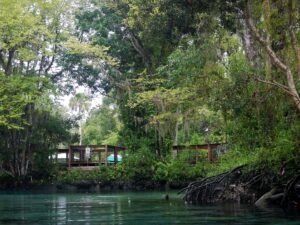
The launch parking area fills fast on nice-weather weekends — arrive early if you want a spot close to the water, since the lot itself is small for how popular the paddle has become. Navigation trips up plenty of first-timers: paddlers consistently report getting lost looking for 'the Crack,' since the entrance is narrow, unmarked, and easy to paddle past without noticing; a waterproof map or a locally-guided tour solves this, and going with someone who's paddled it before is genuinely worth it if you're unsure.
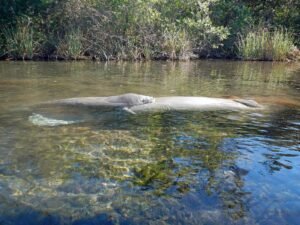
Once you find it, expect company — the Crack gets crowded fast, with reports of what one visitor called 'an armada of canoes and kayaks' converging there on busy days. Manatee sightings are frequent and can be overwhelming in a good way, with some winter visitors reporting so many manatees near the dock that they stopped counting; keep a respectful distance regardless, since refuge staff enforce passive-observation rules and at least one visitor has reported seeing an injured manatee, a reminder these are wild animals sharing the channel with motorboats.
Most trips run 2 to 5 hours depending on how far you paddle and how much time you spend at the springs. The water itself is consistently described as crystal clear and the setting 'far wilder' feeling than nearby Crystal River. There's no cell service once you're deep in the marsh, so plan your route before you launch.
Check the tide chart before you paddle Baird Creek toward the Crack — regulars report the creek runs too shallow to float a loaded kayak at low tide, forcing a short portage over sand; a rising or high tide makes the same stretch an easy paddle.
The river runs through a manatee sanctuary in the cooler months, so boat traffic near the springs slows to idle/no-wake speed roughly November through March — paddlers benefit from this too, since it keeps motorboat wakes down around the Crack and Seven Sisters.
If you're timing a summer trip, Chassahowitzka Bay just downstream is inside Citrus County's bay scallop grounds; the season typically runs July through September with a 2-gallon-per-person whole-scallop limit, so scalloping boats share the lower river with paddlers in mid-summer.
The cave openings around the sister springs are real cave-diving territory, not snorkel-and-peek spots — at least four diver deaths have been recorded in the submerged passages since 1989, so treat any dark opening as off-limits without cave certification and full gear.
Rules & restrictions
No facilities at the springs. Channels are confusing — carry a map or GPS. Manatee protection rules are strictly enforced by refuge staff. Idle/no-wake speed applies through the manatee sanctuary sections of the river, enforced most heavily in winter. The submerged caves beneath the sister springs are technical cave-diving environments, not open-water snorkel spots — entering them without cave certification and proper gear has been fatal; treat any dark, narrow opening as off-limits. If scalloping in season (July-September) in the bay near the river mouth, a valid recreational saltwater fishing license with the scalloping endorsement and the 2-gallon-per-person/10-gallon-per-vessel limits apply.
Good to know
Dogs: Yes, leashed. Season: Year-round.
Facilities
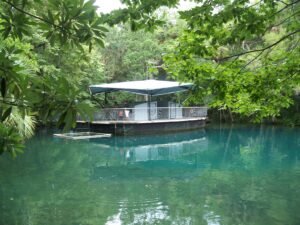
A campground at the launch offers boat rentals, restrooms, and overnight sites under hardwood canopy. A small launch fee applies even if you bring your own kayak or canoe. Nothing exists at the springs themselves beyond what you bring. Seven Sisters Spring sits a five-minute paddle from the campground marina, making it the most accessible of the group for anyone not wanting the full trip to the Crack. The campground (8600 W Miss Maggie Drive, Homosassa) rents kayaks, canoes, and stand-up paddleboards, has RV sites with full hookups and separate tent sites, and charges the $5 honor-box launch fee whether or not you rent from them.
Wildlife you may see
Over 250 documented bird species make this part of the Great Florida Birding and Wildlife Trail. Manatees in winter, dolphins near the river mouth, alligators, otters, raccoons, and deer are all realistic sightings along the paddle. Winter (roughly November through March) is peak manatee season, when the refuge's spring-warmed water becomes a documented winter refuge and a seasonal slow-speed/no-wake zone covers boat traffic through that stretch. Bottlenose dolphins show up more reliably near the river mouth where it meets the Gulf. In July through September, the lower river and Chassahowitzka Bay sit within Citrus County's bay scallop grounds, so it's common to see scalloping boats mixed in with paddlers on the saltier, downstream half of the river.
History & background
The river and its springs sit within a national wildlife refuge established in 1943, and the surrounding marsh is among the least developed coastline in Florida. The refuge's name is usually translated from a Muscogee/Seminole word as 'river of hanging pumpkins,' a reference to wild gourds that once grew along the banks. The U.S. Fish and Wildlife Service established the 30,000-plus-acre refuge primarily to protect migratory waterfowl; in 1970, the Citrus County portion was further designated federal wilderness, permanently barring development. The submerged cave systems beneath the sister springs have drawn technical cave divers for decades and have also proven dangerous — at least four diving fatalities have been recorded in the underwater passages since 1989, which is why the springs are managed as open-water swim/snorkel sites rather than casual cave-diving spots.
Map & directions
FAQs
Do you need a boat for Chassahowitzka Springs?
Yes — the springs are reached by kayak or canoe from the launch at the county campground. There is no drive-up swimming area.
Are there manatees on the Chassahowitzka?
Yes, especially in winter when they move up the river for warm spring water. Passive observation rules apply.
What is the Crack at Chassahowitzka?
A narrow fissure spring off the main river that you can swim into — the most popular destination on the paddle.
Is Chassahowitzka good for kids?
Yes, especially with a guided tour — families report success even with young, first-time kayakers, and manatee sightings often happen within minutes of launching.
What is 'The Crack' at Chassahowitzka?
A narrow fissure spring off the main river run that consistently gets singled out by visitors as the most stunning stop on the paddle.
How much do kayak rentals cost at Chassahowitzka?
About $35/day for a single kayak, $45 for a double or canoe, $50 for a paddleboard. Rentals run 8am-3pm and everything must be returned by 4:30pm.
How deep is the Chassahowitzka River?
Shallow by spring standards — mid-channel depths run 2 to 9 feet depending on tide, per Southwest Florida Water Management District monitoring, so paddling at low tide can mean scraping bottom in spots.
How long is the Chassahowitzka River?
About 5.6 miles from the headsprings down to the Gulf of America, per SWFWMD.
What are Chassahowitzka refuge hours?
Sunrise to sunset year-round, per the U.S. Fish & Wildlife Service. There's no gate or staffed entrance, so access follows daylight rather than posted hours.
Is parking available at the Chassahowitzka launch?
Yes, at the county campground launch for a small fee, but the lot is limited in size and fills on busy weekends — arrive early for a close spot.
Is it easy to find the springs while kayaking the Chassahowitzka?
Not always — paddlers consistently report missing the unmarked, narrow entrance to 'the Crack' and other side springs. Bring a waterproof map or book a guided tour if you're not confident navigating the marsh channels.
What is Seven Sisters Spring?
A cluster of spring vents just off the main channel, about a five-minute paddle from the campground marina. It's the easiest of the Chassahowitzka's named springs to reach, unlike the Crack, which sits much farther upstream on Baird Creek.
Is there a no-wake zone on the Chassahowitzka River?
Yes. Sections of the river fall inside a manatee sanctuary with idle/no-wake speed rules, enforced most heavily in winter when manatees concentrate in the spring-warmed water.
Can you go scalloping near Chassahowitzka Springs?
Yes, but not at the springs themselves. Chassahowitzka Bay, downstream where the river meets the Gulf, is within Citrus County's bay scallop grounds. Season typically runs July through September with a 2-gallon-per-person whole-scallop limit.
Do tides affect paddling the Chassahowitzka River?
Yes, especially on Baird Creek toward the Crack, which can run too shallow to paddle at low tide and require a short portage. Check a tide chart before committing to that leg of the trip.
How much does it cost to visit Chassahowitzka Springs?
The springs themselves are free to paddle to. The main cost is parking at the campground launch (8600 W Miss Maggie Drive, Homosassa), about $5 per vehicle whether or not you bring your own boat, plus rentals if you need a kayak or canoe.
Visitor photos
See this week’s shots: Instagram #chassahowitzka · TikTok #chassahowitzka
Great for: Free Entry · Kayaking · Manatees · Snorkeling