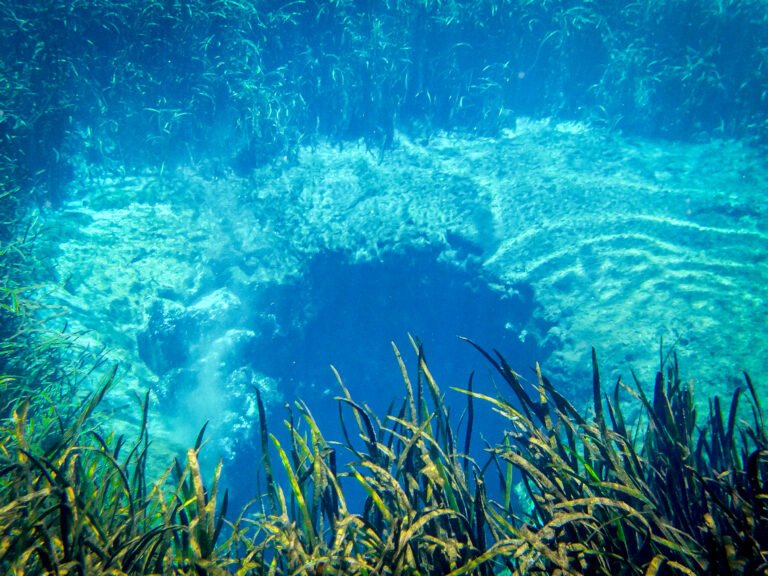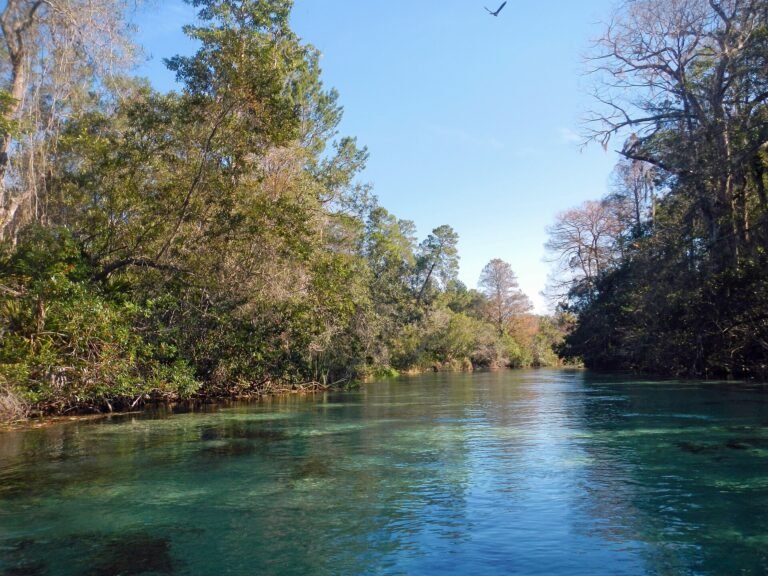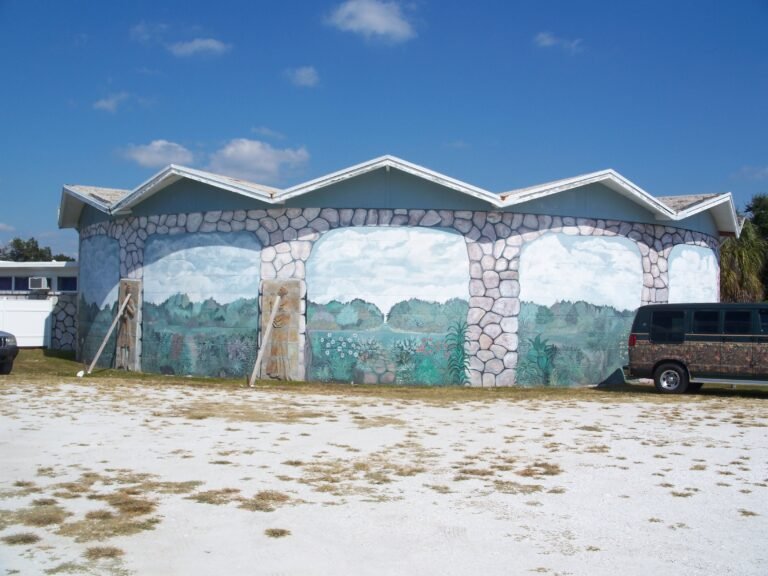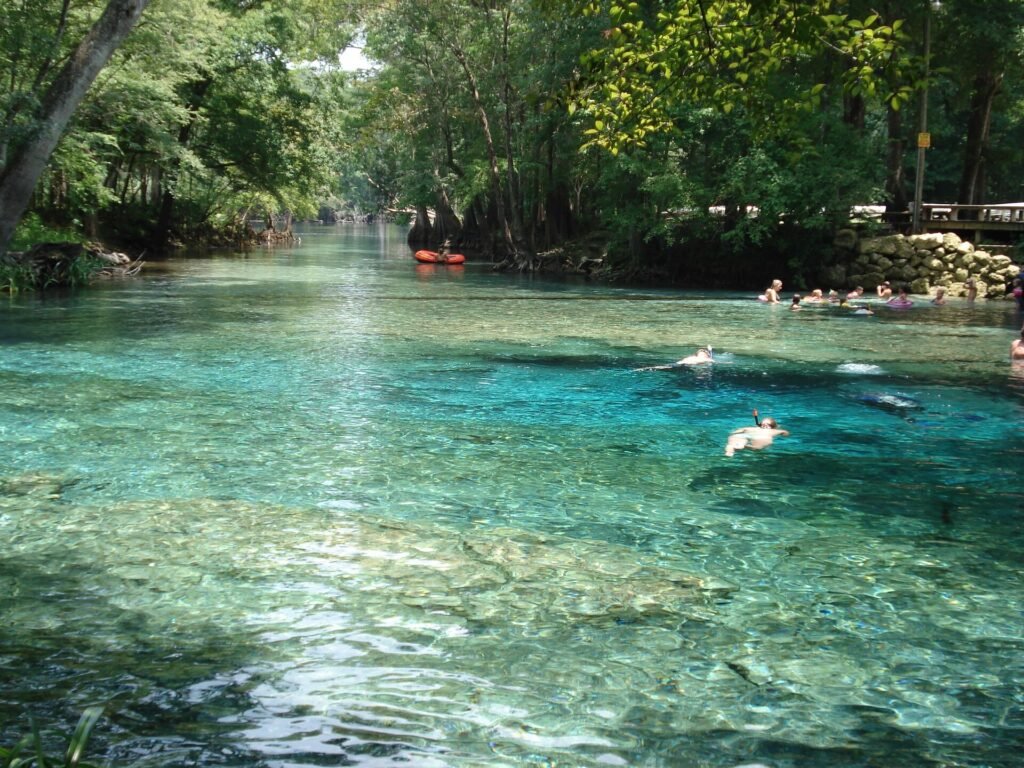
Few stretches of Florida pack this many springs into this small an area. Around the Santa Fe River near High Springs, you can reach five genuinely different springs — Ginnie, Gilchrist Blue, Poe, Rum Island, and Little River — all within about a 30-minute drive of each other. Here’s how to actually sequence a weekend around them rather than just picking one and hoping.
Know the cluster before you plan
These five springs are not interchangeable, even though they’re geographically close. Ginnie is a large private park with seven distinct springs, a lively weekend scene, and the highest entry fee of the group. Gilchrist Blue is the calmer state-park alternative six miles away — same general area, completely different atmosphere. Poe is the quiet local backup that rarely fills. Rum Island and Little River sit further out on the Santa Fe and Suwannee respectively and are smaller, cheaper, and more casual than any of the other three. Matching the right spring to the right day of your trip matters more here than almost anywhere else on this site.
Day one: Ginnie or Gilchrist Blue, and which one fits your group
Ginnie Springs is genuinely beautiful and has more to do than almost anywhere on this list — seven distinct springs, a dive shop, riverside camping — but it’s also where Florida’s spring-day-turns-into-party-scene reputation comes from. As of April 21, 2026, alcohol is confined to inside your own campsite boundaries only, which has calmed the atmosphere somewhat, but weekends still draw a livelier crowd than weekdays. Day admission runs $25/adult March–October, $20/adult November–February (kids 4–12 $6/$5, under 3 free), with passes stopping sale at 3pm and expiring at sunset. No pets of any kind are allowed, not even service animals — plan around that if you’re bringing a dog.
Gilchrist Blue Springs, six miles away, is the answer if Ginnie’s atmosphere sounds like more scene than you want. Entry is a flat $6/vehicle, the main spring has a gentle, sandy, family-friendly entry, and standard state park rules mean no alcohol and a calmer feel overall. One important caveat: as of our last check in August 2026, Gilchrist Blue’s water activities — swimming and paddling — remain closed for construction that began in October 2025, with only the pavilion, picnic area, and volleyball courts open. Check our conditions page before building a day around it; if it’s still closed when you’re planning your trip, Ginnie or Rum Island are the practical substitutes in the same cluster (Poe’s water area is also currently closed).
We cover this exact trade-off in more depth in Ginnie Springs vs. Gilchrist Blue Springs.
Day two: Poe Springs for a walk, Rum Island for the swim
Poe Springs normally draws a fraction of the crowd of its famous neighbors even on a busy weekend, which makes it a natural second-day stop after a livelier first day — but as of our last check (Sep 24, 2026), Poe’s water area is closed until further notice due to low water levels, so treat it as a walk rather than a swim stop right now. Entry is seasonal — $6/vehicle (or $1/person walk-in) May through September, completely free October through March. The spring itself is set apart from the main park entrance, a roughly 0.3-mile walk via boardwalk through cypress swamp, and the water normally runs a distinctive green rather than blue — worth the walk even with the water closed. For the actual swim, head to Rum Island Spring instead (see below).
The two you pair with a paddle: Rum Island and Little River
Rum Island Spring is the least polished stop in the cluster, and that’s the appeal — a rope swing, a sandy bank, three sets of wood stairs into the water, and a small park with basic facilities rather than a full state-park setup. Entry is around $5/car. It’s a natural stop on a Santa Fe paddling day rather than a destination on its own; Rum 138 Outfitters nearby handles kayak and canoe rentals with shuttle service if you want to build the whole day around the river.
Little River Springs sits a bit further out, on the river of the same name near Branford, and is genuinely one of the best-value stops in the region — $5/vehicle, seasonal hours (9am-7pm April-October, 9am-5pm November-March), and a compact blue basin popular with locals. It’s also home to a serious 1,200-foot underwater cave system that draws cave divers worldwide (full cave certification required — this is not an open-water dive). Open-water swimmers and snorkelers stay comfortably in the basin, well away from the cave entrance.
The variable that decides everything: river levels
Every spring in this cluster connects to the Santa Fe or Suwannee River, and that connection matters more here than at spring-boil-only sites. Little River and Rum Island are both explicitly described on our spring pages as “very sensitive” to their river’s water level — when the Santa Fe or Suwannee runs high, tannic water backs into these smaller springs and visibility can drop for days or weeks. Before committing to a full weekend built around this cluster, check our conditions page and recent river-level reports; a rainy stretch beforehand can mean Poe and Ginnie (which draw more from their own spring boils) still look great while Rum Island and Little River are running tannic.
A simple two-day plan
Saturday: Ginnie Springs (or Gilchrist Blue if it’s reopened and you want the calmer option) for the main event, arriving early to beat the crowd. Sunday: a quiet morning walk at Poe Springs (water closed, but the boardwalk is worth it), then Rum Island or Little River for an afternoon paddle-and-swim combo depending on which has the clearer water that week. All five stops are close enough together that lodging or camping anywhere in High Springs works as a base for the whole weekend.
Sources / verified against: Ginnie Springs Outdoors, Florida State Parks (Gilchrist Blue Springs), Alachua County Parks (Poe Springs), Columbia County Parks (Rum Island Spring), Suwannee County Parks (Little River Springs), and our own conditions log.