Should you go?
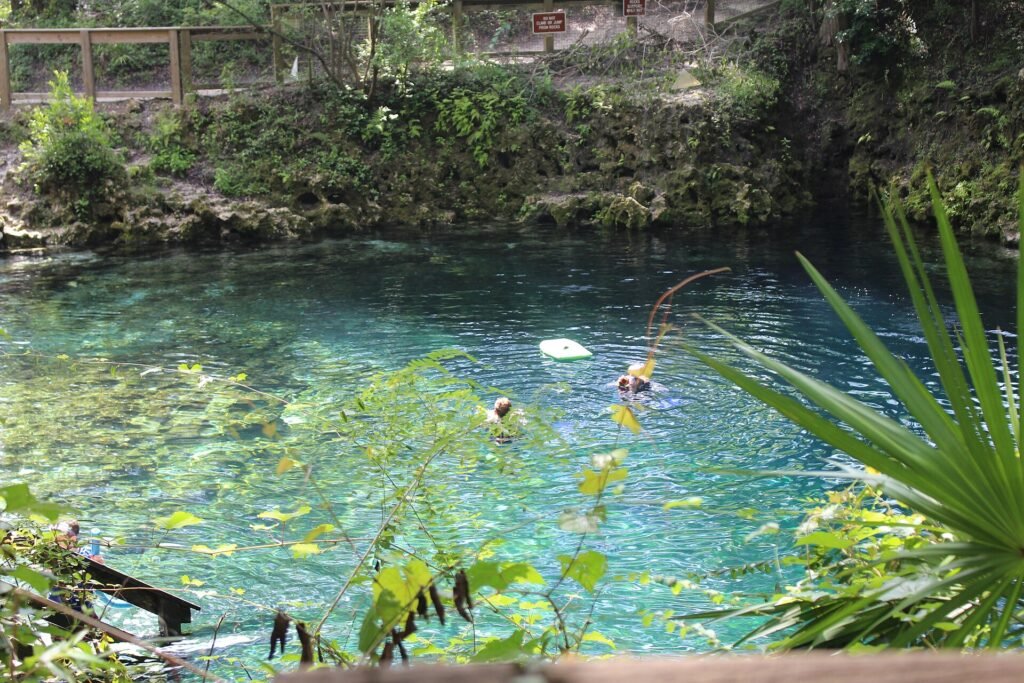
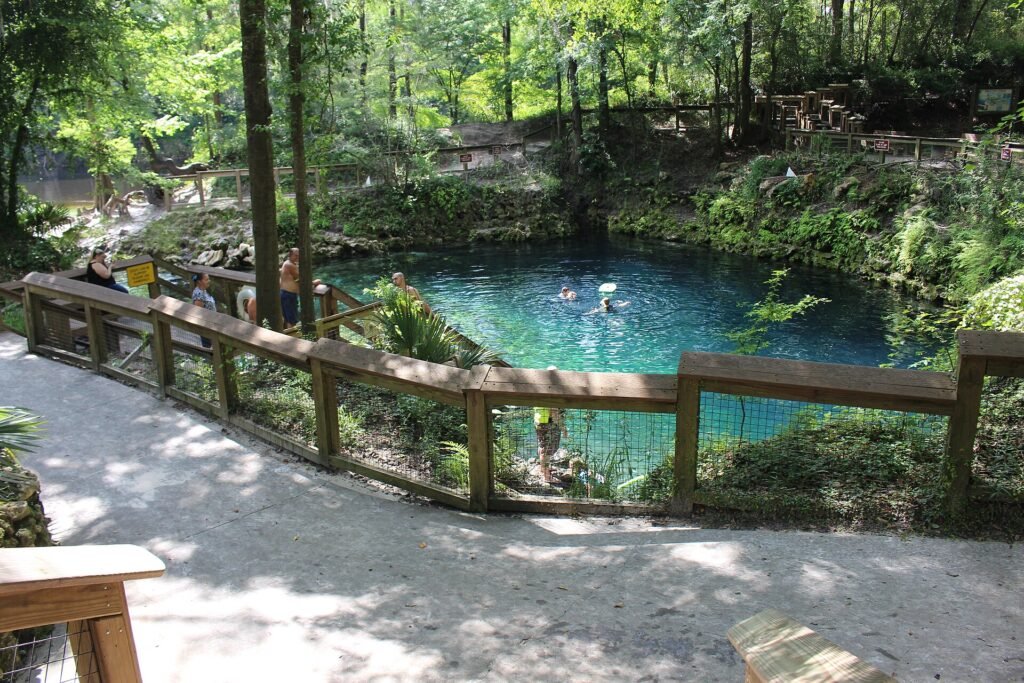
Madison Blue is the underrated one: a first-magnitude spring in a startling blue limestone basin on the Withlacoochee River, regularly voted among America's best swimming holes — yet its distance from big cities keeps crowds modest by Florida spring standards.
For cave divers it is world-class (permits required); for everyone else it is simply one of the prettiest places in the state to float.
Visiting
Entry is $4 to $5 per vehicle, plus $2 for pedestrians, bicyclists, and extra passengers, per Florida State Parks (there's no separate per-diver charge beyond the standard entry fee). Open 8am to sundown. Two recent cautions from the official page: the park closes frequently between 10am-3pm on weekends and holidays when it hits capacity, and you can be cited for waiting in your car on the roadside for it to reopen; and as of April 2026, large RVs and trailer combos are discouraged due to limited turnaround.
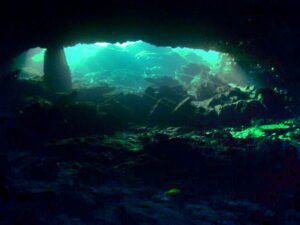
The spring is 82 feet wide and about 25 feet deep. It's internationally known for cave diving — over 26,000 feet of passages mapped — but the cave requires full cave certification (open-water won't suffice) and no solo diving. Swimmers and snorkelers enjoy the blue basin; cave entrance is at ~30 feet. For scuba: A world-class cave-diving destination — over 26,000 feet of mapped passage draw technical divers globally, while the blue basin above stays open to swimmers. For snorkel: A striking, deep-blue basin where snorkelers get a wide, photogenic view without needing any cave certification — the surface experience alone is worth the trip.
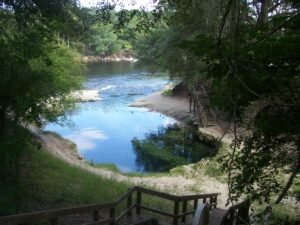
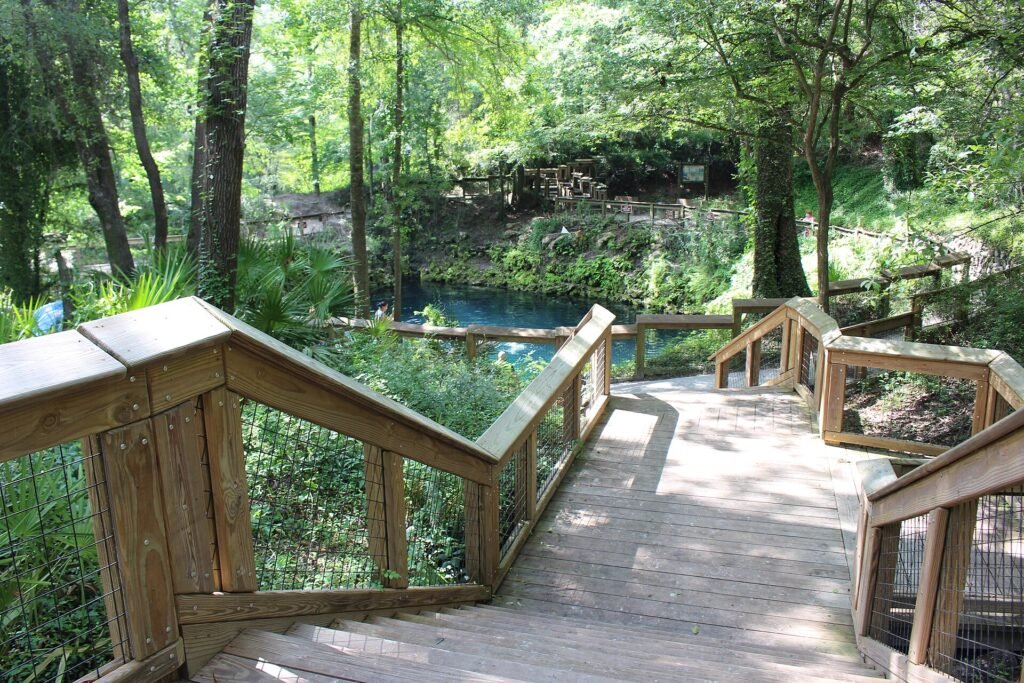
Stairs lead down into the water, which makes entry considerably easier than a lot of springs on this list where you're stepping off a bank or a dock. One honest condition worth knowing: the park actually closes the swimming area when the Withlacoochee River backflows into the spring and clouds the water — it's not just a hypothetical, it happens with some regularity, so check current status if you're driving any real distance for clear water specifically.
This spring has real credentials — USA Today readers voted it the #1 swimming hole in the country, which says something about how striking the blue really is in person, not just in photos. One safety detail worth taking seriously, from someone who's actually run into it: a line of sharp, slippery rocks crosses the spring run where it meets the Withlacoochee River, and the outflow there is strong enough that swimming back against it isn't realistic.
Stay in the main basin rather than drifting toward that stretch, especially with kids. There used to be a diving platform at the spring, but it was removed some years back after a safety incident, so don't expect one — the water itself, not a jump platform, is the draw now.
By the numbers: Madison Blue is a first-magnitude spring discharging at least 2,800 liters (about 740 gallons) per second — roughly 72 million gallons a day — through a short, 150-foot spring run before it joins the Withlacoochee River. The pool itself measures 82 feet across and 25 feet deep, sitting in Suwannee Limestone karst of Oligocene age. Water holds close to 72°F year-round. It's about 55 miles/1 hour from Tallahassee, roughly 110 miles/1.75-2 hours from Jacksonville, and around 80 miles/1.5 hours from Gainesville — the remoteness relative to those cities is a big part of why it stays quieter than the state's famous springs.
When to go
Dry-weather months when the Withlacoochee is low and the basin runs vivid blue. Weekdays are quiet in any season.
Local tips
Check river levels before the drive — the blue basin can turn tannic when the Withlacoochee runs high. Pair it with Lafayette Blue or the Suwannee springs for a quiet North Florida loop. If you're bringing the dog, know the limits upfront: leashed pets are welcome in the picnic area but not around the spring basin or in the water, and they can't be left unattended for more than half an hour, which rules out a long swim while your dog waits in the car or at a campsite alone.
Visitors who show up on a weekday describe having the basin nearly to themselves, sometimes for hours — one reviewer who arrived before 10am on a weekday reported having the whole spring for their group alone for a couple of hours, a sharp contrast with weekend and holiday crowding. On the other end, several reviewers describe being turned away at the gate on busy days after a long drive, with one account of driving six hours only to be told the park was at capacity and to try again in an hour — call ahead (850-815-0869) on weekends and holidays if you're coming any real distance.
The cold catches almost everyone off guard even in summer heat — reviewers consistently describe the water as genuinely cold at first before your body adjusts within a few minutes. Confident swimmers and families with kayaks report the best luck spotting manatees, since paddling covers more of the run than standing in the main basin.
Rules & restrictions
Cave diving requires full cave certification and permits. High river conditions can close or flood the spring entirely.
Good to know
Dogs: Park yes, not in water. Season: Year-round.
Facilities
Restrooms, picnic tables, and a small parking area. Deliberately minimal — no concessions or rentals on site. A seasonal concession stand operates on site, and nearby Crossroads Market and Grill fills gaps when it's closed. For a real meal, Madison (about 15 miles) has Southern home cooking and barbecue, Live Oak (20 miles) offers more variety including Mexican and Italian, and Jasper (10 miles) has small local diners if you want something closer and simpler.
Facilities are genuinely basic here — a ranger station, parking lot, bathrooms, and picnic tables, without the fuller amenities of some larger state parks. Overnight camping is not available at this park; the nearest public camping options are at Suwannee River State Park or the Twin Rivers State Forest, both a short drive away.
For more North Florida spring options within about an hour, see our pages on /springs/lafayette-blue-springs/ and /springs/suwannee-springs/ — both share the same quiet, low-crowd character as Madison Blue and pair well into a two-spring day.
Wildlife you may see
Turtles and fish in the basin, with river otters occasionally working the Withlacoochee. Barred owls and pileated woodpeckers in the hardwoods.
The cave system itself hosts three rare, cave-adapted crustaceans found almost nowhere else — the pallid cave crayfish, Hobb's cave amphipod, and swimming little cave isopod — though only certified cave divers ever see them. Above water, paddlers on the Withlacoochee near the spring mouth occasionally report manatees in cooler months.
History & background
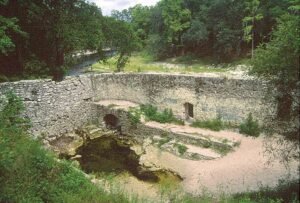
The spring was privately owned and operated as a swimming park for decades before the state acquired it in 2000; it has appeared repeatedly on national 'best swimming hole' lists since.
The surrounding land sits in Suwannee Limestone dating to the Oligocene epoch, one of Florida's more scientifically notable karst formations. Three crustacean species found nowhere else are documented living in the cave system: the pallid cave crayfish, Hobb's cave amphipod, and the swimming little cave isopod — part of why researchers and cave-diving scientists keep coming back here beyond the recreational draw.
Map & directions
FAQs
Is Madison Blue Spring crowded?
Far less than the famous springs — its remote location between Tallahassee and Jacksonville keeps weekends manageable outside holiday peaks, though the park does still hit capacity and turn visitors away on the busiest summer and holiday days.
Can you dive at Madison Blue?
Yes — it is a renowned cave-diving site with an extensive mapped system, restricted to properly certified cave divers with permits. Swimmers and snorkelers enjoy the open basin.
Why is the spring sometimes brown?
When the Withlacoochee River runs high after rain, tannic river water backs into the spring basin. In dry stretches it returns to vivid blue.
Can you bring a dog to Madison Blue Spring?
Yes, on a 6-foot leash, but only in the picnic area — dogs aren't permitted around the spring basin or in the water, and can't be left unattended for more than 30 minutes.
Why would Madison Blue Spring be closed for swimming?
The park closes the swim area when the Withlacoochee River backflows into the spring and reduces visibility. This happens periodically, so check current conditions before a long drive if clear water matters to your trip.
Is Madison Blue Spring good for young kids?
The basin has stairs for easy entry rather than a steep bank, which helps, but it's also 25 feet deep at the center — fine for confident young swimmers with supervision, less ideal for toddlers who need to stay in shallow water.
Is Madison Blue Spring safe for swimming?
Generally yes in the main basin, but be aware of the sharp, slippery rocks and strong outflow where the spring run meets the Withlacoochee River — you can't swim back against that current. Stay in the main spring area rather than drifting toward the river.
Is there a diving platform at Madison Blue Spring?
No, not currently — an earlier platform was removed years ago after a safety incident. The spring itself remains the main draw.
Is Madison Blue Spring really that special?
By outside recognition, yes — USA Today readers voted it the #1 swimming hole in the country, reflecting how strikingly blue and clear the water is in person.
Can you camp at Madison Blue Spring?
No — there's no campground at this park. The nearest public camping is at Suwannee River State Park or Twin Rivers State Forest, both a short drive away.
Does Madison Blue Spring turn visitors away at capacity?
Yes, on busy weekends and holidays — visitors have reported driving several hours only to be told the park was full and to return in about an hour. Call ahead (850-815-0869) before a long drive on a peak day.
Is the water cold at Madison Blue Spring?
Yes, noticeably so even in summer heat — like all Florida springs it stays close to the constant aquifer temperature, and visitors consistently describe an initial shock that eases within a few minutes.
Is there cell service at Madison Blue Spring?
Signal is inconsistent given how rural Madison County is — some carriers get a usable connection near the parking area, but don't count on reliable service down at the basin itself.
Can you bring your own scuba tank or kayak to Madison Blue Spring?
Kayaks and canoes are welcome for paddling the Withlacoochee from the spring run. Diving is restricted to the open blue basin for snorkelers; entering the cave system requires full cave certification, a permit, and your own dive gear — there's no rental or air-fill service on site.
Are there alligators at Madison Blue Spring?
They're occasionally reported in the wider Withlacoochee River near the spring mouth, though sightings in the swimming basin itself are uncommon. Stay alert if you paddle beyond the immediate spring area.
Is Madison Blue Spring worth visiting in winter?
Yes, if you don't mind cooler air — the water stays a near-constant 72°F year-round, and winter visits mean the smallest crowds and the best odds of the basin running clear blue rather than tannic.
Is Madison Springs the same as Madison Blue Spring?
Most people searching 'Madison Springs' mean Madison Blue Spring State Park, at 8300 NE State Road 6 in Lee, Florida, in Madison County. It's a first-magnitude spring with a bright blue basin that USA Today readers once voted the top swimming hole in the country. The park is open 8am to sunset, 365 days a year.
How much does Madison Blue Spring cost, and can you swim?
Florida State Parks lists entry at $4-$5 per vehicle, plus $2 for pedestrians, bicyclists, and extra passengers. Swimming and snorkeling in the main basin are welcome, while cave diving requires full cave certification. The park often closes between 10am and 3pm on weekends and holidays once it reaches capacity, so arrive early.
Visitor photos
See this week’s shots: Instagram #madisonbluespring · TikTok #madisonbluesprings
Great for: Family-Friendly · Scuba Diving · Snorkeling · Swimming