“Free” gets used loosely for Florida springs — plenty of lists count a spring with a $2 county parking fee as free, or one you can wade into from a public riverbank. Held to an actual no-entry-fee standard, verified against official sources, there are exactly three: Suwannee Springs, Cypress Springs, and Chassahowitzka Springs.
Before you go
- Suwannee Springs: entry to the spring itself is completely free.
- Cypress Springs: free water access, but it’s paddle-in only — boat rental or shuttle from outfitters costs extra.
- Chassahowitzka Springs: swimming is free, though the campground charges a boat launch fee, and manatees arrive each winter.
How to choose
Most springs on this site sit inside a state park, national forest, or private operation that charges for land and upkeep even when the water itself has no separate ticket. These three clear the bar because they sit on county or municipal land with public access built in from the start. Free means no gate, not full service — none has a lifeguard, boardwalk, or bathhouse, and clarity swings more with the weather than at a maintained state park.
A few springs get called free elsewhere but don’t qualify here: Poe Springs is free only October through March ($6/vehicle in season), Royal Springs now charges $5/vehicle despite older listings, and Morrison Springs added a $4/car fee in March 2026. Ponce de Leon Springs ($4/carload) and Little River Springs ($5/vehicle) are cheap but not free.
Not every Florida spring costs money. These are the ones with no entry fee — bring your own gear and go.
4 springs
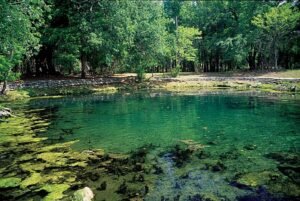
Otter Springs
A quiet RV-and-camping base near the Suwannee.
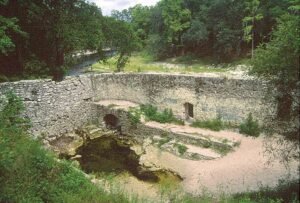
Suwannee Springs
Historic sulphur springs and 19th-century ruins on the Suwannee.
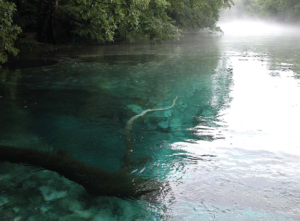
Cypress Springs
The clearest water in the Panhandle — reachable only by paddle.
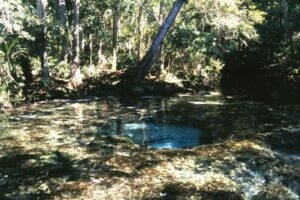
Chassahowitzka Springs
The wildest spring-fed paddle on the Gulf Coast.
Free springs often have fewer facilities and no lifeguards. Clarity at river-fed springs depends on recent rain.