Every spring guide on this site mentions the same number: 68–72°F, year-round, no matter the season. It’s the single most repeated fact about Florida springs, and also one of the least explained. Here’s the actual mechanism, and the one significant exception to the rule.
It’s not the spring — it’s the aquifer
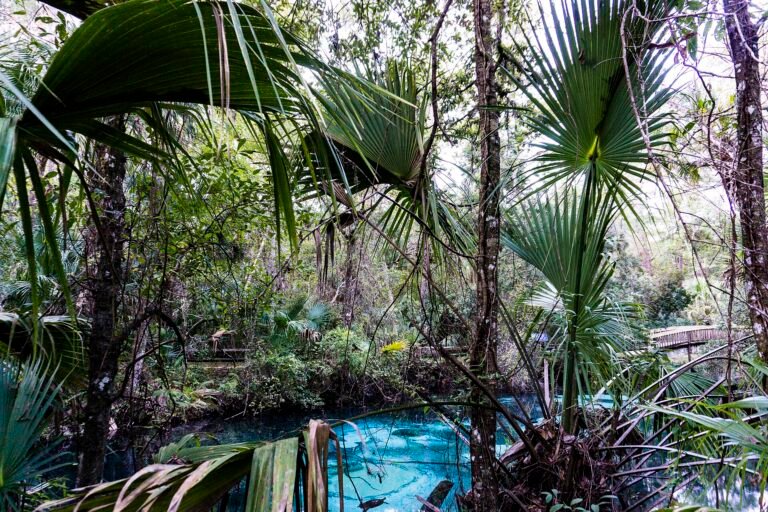
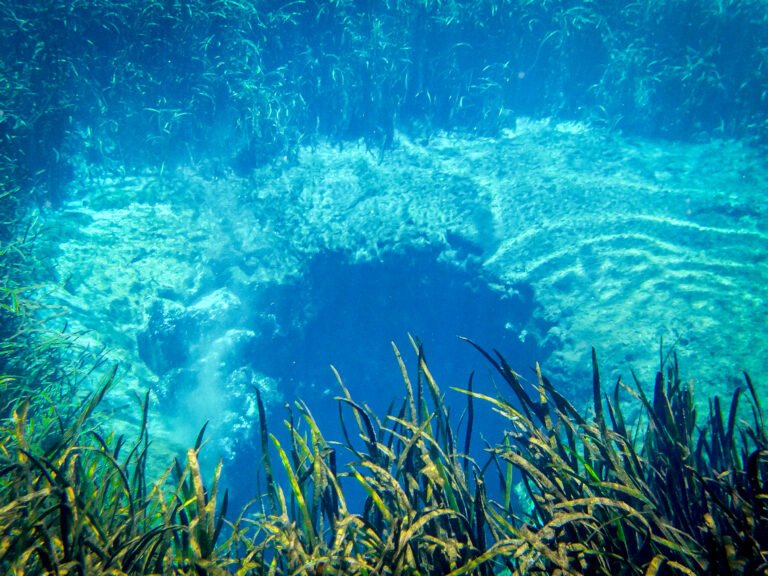
Florida’s springs are windows into the Floridan aquifer, a vast limestone groundwater system that underlies most of the state. The water that emerges at a spring boil didn’t just fall as rain yesterday — it percolated down through sand and limestone, sometimes traveling underground for months or years, before resurfacing. That underground residence time is the whole story: once water is deep enough in the aquifer, it’s insulated from the day-to-day and season-to-season swings of surface air temperature, according to background from Florida Springs Institute and USGS groundwater research on the Floridan aquifer system. A summer heat wave or a winter cold snap barely registers a few dozen feet underground, so the water that discharges at a spring reflects something closer to the region’s long-term average annual temperature rather than whatever the weather happens to be doing that week.
Florida’s statewide mean annual air temperature happens to sit right around 70–72°F, which is essentially why spring water comes out in that same narrow band. It isn’t a coincidence or a marketing number — it’s a direct consequence of groundwater temperature tracking regional average surface temperature over a long enough timescale to smooth out seasonal extremes.
Why it feels cold in summer and warm in winter
This is the detail that trips people up every year: the water temperature doesn’t actually change, but how it feels does, because it’s being compared against a moving target — the air and your own body temperature. A 72°F spring in August, next to 95°F air, feels like a genuine shock on first entry. The same 72°F water in January, next to 55°F air, feels comparatively warm — which is exactly why manatees seek it out as a winter refuge (see our manatee season guide for where to see that in person). The spring hasn’t changed. You have.
The one real exception: Warm Mineral Springs
Warm Mineral Springs in North Port breaks the pattern completely — it flows at roughly 85°F, not 68–72°F, making it Florida’s only naturally warm mineral spring. The reason comes down to geology rather than a different aquifer mechanism: it’s a sinkhole formed roughly 30,000 years ago by a collapsed cavern roof, and its water draws from a deeper, mineral-rich source than the shallower Floridan aquifer discharge that feeds nearly every other spring on this list. Instead of the clear blue most Florida springs are known for, it’s a mineral-heavy, faintly sulphurous bowl that draws people for soaking rather than snorkeling — a genuinely different experience from anywhere else we cover.
Warm Mineral Springs is also one of the most significant archaeological sites in North America: roughly 10,000-year-old human remains have been recovered from its depths, evidence of some of the earliest people in Florida, and it’s been listed on the National Register of Historic Places since 1977. As of our last check, swimming has continued at the springs even while the property’s three historic 1950s bathhouse buildings remain closed for a $16.7 million rehabilitation project the city fully funded in July 2026 — so expect construction activity nearby, but the warm water itself has generally stayed accessible. Always confirm current status on our conditions page before a special trip, since access has changed with some regularity over the years.
What this means for planning a trip
Because the 68–72°F temperature is a function of the aquifer, not the season, it’s genuinely true that any Florida spring on this site feels roughly the same in the water whether you visit in January or July — the deciding factors for when to go are crowd levels, water clarity (see our piece on tannic water and clarity for why river-fed springs vary more than spring-boil water does), and air temperature for comfort getting in and out, not the temperature of the water itself. Warm Mineral Springs is the one spring on this site where the water temperature genuinely is a reason to pick a season — cooler months make an 85°F soak feel best, the same way a 72°F spring feels best in the heat of summer.
Which springs this applies to
The 68–72°F rule holds across nearly every spring we cover, but a few are worth naming specifically because their temperature is part of what makes them distinctive:
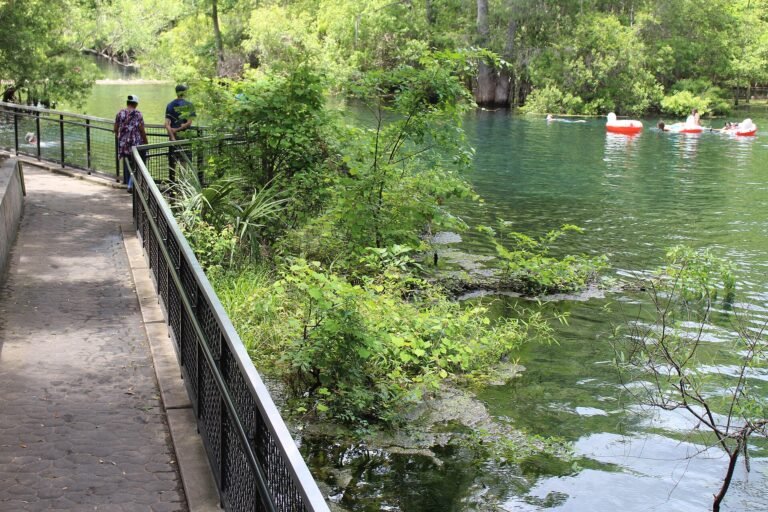
- Ichetucknee Springs — eight named springs feed the same river system, all discharging in the same 68–72°F range regardless of season, which is exactly why a January float feels shockingly cold in the air and a July one feels like relief.
- Blue Spring State Park — the constant spring temperature is the entire reason manatees gather here every winter; when the St. Johns River drops toward the 60s, the spring run stays in the 70s and becomes a survival refuge, not just a swimming spot.
- Three Sisters Springs — the same constant-temperature mechanism draws manatees into Kings Bay, which is why it’s paired with Blue Spring as one of the two best-known winter manatee gathering points in the state.
- Ginnie Springs and Rainbow Springs — both large-volume, high-flow springs where the boil itself stays reliably close to 72°F year-round, part of why they’re popular even on the hottest and coldest days.
- Warm Mineral Springs — the exception that proves the rule, at roughly 85°F from a deeper mineral-rich source rather than the shallower Floridan aquifer discharge that feeds everywhere else on this list.
Frequently asked questions
Does a spring ever get colder in a hard freeze?
Not meaningfully — the water’s temperature is set by its underground residence time in the aquifer, not by a few days of cold air at the surface. A hard freeze changes the air temperature and can affect wildlife behavior around a spring, but the boil itself stays close to its usual 68–72°F.
Why do some springs feel colder than others if they’re all around 72°F?
Flow volume and basin depth both play a role in how a given spring feels on entry, even at the same underlying temperature — a spring with a strong, direct boil right where you get in can feel more bracing than a slower-moving run of the same temperature. Ponce de Leon Springs in the Panhandle is a genuine exception to the general rule rather than a perception effect: it runs closer to 68°F rather than the usual 72, from two underground flows converging, which is measurably cooler, not just a difference in how it feels.
Is the 68–72°F range the same at every Florida spring, or does it vary by region?
It’s a genuinely narrow range statewide, since it tracks Florida’s regional mean annual air temperature rather than local weather — springs in the Panhandle and springs in Central Florida both fall in the same general band, with Ponce de Leon Springs’ roughly 68°F flow as the more notable outlier on the cooler end and Warm Mineral Springs’ roughly 85°F as the outlier on the warm end.
Sources / verified against: Florida Springs Institute FAQ, USGS Floridan aquifer system research, Warm Mineral Springs (City of North Port), and our own conditions log.