Should you go?
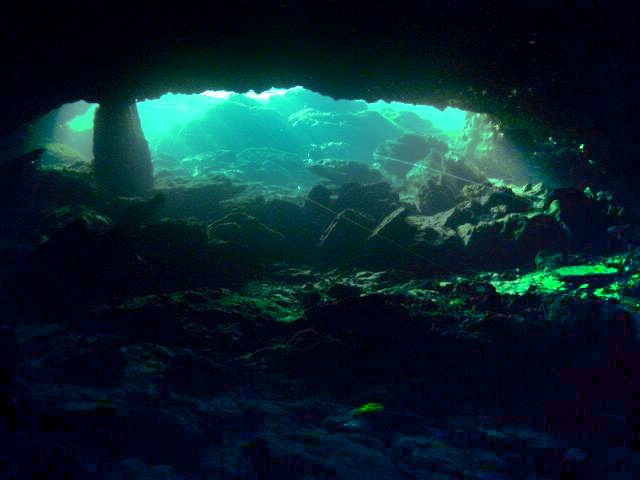
Peacock Springs holds one of the longest underwater cave systems in the continental United States — more than 33,000 feet of mapped passage — and it is the training ground where a large share of the world's cave divers earned their certifications.
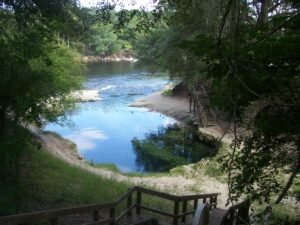
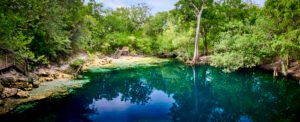
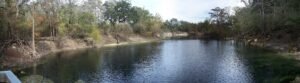
Above water it is quiet and unassuming: a small park with two major springs and several sinkholes under hardwood forest. Non-divers can swim at Peacock I, but this is fundamentally a diver's park.
Visiting
Entry is $4 per vehicle (verified). Wes Skiles Peacock Springs holds one of the longest underwater cave systems in the country — over 33,000 feet mapped (Wikipedia and other secondary sources now put the surveyed total closer to 38,000 feet following a 2010 connection to Baptizing Spring). The Orange Grove Sink allows open-water diving for all levels, but the Peacock I and Peacock III entrances require proof of cavern or cave certification. No DPVs (diver propulsion vehicles) and no solo diving are allowed anywhere in the system.
Non-divers can swim at the designated areas at Peacock I and Orange Grove Sink, but this is fundamentally a cave-diver's park with minimal facilities — no concessions. For scuba: One of the longest underwater cave systems in the country — over 33,000 feet of mapped passage, and the training ground where much of the world's cave-diving certification happens. Non-divers genuinely have something here too: an award-winning interpretive nature trail traces the path of the underwater cave system beneath your feet, with markers explaining the passages you're walking directly above — a clever way to experience what the divers see without getting in the water at all.
Entry is $4/vehicle on the honor system (correct change required). Wes Skiles, the park's namesake, was a world-class explorer and cinematographer who died in an open-water diving accident in 2010, not in these caves.
Check-in for divers: per Florida State Parks' own cave-diving page, every diver must show proof of certification before entering the water or leave certification cards visible on the dashboard, and everyone signs a Diver Sign-In Form at the trailhead. Dive parties must have at least two divers — no solo diving anywhere in the system — and open-water divers are not permitted to carry lights at any location, cave-certified or not. Surfacing is only allowed at the designated sinks unless there's a genuine safety need.
By the numbers: this is a second-magnitude spring system (roughly 10-100 cfs per opening) with three named tunnels converging at Peacock I — the Pothole tunnel (the deepest, to about 65 feet), the Peanut tunnel (20-60 feet), and the passage leading to Peacock II. Water holds a constant 72°F. The park sits in Luraville, about 20 minutes from Live Oak, 45 minutes from Lake City, and roughly 1.5 hours from both Gainesville and Tallahassee.
When to go
Weekday mornings for divers seeking parking near Orange Grove. Non-divers will find little to do here.
Local tips
Bring your own snorkel, fins, and a life jacket even if you're not diving — the water rewards underwater viewing, and without a flotation aid you'll tire quickly just staying afloat to look. Facilities here are genuinely basic — a portable toilet at Peacock 1, a compost toilet at Orange Grove — so plan accordingly, especially with kids.
The park is open 8am to sunset all 365 days of the year per Florida State Parks, and dives must wrap up a full hour before sundown, so build that into your schedule if diving is the plan rather than arriving late afternoon expecting a long dive.
Rules & restrictions
Cave certification is verified and enforced. Untrained divers have died in these systems. Swimming is limited to the designated areas at Peacock I and Orange Grove Sink. Dogs are welcome on a 6-foot handheld leash. Dives must conclude one hour before sundown, and solo diving is prohibited.
Every diver signs a Diver Sign-In Form and must show certification (or leave the card visible on the dashboard) before entering the water; student divers register under their instructor's current commercial dive permit. Orange Grove Sink is open to certified open-water divers as well as cavern/cave divers; the Peacock I and III entrances are cave/cavern-certified only. Open-water divers cannot carry lights anywhere in the system, regardless of location. No DPVs (scooters) are allowed, per a rule the park put in place in 2002 specifically to protect the cave formations.
Good to know
Dogs: Park yes, not in water. Season: Year-round.
Facilities
Basic restrooms, parking areas at the main sinks, and interpretive signs. No concessions, no rentals, no camping. Grills and picnic areas round out the amenities, along with ample parking including RV space. Florida State Parks' own listing for the park confirms pet-friendly areas throughout the grounds and ADA-accessible facilities at the main sink areas, so a family member who isn't diving or swimming still has a comfortable way to see the springs and walk the nature trail.
Wildlife you may see
Little visible above water beyond woodland birds and turtles — the park's significance is entirely below the surface.
Above ground, the mature hardwood hammock and upland pine draw woodpeckers and songbirds year-round; turtles bask around the sink edges in warm months. There's little seasonal variation to report since so few visitors come here for wildlife — the draw is what's mapped beneath the surface, not what's visible above it.
History & background
Named for the Peacock family who farmed the land, the park was renamed in 2011 for Wes Skiles, the pioneering cave diver and cinematographer who filmed here and died in 2010. According to Florida State Parks' page for Wes Skiles Peacock Springs, the park protects two major springs, a spring run, and six sinkholes set within a mature forest that represents four distinct plant communities — a small footprint (the whole park is well under a square mile) that packs in a surprising range of habitat types, from wet hardwood hammock around the sinks to drier upland pine further from the water.
The interpretive cave-dive trail that traces the mapped passages above ground has won recognition specifically for how it translates what divers see 30-60 feet underground into something a walking visitor can follow and understand — a rare bridge between the two very different ways people experience this park.
More history: Dr. John Calvin Peacock and his family settled the surrounding land in 1855. Vasco Murray made the first recorded cave dive into the system in 1956. The Nature Conservancy acquired 250 acres for conservation in 1985, and the park opened to the public in 1993. It was renamed for Wes Skiles in 2011, the year after his death. A 2006 Trust for Public Land purchase of roughly 481 acres more than doubled the park's original 252-acre footprint to its current 733 acres. Cave exploration itself has continued for decades: Sheck Exley's team produced the first full map after more than 521 dives by 1995, and in 2010 divers Agnes Milowka and James Toland connected the Peacock and Baptizing spring systems, adding roughly 10,000 feet of newly linked passage.
Map & directions
FAQs
Do you need cave certification at Peacock Springs?
Yes — the cave systems are restricted to fully cave-certified divers, and the park verifies credentials. This is not a cavern site for open-water divers.
Can you swim at Peacock Springs?
Yes, in the designated areas at Peacock I and Orange Grove Sink, though the park is primarily oriented toward cave diving.
How long is the Peacock cave system?
More than 33,000 feet of mapped underwater passage per the park's own figures, with secondary sources putting the current surveyed total closer to 38,000 feet after a 2010 connection to the Baptizing Spring system — either way, one of the longest in the United States.
Is Peacock Springs good for non-divers?
There's an award-winning nature trail that traces the cave system beneath your feet with interpretive markers, plus swimming allowed at Peacock 1 and Orange Grove Sink — but facilities are basic and this is fundamentally a diver's park.
What bathroom facilities does Peacock Springs have?
Basic — a portable toilet at Peacock 1 and a compost toilet at Orange Grove. Plan accordingly, especially with young kids.
Are dogs allowed at Peacock Springs?
Yes, on a 6-foot handheld leash.
How many springs and sinkholes does Peacock Springs State Park protect?
According to Florida State Parks, the property contains two major springs, a spring run, and six sinkholes, set within a mature forest spanning four distinct plant communities.
What are the park's hours?
8am to sunset, 365 days a year, per Florida State Parks — dives must be completed a full hour before sundown.
How do divers check in at Peacock Springs?
Every diver signs a Diver Sign-In Form at the trailhead and must show a certification card, or leave it visible on the vehicle dashboard, before entering the water. Dive parties need at least two divers — solo diving isn't allowed anywhere in the system.
Can open-water divers use lights at Peacock Springs?
No — open-water (non-cave, non-cavern) divers may not carry lights at any location in the park, even at Orange Grove Sink where open-water diving itself is allowed.
Which sink is easiest for beginner or open-water divers at Peacock Springs?
Orange Grove Sink is the one entrance open to certified open-water divers as well as cavern and cave divers. Peacock I and Peacock III require cavern or cave certification.
When was the park renamed for Wes Skiles?
In 2011, a year after Skiles died in an open-water diving accident. He was a pioneering cave diver and cinematographer who filmed extensively in this system.
Visitor photos
See this week’s shots: Instagram #peacocksprings · TikTok #peacocksprings
Great for: Scuba Diving · Swimming