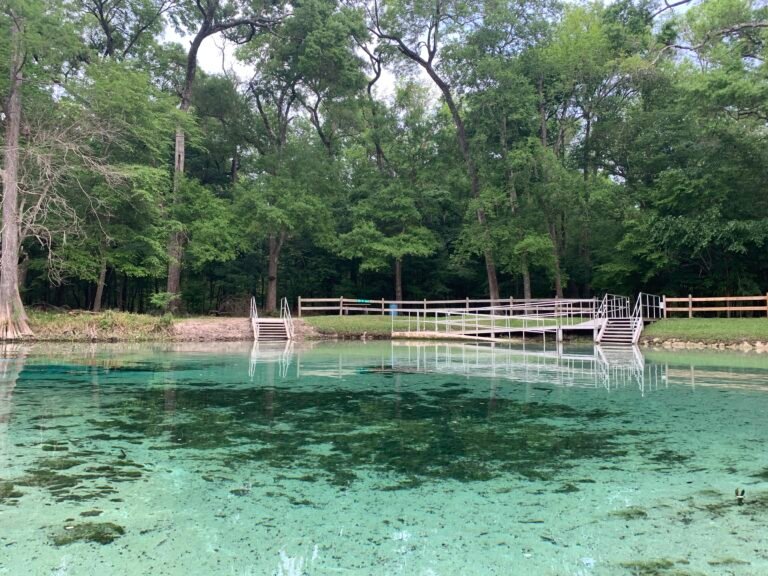
The rules at a Florida spring exist because these are fragile, fast-flowing ecosystems that a few hundred thousand visitors a year could easily wreck, and the ones that get enforced hardest — no glass, no alcohol at state parks, no touching manatees — aren’t arbitrary. Here’s what’s actually allowed, what isn’t, and what gets you asked to leave.
State park rules: no alcohol, no glass
Florida state parks prohibit alcoholic beverages and glass containers in the park, full stop — this applies at every state-park-managed spring, from Ichetucknee to Wekiwa to Manatee Springs. Rangers do check coolers, especially on busy weekends, and the glass rule exists because broken glass on a limestone river bottom is both a real injury risk to bare feet and effectively unrecoverable once it’s in the water. Bring drinks in cans or plastic, and leave the wine glasses at home.
On top of the general glass ban, Ichetucknee’s tubing run and the Rainbow River both restrict disposable containers more specifically — the intent is to keep cans, cups, and single-use plastics from ending up in the water or washed downstream during a busy tubing day. The exact wording and enforcement details can shift season to season, so check the current posted rules at the entrance station or the park’s official page before you pack a cooler for either run.
Private springs play by different rules
Ginnie Springs, being privately owned, has historically allowed alcohol for adults on the property while still banning glass containers — a real difference from the state park model. That said, Ginnie’s alcohol policy changed in 2026; we’ve noted the update on our scuba diving guide as well. Don’t rely on what a policy used to be — check ginniespringsoutdoors.com directly for the current rule before you plan a trip around it. Other private springs (Devil’s Den, Vortex Spring) set their own policies too, and none of them are guaranteed to match what a state park allows.
Speakers and music
Most springs either prohibit amplified music entirely or expect it kept low enough not to carry across the water to other visitors. This is one of the more commonly ignored rules and one of the more commonly enforced ones — a ranger asking someone to turn off a speaker is a routine sight on a busy Saturday. If you want music, bring headphones or keep the volume to your own group’s immediate area, and expect to be asked to shut it off if another family complains.
Drones
Florida state parks require a permit to fly a drone, and that permit process exists independent of any FAA registration you already hold — a drone that’s legal to fly under federal rules is still not automatically legal to launch or land inside a state park boundary. Flying without a permit risks a citation and, at minimum, a ranger telling you to land immediately. If you want aerial footage of a spring, check the specific park’s drone policy and permit process before you show up with one in the trunk.
Sunscreen and the water
Chemical sunscreens (the kind with oxybenzone or octinoxate) are increasingly discouraged or restricted at sensitive aquatic sites because those compounds don’t break down cleanly in a closed spring system. Use a reef-safe or mineral sunscreen (zinc oxide or titanium dioxide based) instead, and apply it about 15 minutes before you get in the water so it has time to actually bind to skin rather than rinsing straight off into the spring the moment you jump in. This matters more at a spring than at the beach — springs are smaller, more enclosed bodies of water with far less dilution than the ocean.
Stay off the vegetation
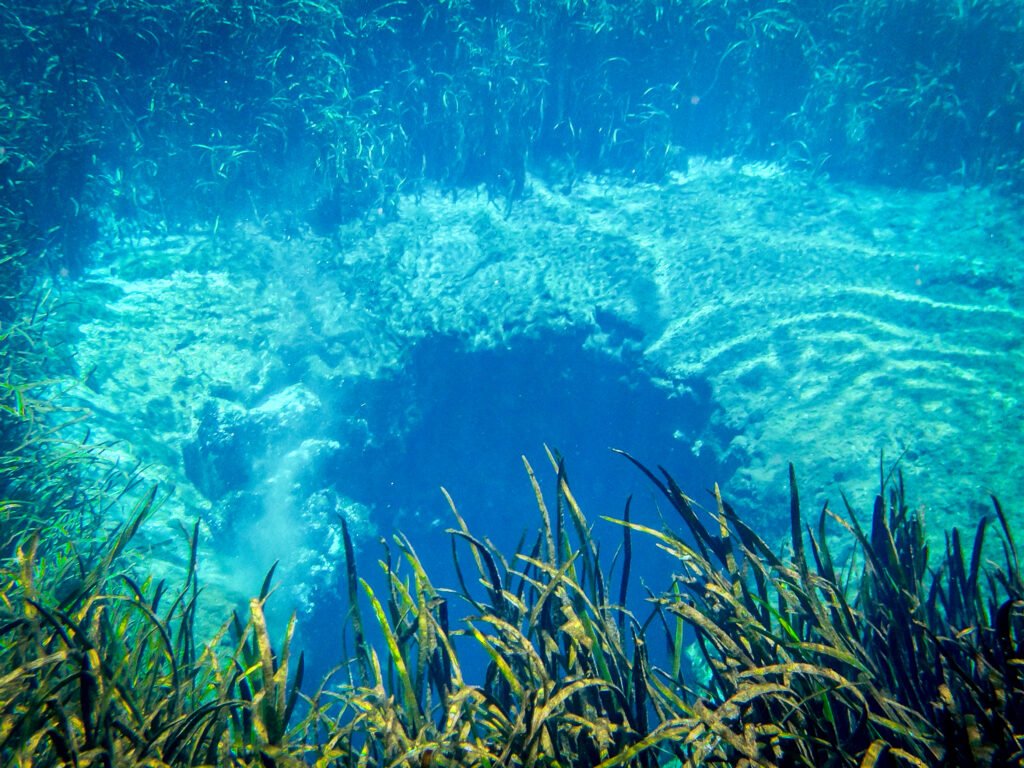
The eelgrass and other submerged vegetation you see waving in a spring’s current isn’t just scenery — it’s habitat, it stabilizes the sediment, and it’s slow to recover once trampled. Standing on it, kicking through it with fins, or anchoring a kayak in it does real, visible damage that can take a season or more to grow back. Stick to designated swim areas and sandy bottoms where you can, and if you’re snorkeling, keep your fins up and off the bottom in grassy sections.
Don’t touch the manatees
This one is federal law, not just park etiquette: manatees are protected under the Marine Mammal Protection Act and the Endangered Species Act, and touching, chasing, or otherwise disturbing one carries real fines. During manatee season (roughly November through March), springs like Blue Spring and Three Sisters post manatee zones and require snorkelers to observe passively — hands to yourself, no chasing, no cornering an animal against a wall or the shore. See our manatee season guide for which springs see them and when, and what “passive observation” actually looks like in the water.
Stay off the boil vent
The boil — where water actually pushes up out of the aquifer — is often the most fragile and, at some springs, the most current-heavy part of the whole system. Standing on it, sitting on it, or letting kids treat it like a jacuzzi jet can damage the vent structure and, at a few springs, is flatly against the rules. Swim near it, look down into it, but don’t put your feet on it.
Trash in, trash out
Not every spring — especially the smaller county access points — has trash service at the water’s edge, and even where cans exist, they overflow fast on a busy weekend. Bring a bag for your own trash and pack it out rather than assuming a can will be there when you’re ready to leave. This applies double at free or lightly-staffed sites like the ones in our free springs guide, where there’s often no staff at all to clean up after visitors.
Dive-flag rules for snorkelers in the runs
On a spring run that also sees boat or kayak traffic — the Santa Fe River near Ginnie and Rum Island, the Rainbow River, the Wakulla — a dive flag matters for snorkelers the same way it does for divers. A red-and-white or orange-and-white dive flag signals your position to anyone paddling or motoring past, and Florida law generally requires boats to give a flagged diver or snorkeler a wide berth. If you’re snorkeling in open current rather than a fully enclosed swim area, tow a flag or stay close to a boat/kayak that’s flying one.
What actually gets you asked to leave
- Alcohol or glass at a state park spring, especially if a ranger sees it in a cooler check.
- Amplified music after a complaint or a posted quiet request.
- Flying a drone without a permit.
- Touching, chasing, or crowding a manatee — this can also draw a federal citation, not just a park warning.
- Climbing on or damaging vegetation, cave formations, or posted no-access areas after a warning.
- Entering a cave or cavern system without the required certification — see the safety note below.
A safety note on caves and overhead environments
Several Florida springs have real cave systems beneath them, and an open-water scuba certification does not qualify a diver to enter one. Cave diving requires specific cave certification, and entering an overhead environment — a cave, a cavern beyond the daylight zone, any space where you can’t swim straight up to the surface — untrained is genuinely dangerous. Florida’s springs have killed untrained and improperly-equipped divers, and every cave-diving fatality report points to the same handful of preventable mistakes: no training, no guideline, no proper gas planning. If you’re certified only for open water, stay in open water; see our scuba diving guide for exactly which springs offer cavern tours versus full cave access and what certification each requires.
Common questions
Can I bring beer to a state park spring?
No. Alcohol is prohibited in Florida state parks, springs included, regardless of container type.
Does Ginnie Springs allow alcohol?
Ginnie has historically allowed alcohol for adults, but the policy changed in 2026. Check ginniespringsoutdoors.com for the current rule before you plan around it.
Do I need a permit to fly a drone at any Florida spring?
At state park springs, yes — a permit is required regardless of your FAA drone registration status. Private springs set their own policies, so check directly.
Is it actually illegal to touch a manatee?
Yes. It’s a federal violation under the Marine Mammal Protection Act and Endangered Species Act, enforced with real fines, not just a park rule.
Why can’t I use my regular sunscreen?
Many chemical sunscreens contain compounds that don’t break down cleanly in a spring’s relatively enclosed water system. Reef-safe or mineral sunscreens, applied before you get in the water, are the better choice for both the spring and your skin.
Sources / verified against: Florida State Parks rules and regulations pages, Florida Fish and Wildlife Conservation Commission manatee protection guidance, NOAA Marine Mammal Protection Act summary, Ginnie Springs Outdoors official site (check for current 2026 alcohol policy). Rules and posted policies change; verify with the specific park or property before your visit.