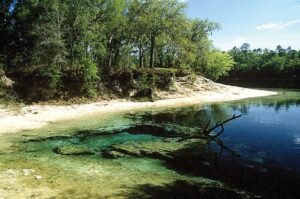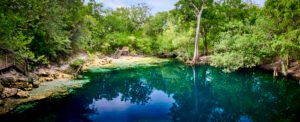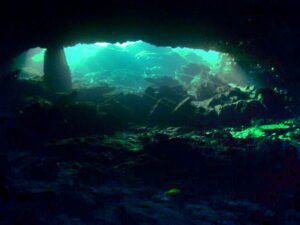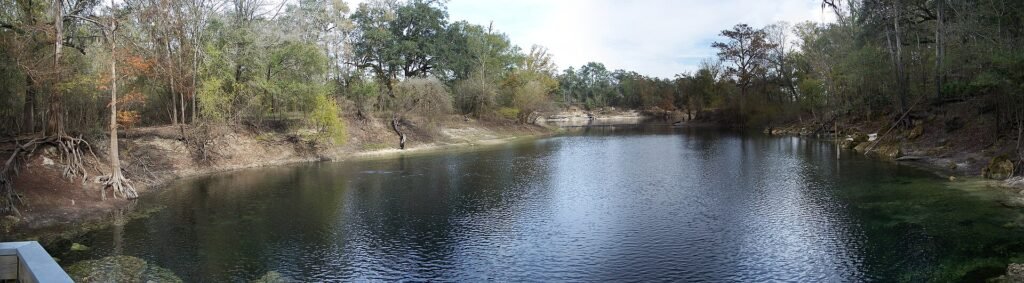
Should you go?
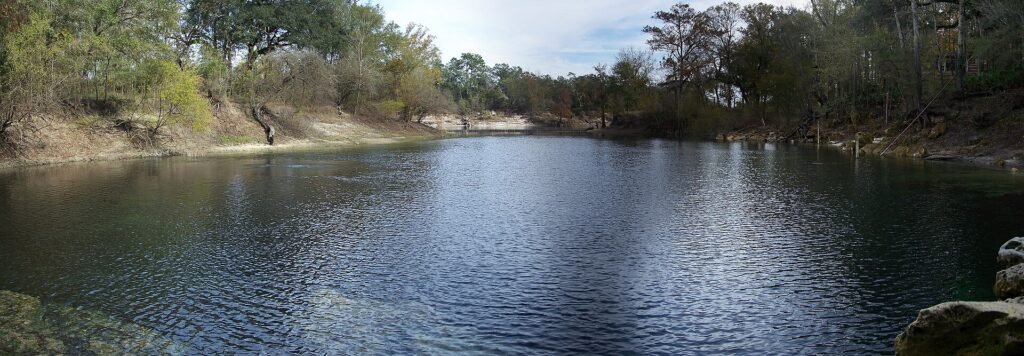
Troy is a deep, blue first-magnitude bowl on the Suwannee with a genuine hook: the remains of the Madison, a Civil War-era steamboat scuttled in the run in 1863, still visible to snorkelers in the shallows.
It stays far quieter than the famous springs — a favorite of locals, divers, and anyone who likes their history submerged.
Visiting
Entry is $5 per vehicle (verified against Florida State Parks — confirmed there is no separate per-diver charge, just the standard vehicle rate). Open 8am to sundown; dives must finish before 5pm. This first-magnitude spring drops to 70 feet, and only open-water certified divers may dive — no solo diving, no cave penetration, no lights.
The draw is the wreck of the steamboat Madison, scuttled in the spring run in 1863 to keep it from Union capture; its outline is visible to snorkelers and even from the boardwalk on clear days. Do not touch or remove anything from the wreck — it is a protected archaeological site.
Note: clarity here has declined and clear days are less frequent than they once were. <strong>For scuba:</strong> Dive over a Civil War shipwreck — the scuttled 1863 steamboat Madison rests in the spring run, its outline visible even from the boardwalk on clear days. <strong>For snorkel:</strong> Snorkel directly over a Civil War shipwreck — the outline of the scuttled steamboat Madison is visible from the surface on clear days, no diving required. Access here is genuinely well thought out for a range of abilities: an accessible ramp winds from the picnic area down to spring level, with a platform overlooking the water, then stairs lead to a lower boardwalk and further stairs give direct entry for swimmers and snorkelers.
Divers tend to gather near a short waterfront boardwalk on a rocky shoreline before entering. A nice historical detail: the steamboat Madison was actually named after the captain's hometown of Madison, Florida — a small human thread connecting the wreck to the region it still rests in.
By the numbers: a first-magnitude spring pushing about 96 million gallons a day, with a main vent that drops to roughly 70 feet and a 325-foot run connecting it to the Suwannee River — fed in part by the Little River Sink and Stick Sink funneling groundwater in from nearby. Troy sits just outside Branford, about 20 miles from Live Oak, 45 miles from Gainesville, and 70 miles from Tallahassee.
When to go
Late morning in dry months, when sunlight reaches into the deep basin and the Suwannee is low.
Local tips
Late morning sun lights the deep basin best. Do not touch or stand on the wreck — it is a protected archaeological site. Kids often spot the wreck outline before adults do — sharp young eyes and a willingness to look straight down seem to be the trick, one reviewer noted with some amusement.
Visitors consistently praise the water clarity but note it depends on conditions — after heavy rain, the Suwannee can back up into the spring basin and limit access to the beach area. There's no posted trail map at the park, so plan your route on the short nature trail before you head out. The paved access road and winding ramp down to the water make this one of the more wheelchair-friendly wreck-diving spots in the state.
Rules & restrictions
Do not stand on, touch, or remove anything from the steamboat wreck — it is a protected site. No cave diving; the basin is open-water only. Dives must be completed before 5pm daily. Leashed pets are welcome throughout the park.
Good to know
Dogs: Park yes, not in water. Season: Year-round.
Facilities
Restrooms, picnic tables, a boardwalk and stairs into the basin, and parking. Minimal beyond that — no concessions. Restrooms and showers are available. Geocaching is genuinely popular here, worth looking into if your family enjoys that as a side activity during the visit. Florida State Parks' own amenities listing also notes a diver rinse station and outdoor shower near the water, plus an accessible walkway down to the spring and a half-mile nature trail that winds through hardwood hammock and past two small ponds — a nice, quiet stretch-your-legs option if you want a break from the water.
Wildlife you may see
Fish school in the deep basin, with turtles along the run. The Suwannee brings otters and occasional sturgeon. Fish congregate visibly around the wreck itself, adding to the appeal for snorkelers.
The heavier algae growth documented in recent water-quality assessments has reduced habitat for native aquatic plants on the spring bottom, though fish still concentrate visibly around the wreck and the deep basin.
History & background
The steamboat Madison was scuttled here in 1863 by its Confederate owner to prevent Union capture; its ribs remain in the spring run and are protected as an archaeological site. Florida State Parks' own account of the wreck fills the story in further: the Madison was built in 1854 and spent its early years as a kind of floating general store and mail carrier along the Suwannee, owned and captained by James M. Tucker, whose shallow-hulled ship could navigate stretches of river that tripped up competitors.
When the Civil War came, the Madison was pressed into Confederate service — unarmed, but used to move rations and supplies to the town of Columbus. As Union forces pushed into Florida roughly two years into the war, Tucker made the call to scuttle his own ship in the spring run rather than let it be captured and used against the Confederacy.
By most accounts, he expected to raise it again once the war ended, but the vessel's machinery and fittings were stripped and stolen in the meantime, leaving it permanently unusable. What snorkelers and boardwalk visitors see today is that same hull, over 160 years later, a genuine piece of Civil War-era Florida still resting where it was sunk.
Map & directions
FAQs
How deep is Troy Spring?
70 feet at its deepest point — a genuinely dramatic depth for a spring this accessible, part of why it draws both casual swimmers and certified divers.
Is Troy Spring good for families?
Yes — reviews consistently describe it as a great old-fashioned swimming hole for a family afternoon, with an accessible ramp down to the water and shallower areas near the entry stairs for those who don't want to swim the full depth.
What time do divers need to be out of the water at Troy Spring?
All dives must be completed before 5pm daily.
Are pets allowed at Troy Spring?
Yes, leashed pets are welcome throughout the park.
Who captained the steamboat Madison?
James M. Tucker, who owned and commanded the vessel. According to Florida State Parks, he was known for navigating the shallow Suwannee more successfully than rival captains because of the ship's shallow-hulled design.
Why couldn't the Madison be raised after the Civil War?
Captain Tucker reportedly intended to raise the ship again once the war ended, but its machinery and fittings were stolen in the meantime, leaving the hull permanently unusable and eventually a protected archaeological site.
Is Troy Spring's water quality declining?
Yes — Florida DEP lists it among the state's impaired Outstanding Florida Springs because of elevated nitrate levels, and algae now covers much of the spring bottom where native plants used to grow. The water can still run clear on a good day, but it's a documented, real decline.
How much water does Troy Spring produce?
About 96 million gallons a day, making it one of Florida's 33 first-magnitude springs. The main vent runs about 70 feet deep with a 325-foot spring run to the Suwannee River.
Can flooding close Troy Spring?
The spring itself doesn't close, but heavy rain on the Suwannee River can flood the basin and limit access to the beach area. Check river levels if you're planning a special trip after a stretch of rain.
Visitor photos
See this week’s shots: Instagram #troyspring · TikTok #troyspring
Great for: Scuba Diving · Snorkeling · Swimming