Should you go?
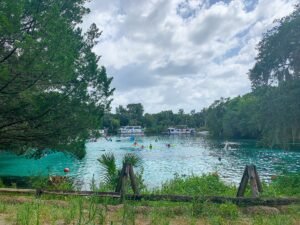
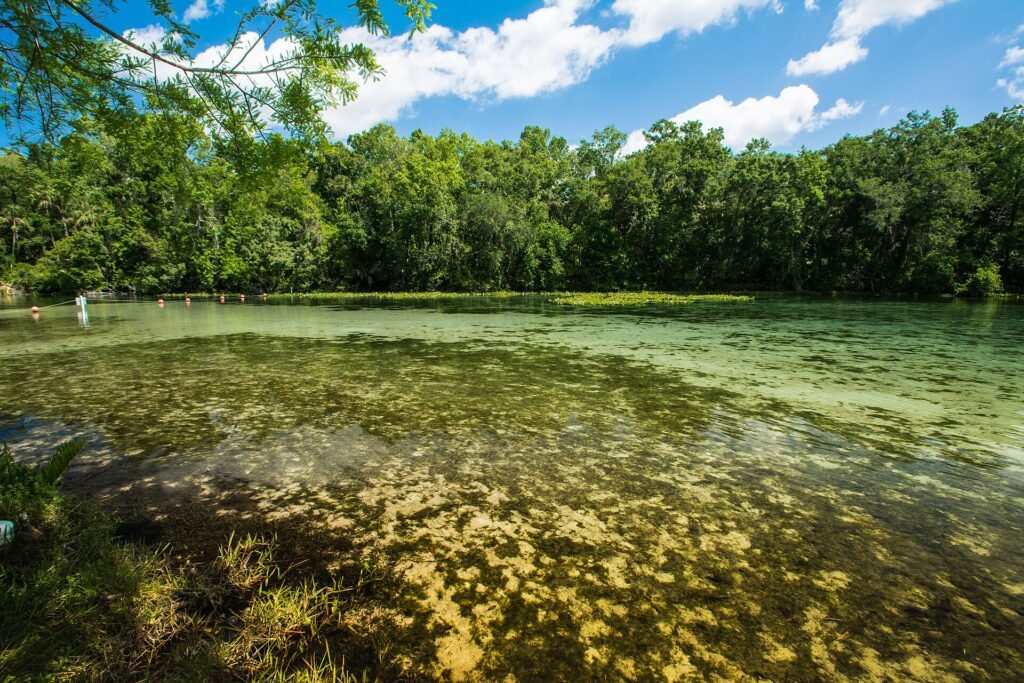
Alexander is the gentlest of Florida’s first-magnitude springs: a huge, gradually-sloping sandy basin in the Ocala National Forest where you can wade in like a beach. It is also one of the few springs where open-water scuba is allowed without cave certification.
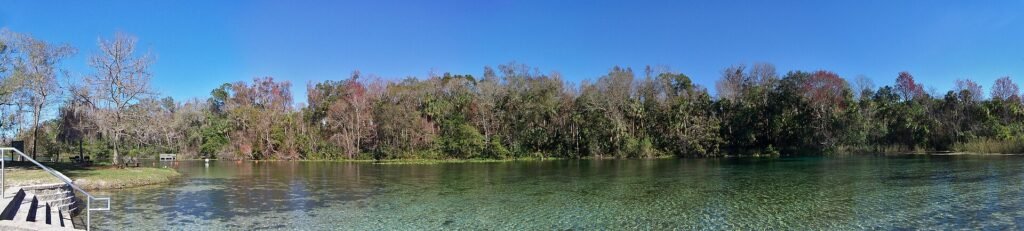
The surrounding forest keeps it feeling remote, and the paddle down Alexander Creek is prime gator-and-heron Florida.
Is it worth it? Yes, especially for families and newly certified divers, though go in knowing the entry fee has risen to $14.50 per person and the dive itself is a single, fairly shallow sand basin rather than a true cave system. It’s the best place in Florida to introduce a nervous swimmer or a brand-new diver to open water, less so if you’re chasing depth or drama. Arrive by 10am, especially on weekends, since the main spring genuinely does fill in by midday.
Visiting
Entry is $14.50 per person plus tax, confirmed on the recreation area operator Naventure's current fee page — children 5 and under are free, and an annual pass runs $80 plus tax. This replaces older $8 weekday/$11 weekend figures still floating around online, so don't rely on those.
It's the only place in the Ocala National Forest where scuba diving is allowed, and its gently sloped 300-foot basin (2.5 to ~25-30 ft deep) makes it ideal for new divers and snorkelers; a small cavern with strong vent flow adds interest, though at least one experienced diver has described the main basin as a single, fairly cramped sand bowl around 17 feet deep rather than a dramatic dive — a great training site, not a deep one. USFS site, so state park passes don't apply — but the $80 (plus tax) Springs Hopper Pass, valid through the end of the calendar year, covers Alexander plus Juniper, Silver Glen, and two lakes (Clearwater and Wildcat), per the Forest Service listing.
During the summer season (roughly late May through early September), a Vehicle Access Reservation is required on weekends, holidays, and select federal observances — $20 per vehicle on top of per-person admission, booked at ReserveOcala.com; check the operator's current reservation page for this year's exact dates. Bring your own tanks — no dive shop on site.
A lifeguard is often on duty in summer. For camping: The rare spring where you can camp and scuba dive the basin on open-water certification — a gently sloping, swimmer-friendly spring in the Ocala National Forest with a campground beside it. For scuba: The best open-water spring dive for newly certified divers — the only scuba site in the Ocala National Forest, with a gently sloped 300-foot basin and a small cavern with a strong vent flow to explore. The drive in is genuinely remote — narrow country roads with little else around, and once you're close, there's no sign marking the entrance until you're right at the fee booth.
Punch 'Alexander Springs' straight into your GPS rather than relying on the last mile of turns. Pack food before you leave; there's a small concession stand on site but no restaurants nearby, and you won't find dinner easily on the way out either. One safety detail worth building your visit around if you have young or less-confident swimmers: lifeguards are on duty here seven days a week, 10am-5pm, from May 15 through September 15 — one of the few Florida springs that offers this at all, and it makes a real difference for peace of mind with kids in the water.
By the numbers: Alexander is a 1st-magnitude spring — by definition at least 65 million gallons a day — with water holding at a constant 72°F year-round. The vent area toward the back of the main basin drops to roughly 25-28 feet, where exposed limestone boulders and an eroded rock ledge become visible through the clear water; most of the swimming area is far shallower. Alexander Springs Creek runs about 10 miles downstream to the St. Johns River. The recreation area is about 60 miles from Orlando (roughly 1 hour 15 minutes), about 70 miles from Gainesville (around 1 hour 30 minutes), and about 55 miles from Daytona Beach (around 1 hour 10 minutes).
The canoe run here is a different animal from Juniper's: it's a forgiving out-and-back on Alexander Springs Creek, 60-80 feet wide and slow-moving, with no whitewater, no mandatory shuttle, and no fixed distance — paddlers turn around whenever they've had enough rather than committing to the whole run. Most people paddle a mile or two to the creek bridge and back, roughly 2-4 hours total; canoe and kayak rentals are available on site by the hour or for the full day, and private boats are welcome too.
When to go
Weekdays in spring and autumn. The campground fills with snowbirds January through March.
Local tips
Arrive by 10am if you can, especially on weekends — more than one reviewer specifically notes the main spring itself gets genuinely crowded by midday, even though the surrounding property is large enough that the site overall rarely feels packed. On facilities, reviewers repeatedly call out real bathrooms and showers rather than portable toilets, plus a full on-site store, as a step up from some of the more bare-bones USFS sites.
For divers specifically, know before you go: the main basin is one large sand pit around 17 feet deep, which some experienced divers find cramped for buddy pairs compared to a true cave or cavern system — it's an excellent, low-risk place to log open-water certification dives, not a destination for advanced or technical diving.
Snorkel the vegetation line at the basin's edge for the fish life. This spring has a different character than some of its neighbors, worth knowing if you're choosing between them: one longtime visitor put it plainly — you don't come here to drink and get rowdy, and staff have been known to confiscate alcohol from people pushing it. If that's not your scene, that's exactly the point; if you want livelier, Ginnie Springs is the honest answer, several hours away.
The Timucuan Trail, about a mile, half boardwalk half dirt path, is a genuinely nice add-on for families — mostly shaded, with several spots to look down into the crystal water and spot fish and turtles along the way.
Rules & restrictions
Open-water diving is allowed with certification — unusual among Florida springs. No pets in the swim area. Federal fee rules apply. Dogs are welcome leashed in most areas of the recreation site, but not on the beach at the swimming area itself.
Good to know
Dogs: Not in swim area. Season: Year-round.
Facilities
Restrooms, showers, campground, canoe rentals, picnic areas, and a swimming beach with gradual entry. If you want a real meal and don't mind a detour, The Yearling Restaurant near Cross Creek — about 40 minutes away — is a 60-year-old local institution serving Florida Cracker fare: frog legs, catfish, venison, and a genuinely famous sour orange pie. Closer in, Castaways Restaurant about 8 miles out covers seafood, steak, and diner classics if you just want something quick on the way home.
Bear-proof food storage is provided at the campground, worth using given the forest's bear population. A walk-in store sells snacks, drinks, and souvenirs on site.
Wildlife you may see
Turtles by the dozen, bass, bream, and gar visible in the shallows; alligators in Alexander Creek downstream. Deer and scrub jays in the surrounding forest.
Paddlers on Alexander Springs Creek regularly report bald eagles and belted kingfishers alongside the turtles and gators already common near the swim area; rangers have mentioned sightings of one alligator estimated at around 12 feet.
History & background
The spring sits within the Ocala National Forest, established in 1908 as the oldest national forest east of the Mississippi and the first to protect subtropical land.
Map & directions
FAQs
Can beginners scuba dive at Alexander Springs?
Yes — it is one of the only Florida springs allowing open-water (non-cave) diving, and dive shops run training here. Some divers note the basin itself is a single large sand bowl only about 17 feet deep, which can feel cramped for buddy teams compared to a true cave or cavern dive — it's a great training site, not a deep or complex one.
Is Alexander Springs good for kids?
Very — the sandy, beach-like entry and huge shallow area make it the easiest first-magnitude spring for small children.
How much does Alexander Springs cost?
$14.50 per person, per the operator Naventure's current fee page, with children 5 and under free. An annual pass is $80 plus tax. This is a real increase from older $8/$11 figures still circulating online — confirm before you go.
Is Alexander Springs a party spot like Ginnie Springs?
No, deliberately not — it has a calmer, family-oriented atmosphere, and staff actively discourage rowdy drinking. If a livelier scene is what you want, that's a fair description of Ginnie Springs instead, several hours north.
Is there food near Alexander Springs?
Very little — it's genuinely remote, with a small on-site concession stand but no real restaurants close by. Pack food for the day. The Yearling Restaurant near Cross Creek, about 40 minutes away, is worth the detour if you want a real meal.
Is the Timucuan Trail good for kids?
Yes — about a mile, mostly shaded, half boardwalk, with several spots to look into the clear water and spot fish and turtles along the way. A nice, easy add-on to a swim day.
Are there lifeguards at Alexander Springs?
Yes, seven days a week, 10am-5pm, from May 15 through September 15 — one of the few Florida springs offering lifeguard coverage at all.
Are dogs allowed at Alexander Springs?
Yes, leashed, in most areas of the recreation site — but not on the beach at the swimming area itself.
Do you need a vehicle reservation for Alexander Springs?
During the summer season (roughly late May through early September), yes — on weekends, holidays, and select federal observances, per the operator's reservation page. It's $20 per vehicle on top of the per-person admission, booked at ReserveOcala.com; check the site for this year's exact dates. Weekdays and the off-season don't require one.
When is Alexander Springs least crowded?
Weekdays, and arriving by 10am on any day — reviewers consistently note the main spring itself gets genuinely crowded by midday on weekends and holidays, even though the property overall is large enough to absorb most visitors.
Is the Alexander Springs canoe run hard?
No — unlike Juniper Run nearby, it's an easy out-and-back paddle on a wide, slow-moving creek with no mandatory shuttle or fixed distance. Most people paddle a mile or two to the bridge and back before turning around.
How far is Alexander Springs from Orlando?
About 60 miles, roughly 1 hour 15 minutes by car.
How deep is the vent at Alexander Springs?
The main basin's vent area, toward the back, drops to roughly 25-28 feet, where you can see exposed limestone boulders and rock ledge through the clear water — most of the swimming area itself is far shallower.
Can you bring your own kayak to Alexander Springs?
Yes — private canoes and kayaks are welcome on Alexander Springs Creek; rentals are also available on site by the hour or full day if you don't have your own.
Where is Alexander Springs, Florida?
Alexander Springs is a first-magnitude spring in the Ocala National Forest, in Lake County between Astor and Altoona. From SR 40 at Astor, take Butler Street to CR 445A, turn left on CR 445, and the recreation area is 5.8 miles south on the right. The gently sloping spring pool holds a constant 72°F.
Visitor photos
See this week’s shots: Instagram #alexandersprings · TikTok #alexandersprings
Great for: Camping · Kayaking · Scuba Diving · Snorkeling · Swimming